
Going under a drastic transformation, the world’s agriculture is now embracing a new and different approach. The innovation of new technology that would have seemed unimaginable or unrealistic just a generation back has now become a stark reality, which opens new opportunities and allows farmers to be more efficient at their work. Artificial intelligence (AI) remains at the center of this change. AI acts as a powerful tool that can be beneficial to agriculture in a way that farmers wouldn’t be replaced. It shifts the nature of agricultural work by granting more smart, efficient, and sustainable farming practices.
In the rural areas throughout the world, labor gaps are heavily experienced by the industry as the older farmers move towards retirement and younger generations are hesitant to join the industry and be recruited due to the various types of opportunities the world has to offer as cornerstones for their careers. Farm employment has been declining quite evidently in the United States during the past couple of years, especially as a large amount of the workforce is nearing their retirement, as previously mentioned before. This decline comes at a highly unfortunate time, as due to the events that are currently taking place in the world, the prices of agricultural products continue to be on the rise. This increase in inflation has pushed the value of the global agricultural sector into trillions of dollars. As questions are urgently asked about how more produce can be grown with fewer resources.
AI technologies are stepping in to fill some of these gaps. Instead of eliminating jobs, many experts highlight that AI and robotics are enhancing the roles of farmers by taking over repetitive, dangerous, or labor‑intensive tasks, allowing human workers to spend more time on high‑value decision‑making, strategic planning, and on‑farm management. This shift moves farmers “up the stack,” meaning they transition from manual labor to overseeing complex, integrated systems that combine sensors, data analytics, and autonomous machinery.
Emerging startups and incubators worldwide are reshaping agriculture with AI. By creating self-operating grain systems to cut down on waste during production, using AI to monitor livestock, and developing smarter tools for land use and conservation, farming efficiency has started to improve throughout the entire process.
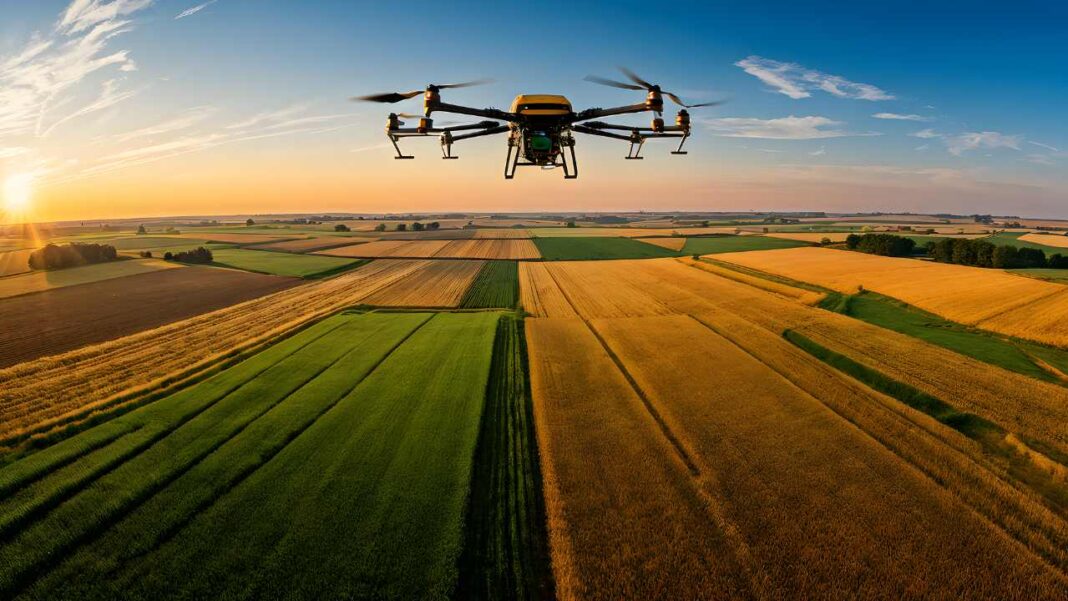
Precision agriculture comes as a key part in this whole shift. This type of agriculture is where AI helps farmers to customize practices in a highly detailed manner. Data from sensors, drones, and satellites analyzes and assesses the moisture in the soil, health of the crops, and microclimates. Through this approach, farmers get an opportunity to treat their fields plant-by-plant instead of having the pressure to treat multiple fields at the same time. By using large datasets together with machine learning, it can provide farmers the opportunity to predict crop yields, spot pests or diseases early, and plan planting better, turning reactive farming into smarter, more efficient, and climate-ready management.
However, challenges continue to remain. While AI adoption is growing fast on large farms with access to capital and reliable connectivity, smaller farms in many regions face barriers like limited broadband infrastructure, high upfront costs, and gaps in digital skills. These hurdles threaten to create a “digital divide,” leaving farms with fewer resources behind in the technological shift. Ensuring that AI tools are affordable, user‑friendly, and locally tailored is highly important due to these factors in order to broaden and grant fair adoption.
Despite challenges, AI in agriculture increases productivity, automates tasks, provides data insights, and enables precision farming, helping meet growing food demand sustainably while supporting resources and rural communities.