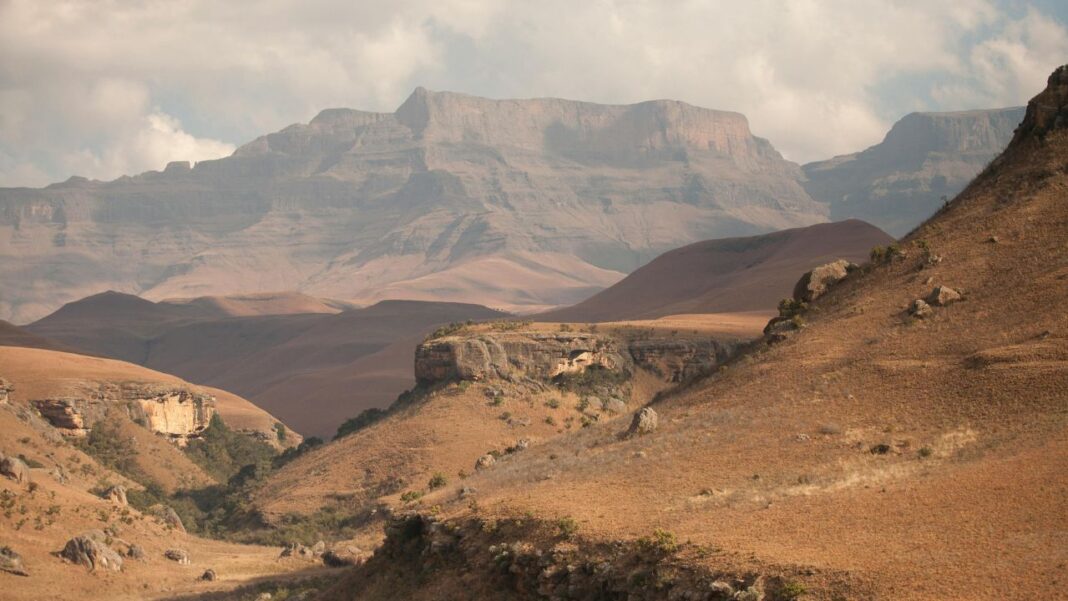

The Turkana Rift in Eastern Africa is a vibrant hub for scientific exploration. It is famous for two reasons. First, many fossils of early human ancestors have been found there. Second, it is an active volcanic region shaped by moving tectonic plates. Now, new research indicates that the Earth’s crust in this area is much thinner than scientists once thought. This discovery suggests that Africa may slowly split apart in the distant future. It also offers a fresh way to understand why so many fossils are preserved in this region, as the thinner crust may create unique geological conditions that favour fossilisation, such as reduced tectonic activity and specific sedimentary processes.
The study was published in the journal Nature Communications. Scientists have studied the Turkana Rift for many years. It is a wide, low area that stretches across parts of Kenya and Ethiopia. The rift is about 500 kilometres long. It forms part of the much larger East African Rift System. This system runs from northeastern Ethiopia all the way down to Mozambique.
In this region, tectonic plates are slowly moving. The African plate and the Somali plate are drifting away from each other. They separate at a rate of about 4.7 millimetres per year. This movement may sound slow, but over millions of years, it causes big changes. As the plates pull apart, the Earth’s crust stretches. It cracks and bends. Hot magma rises from deep inside the Earth and leads to volcanic activity.
Not all rifts end in continents breaking apart. But the Turkana Rift seems to be heading in that direction. The researchers found that the crust here is thinner and weaker than expected. This means the process of rifting is more advanced than scientists previously believed.
To reach this conclusion, the research team used detailed seismic data. These are sound waves sent into the ground. By studying how the waves bounce back, scientists can see what lies beneath the surface. The team combined this information with other imaging methods. This allowed them to map the underground structure of the rift.
They discovered that the crust along the rift’s center is only about 13 kilometres thick. In comparison, areas away from the rift have crust that is more than 35 kilometres thick. This thinning process is called “necking.”. It is similar to what happens when you stretch soft candy. The middle becomes thin while the ends stay thick.
As the crust becomes thinner, it also becomes weaker. This process makes it easier for the rift to keep opening. Scientists believe the Turkana Rift has now reached a critical stage. However, this development does not mean the continent will split anytime soon. These changes happen over millions of years.
The rifting in this area began around 45 million years ago. The thinning process likely started about 4 million years ago after a period of strong volcanic activity. In the future, the next step could be “oceanization.” This is when new ocean crust forms, and seawater may enter the gap, creating a new ocean.
The researchers also found signs of an older rifting event. This earlier phase did not split the continent but left the crust weaker. This may have helped the current rifting process move faster. This discovery is important for understanding how continents break apart. It also helps scientists study past environments, including climate and landscapes, by providing insights into the geological processes that shaped these areas over millions of years.
The findings may also change how we think about human evolution. The Turkana Rift has produced more than 1,200 fossils of early humans. That is about one-third of all such fossils found in Africa. Because of these findings, some scientists believed this area was a key centre for human evolution. However, the new study suggests a different idea. Around 4 million years ago, the land in the Turkana Rift began to sink.
Fine sediments built up quickly in this low area. These sediments were ideal for preserving fossils. This suggests the region may not have had more early humans than other places. Instead, it simply preserved their remains better. This idea is still being studied. But it opens new questions about our past. Scientists can now use this data to explore how Earth’s changes influenced human evolution over time.