
The Spring Economic Update was tabled in the House of Commons on Wednesday, 29 April ’26, against a backdrop of heightened global instability. This was particularly so due to the oil price market volatility caused by the Middle East conflict. Additionally, the rapid and continuous shifts in U.S. tariff policy contributed to the situation. The tone of the update was one of resilience, besides economic diversification. Deficits are implicitly justified as required to navigate uncertainty, besides supporting long-term growth, as they can provide necessary funding for essential services and investments that stimulate the economy during challenging times. The update projected a modestly improved fiscal scenario, selective affordability relief, and a continued emphasis on investment & stability.
Fiscal outlook
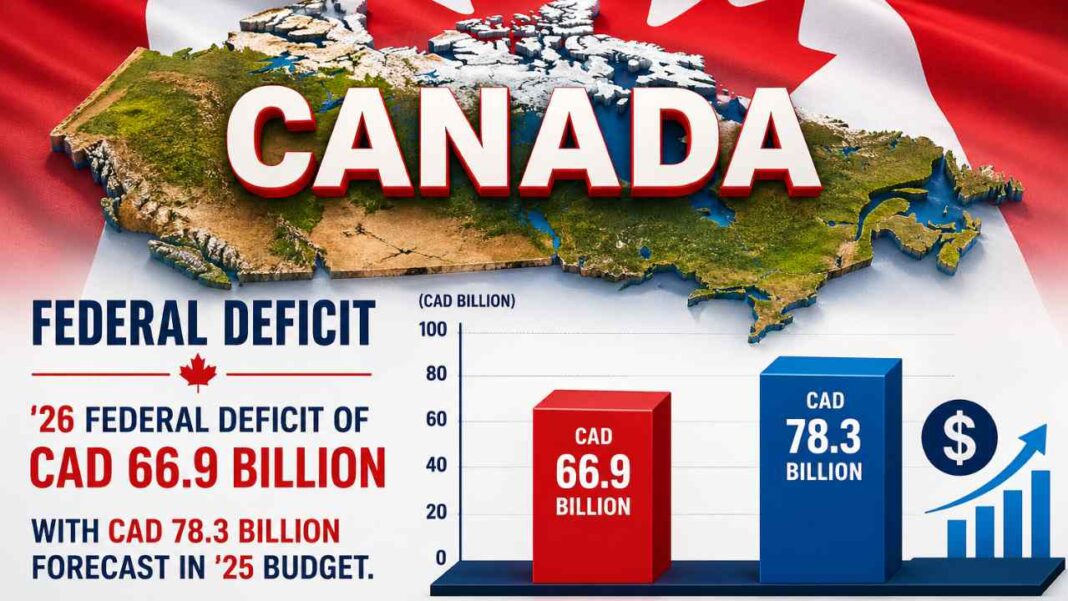
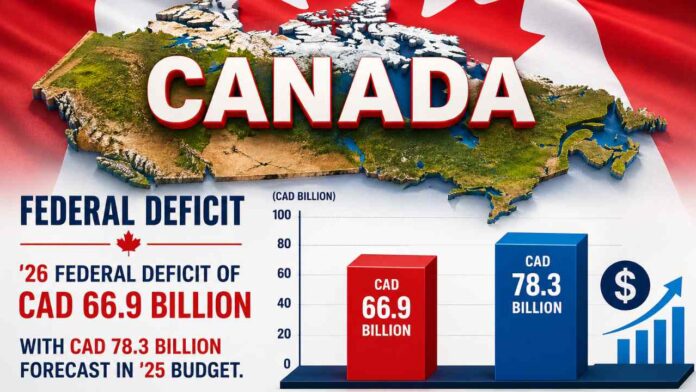
The update estimates that last year’s federal deficit came at USD 48.84 (CAD 66.9) billion. That’s more than USD 8.4 (CAD 11.5) billion lower than the USD 57.16 (CAD 78.3) billion forecast in the ’25 budget. This was largely due to improved economic performance, despite some lapses in planned spending, as well as increased revenues from higher oil prices resulting from the Middle East conflict. Additionally, revenues have improved due to increases in oil prices resulting from the Middle East conflict. The government forecasts that the annual deficit may decline to USD 38.84 (CAD 53.2) billion by ’30-’31.
Despite the inflation rate hovering around the Bank of Canada’s target of a 2% figure for nearly two years, two key areas on the affordability front, besides fuel and groceries, continue to remain elevated.
The government is using some of the available fiscal room for increased expenditure of USD 39.79 (CAD 54.50) billion over 6 years. This includes USD 27.38 (CAD 37.50) billion for new measures such as the previously announced groceries & essentials benefit. Additionally, the government is implementing a temporary suspension of the federal fuel excise tax.
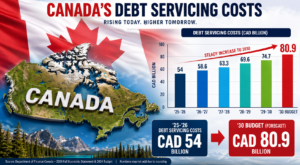
Debt servicing costs are estimated at USD 39.42 (CAD 54) billion in ’25-’26. It’s projected to increase to USD 59.06 (CAD 80.90) billion in another 4/5 years by ’30-’31. This was largely in line with fall projections. These trends tend to underscore the increasing cost of financing near-term consumption through debt.