
The British working class is to face a surge in unemployment as the economic shockwaves from the war in Iran push an already stagnating economy towards recession.
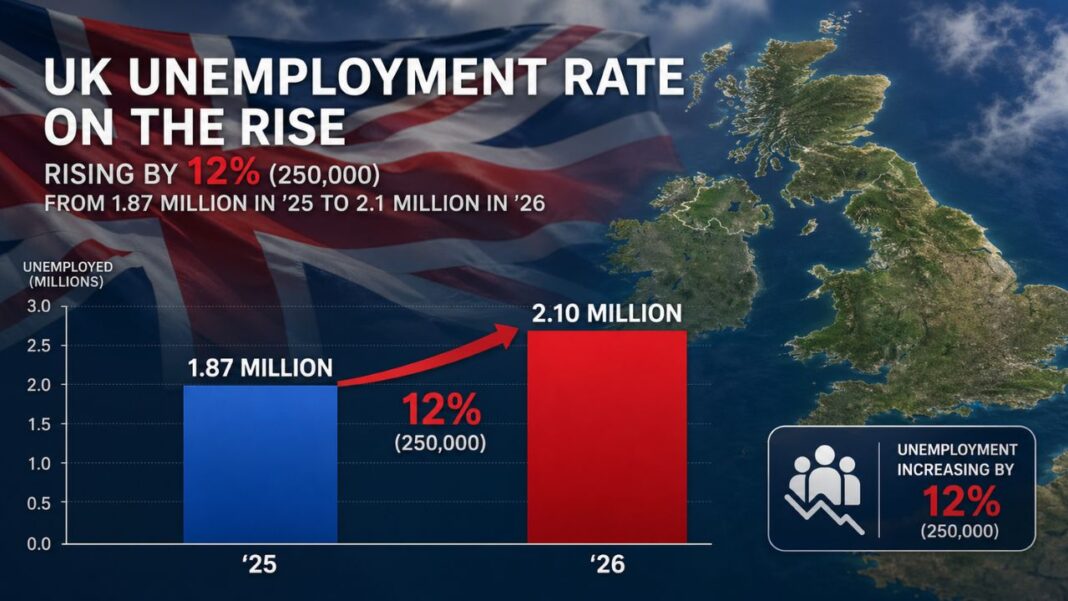
The latest forecasts point to a sharp deterioration in labour market conditions. Forecasts indicate that there could be up to 250,000 additional job losses. This downturn is likely to result in the official unemployment figure increasing by 12% from 1.87 million to over 2.1 million.
An economic forecasting group, the EY Item Club, warns that the UK economy will flatline in the second and third quarters of this year. This may place the UK on the brink of a technical recession. This is defined as two consecutive quarters of contraction. Already weak economic growth is projected to collapse from 1.4% in ’25 to a mere 0.7% this year. The term cuts across earlier signs of modest recovery reflected in February ’26, where a slight uptick was predicted in gross domestic product.

The consequences for the working class seem to be severe. Unemployment is expected to increase to 5.8% by mid-’27. That is an increase from the current five-year high of 5.2%. This is because the crisis triggered by the Middle East conflict reverberates through the global economy, leading to reduced trade, increased inflation, and job losses in various sectors.
The UK’s real level of unemployment may be far higher. This discrepancy is due to the doctoring of figures implemented by successive governments, sustained for decades. According to the latest figures at hand, the quantum of people aged between 16 & 64 classed as ‘economically inactive’ hit 22% in ’24. Guided by the public finance website, the figure equates to 9.1 million Britons aged between 16 & 64. That’s an increase of around 8.5 million from before the pandemic in early ’20. It indicates the grim onslaught on public health as the virus was allowed to ‘let rip’, with around 2 million people suffering the debilitating consequences of Long COVID.