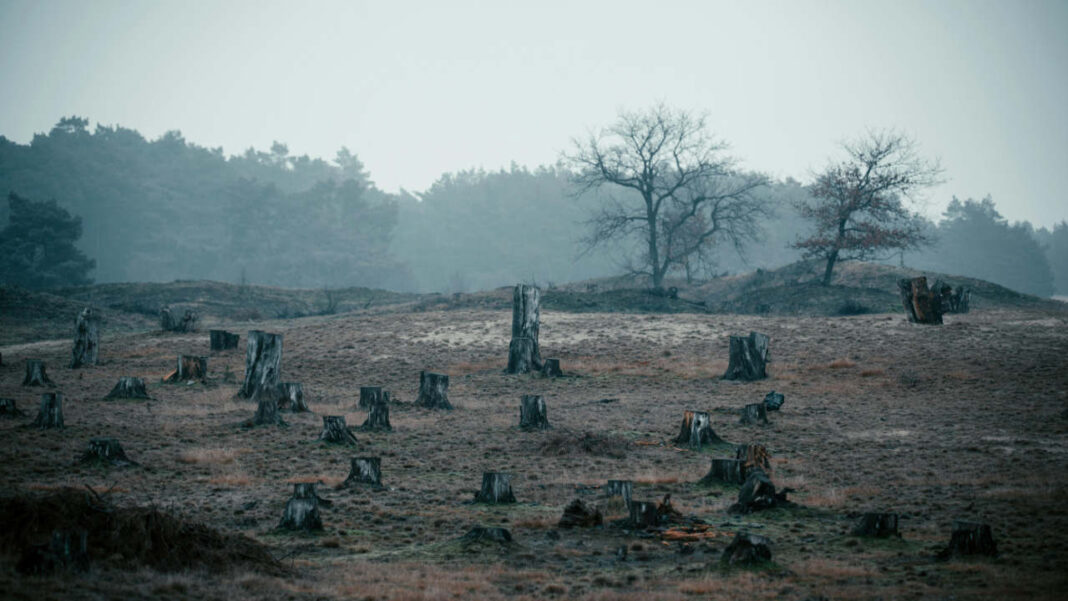

Recently recording the lowest level of deforestation in 40 years, Brazil‘s Atlantic Forest has finally faced some good news regarding its environment as it is a region that is long associated with rapid forest loss. According to a report which was made recently, there were only 8,658 hectares that were cleared within the past year, which shows a much stronger enforcement that has been improved. One can also see how environmental policies have also gone through a betterment along with the active efforts in hosting relevant conversations. However, scientist and environmental groups have gone to warn that this process should not hide the scarce reality of how Brazil’s forests, and worldwide tropical forest remains under a deep threat with the severe pressures.
The Atlantic Forest, which has been reduced to a small fragment compared to its original size, once stretched throughout Brazil’s coastline. Today, unfortunately, its existence has been reduced to heavily fragmented patches which are surrounded by cities, agriculture, concrete and infrastructure. While encouragement and hope can be found through deforestation, it cannot be overturned that the world is facing massive losses with oxygen as the ecosystem is still highly vulnerable. Which means that even small losses can have major consequences when it comes to biodiversity and stability of the climate.
The Amazon rain forest also is focused on increasingly, as just as the other forests, it faces the same kind of threats, just on a much larger scale. The Amazon, Unlike the Atlantic Forest, spreads throughout a few countries and it contains one of the highest levels of biodiversity on Earth as it harbors a largescale of wildlife. However, it continues to suffer from deforestation as well. The main drivers being cattle ranching, illegal logging, mining, and the expansion of agriculture, continues to threaten the forest day by day. Millions of hectares have already been lost throughout the past decade, which makes scientists warn that parts of the forest are approaching ecological tipping points which are highly endangered.
Even though deforestation rates have slowed in numerous areas over recent years, another issue is emerging: forest degradation. This includes selective logging, fires, and drought damage that weaken the forest without completely clearing it. Most of the time, these actions have been made by either man, or the worsening climate change. Studies show that a significant portion of the Amazon has been affected and may contribute even more to carbon loss than plain deforestation. This means the forest’s ability to store carbon and regulate rainfall is declining in a steady pace, even in areas that still appear “standing.” Which brings us to reality, glimpses of hope, doesn’t dismiss the stark reality.
The impact of this loss extends far beyond Brazil. Forests like the Amazon and Atlantic Forest act as major carbon sinks, that end up absorbing carbon dioxide and helping regulate global temperatures. When they are destroyed or degraded, that carbon is released back into the atmosphere, which ends up accelerating climate change. In addition, the Amazon plays a key role in generating rainfall patterns across South America and influencing global weather systems. Disruption to this system can lead to more extreme droughts, floods, and unpredictable climate conditions worldwide.
The consequences are, therefore, as one can see, global. Rising temperatures, biodiversity loss, and unstable, uncertain weather patterns are no longer simply regional problems, they are interconnected outcomes of forest destruction. Scientists continue to warn that continued deforestation could end up pushing parts of the Amazon toward a point of no return.
While recent improvements in Brazil’s Atlantic Forest do end up offering glimpses of hope that policy and enforcement can truly make a difference, experts of the situation highlight that long-term protection of both forests is highly essential. Each being is responsible, which means everyone must continue to bring the planet to a stage of stability. Without sustained global action, the world risks losing some of its most important natural systems, systems that help regulate the climate for everyone.