
In June 2024, Penn State scientists travelled along the eastern United States coast. They used a modified 2013 Toyota Sienna with a custom weather instrument mounted on the roof. Their goal was to study storms and unusual electrical effects in trees.
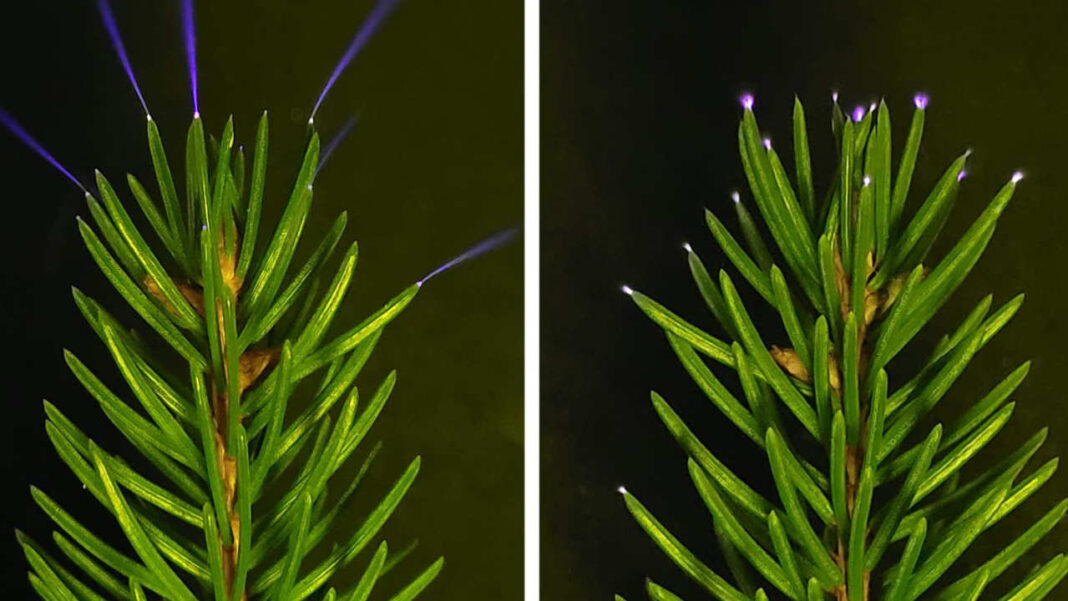
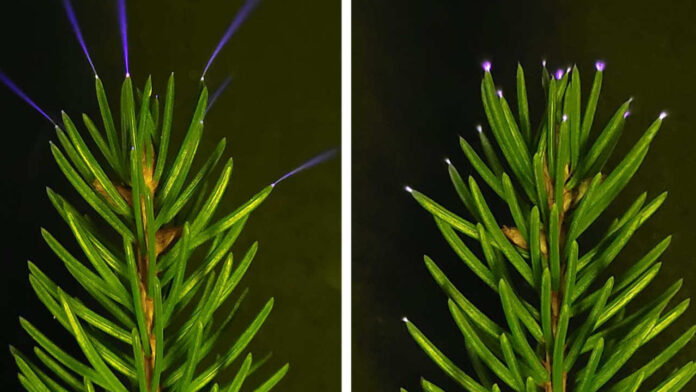
They were searching for corona discharges. This effect is a long-suspected phenomenon discussed for over seventy years. It had never been clearly observed in nature. The idea is that tiny electrical bursts may form on tree leaves during thunderstorms. These bursts could create a faint ultraviolet glow.
The team included experts in atmospheric science. William Brune was a senior professor. Patrick McFarland was a doctoral researcher and lead author. Jena Jenkins was an assistant research professor. David Miller was a former associate research professor from the Applied Research Lab. Florida was chosen because thunderstorms are frequent in the summer. The team expected many chances to observe storms. However, conditions were difficult. Storms formed quickly and disappeared before measurements could be taken.
For three weeks, the team chased storms across different locations. Most attempts failed due to short storm duration. They continued moving but collected little usable data. While returning north, strong storms developed near Interstate 95. The researchers stopped near the University of North Carolina at Pembroke. They set up equipment in a parking area.
They aimed instruments at nearby trees, including a sweetgum and a loblolly pine. A long-lasting thunderstorm passed overhead. It brought rain, lightning, and strong electric fields. It lasted nearly two hours. During this storm, the team finally observed corona discharges in nature. They detected faint electrical glows on leaves and branches. This was the first confirmed field observation.
The results were published in Geophysical Research Letters. The scientists confirmed that corona discharges exist outside laboratories. This was a major step in atmospheric research. Corona discharges form when thunderstorms create strong electric fields. Clouds carry negative charges. The ground becomes positively charged. This charge rises through tall objects like trees.
At leaf tips, the electric field becomes intense. This causes tiny electrical bursts. They are invisible to the human eye but can emit ultraviolet light. This ultraviolet light can break water vapour in the air. This reaction produces hydroxyl, a key atmospheric chemical. Hydroxyl helps remove pollutants and greenhouse gases. It plays an important role in cleaning the air.
Researchers believe corona discharges may help break down gases released by trees and human activity. They may also affect methane levels, a powerful greenhouse gas. Earlier laboratory work supported these findings. The team applied electrical signals to branches and observed similar ultraviolet emissions and chemical reactions.
In the field, they also saw slight leaf damage where corona discharges occurred. This suggests the process may affect plant tissue, though more study is needed. The team used a custom system combining a telescope and UV camera. It measured electrical fields and filtered sunlight to isolate relevant signals.
Using this system, they recorded many corona events. They observed 859 events on a sweetgum tree and 93 on a pine tree. Some lasted briefly, others several seconds. Other tree species exhibited similar activity. The researchers say the discovery raises important questions. It is unclear whether corona discharges harm or benefit trees. It is also unknown if trees have adapted to them over time.
The team is working with ecologists and biologists to study these effects further. They aim to understand impacts on forests and air quality. The study was funded by the National Science Foundation. The researchers say the work opens a new field linking weather, chemistry, and biology.
The observing system was designed for fieldwork. It combined a Newtonian telescope and a UV camera. It included sensors measuring atmospheric electric fields in real time. The instrument was calibrated with a mercury lamp before deployment. It filtered sunlight so only ultraviolet signals from lightning, fire, or the corona were detected. Researchers checked alignment during storms for accuracy.
They logged GPS locations for each measurement to connect data with trees and storm conditions. The team believes they can enhance the system for extended studies. Future work will examine how often corona discharges occur across forests and climates. They also plan to study effects on tree health and atmospheric chemistry over many seasons.