
An international group of scientists found new details about coral reefs and tiny microbes living inside them. The study show that different coral species have their own special microbial communities. Researchers also found these microbes may have useful chemicals for medicine and biotechnology in future. The research was done by scientists from many countries, including University of Galway researchers.Their findings were published in the journal Nature.
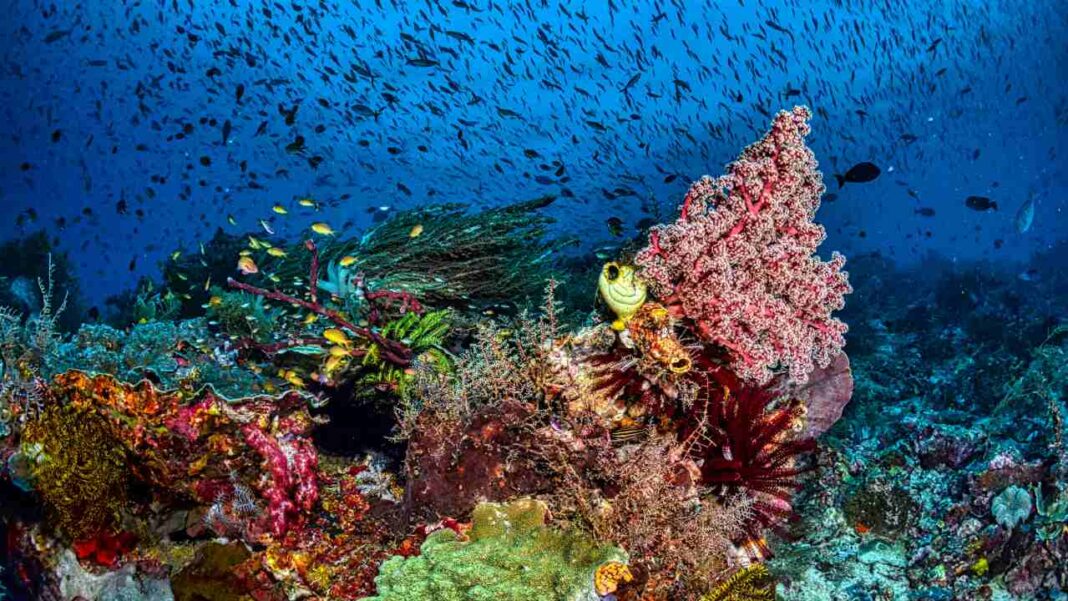
Coral reefs are often described as the rainforests of the ocean because they support huge numbers of marine species. Around one-third of large marine organisms depend on reefs in some way. Reefs also provide many benefits, including tourism, food sources, and nutrient cycling in the ocean. However, scientists say much of the reef’s true diversity cannot be seen with the naked eye.
Hidden inside corals are complex microbial communities. These include bacteria, fungi, algae, viruses, and other microscopic life. Together, they help corals survive and stay healthy. They also support reef balance and improve ocean ecosystem resilience
The research was supported by the Tara Pacific consortium. Scientists collected microbiome samples from 99 coral reefs across 32 Pacific islands. The samples was gather during Tara Pacific expedition between 2016 and 2018.Pacific Ocean contain about 40% of world coral reefs, making it important area for researchs. Using advanced genetic analysis, the team reconstruct the genomes of 645 microbial species living with corals. important ocean study also gives new insight for future science findings
More than 99% of these species had never been genetically studied before. This showed that coral reefs contain a huge amount of unknown microbial life. Researchers found that many of these microbes are highly specialised and closely linked to the coral species they live with. The microbes also produce large numbers of bioactive compounds. These are natural chemicals that could have medical or industrial uses in the future.
The study showed that coral-associated bacteria contain a very large number of biosynthetic gene clusters. These clusters act like instructions for producing natural compounds. Scientists said the variety found in coral microbes was greater than what has previously been recorded in ocean environments. Dr. Maggie Reddy said the findings revealed how little scientists still know about reef microbes.
The team identified more than 4,000 microbial species, but only about 10% currently have genetic information available. Even fewer have been properly studied in laboratories. She explained that many species discovered during the Tara Pacific project remain almost completely unknown.
According to the researchers, this highlights the urgent need for more biodiversity studies, especially in regions that have not been well explored. The scientists also warned that damage to coral reefs could mean losing more than marine animals and plants. They said reefs also contain a hidden “molecular library” made up of microbial life and unique chemical compounds.
If reefs disappear, this valuable biological information may disappear as well. Professor Olivier Thomas said some reef microbes may be as useful as organisms traditionally studied for medicine, such as sea sponges. The researchers even identified previously unknown bacteria that produce new enzymes with possible biotechnology applications. The scientists believe these discoveries could eventually support the development of new medicines, industrial products, or scientific tools.
At the same time, they said the findings show why protectng coral reefs is becoming increasingly important. The study involved researchers from the Marine Biodiversity Lab at the Ryan Institute at the University of Galway and scientists from ETH Zurich. The researchers are also preparing for another expedition in Papua New Guinea later this year. During the trip, they will collect more marine samples and study why some corals are better able to survive climate change.