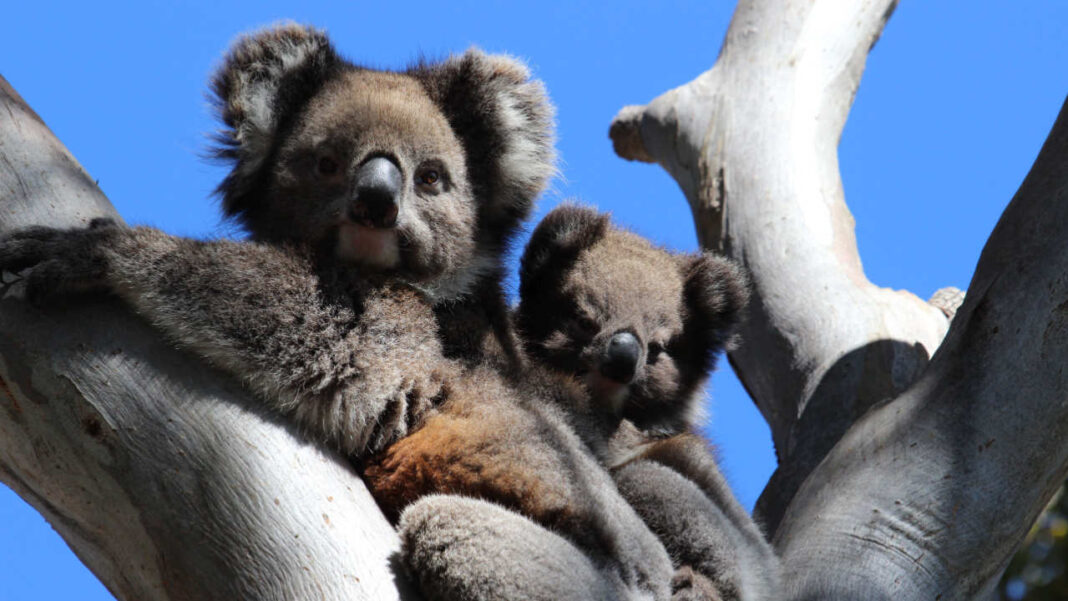

A new genetic study has changed what scientists know about the history of koalas. Researchers discovered that koalas went through a huge population decline about 100,000 years ago. This happened long before people arrived in Australia. The findings were published in Molecular Biology and Evolution by Oxford University Press.
The study found that all koalas living today came from a small group of survivors. These animals managed to live through very difficult environmental changes. At that time, Australia faced colder and drier conditions. Large climate shifts made survival much harder for many species.
Today, koalas are facing different problems. Habitat destruction, bushfires, disease, and hunting have all affected their numbers. Because of these threats, koalas were officially listed as endangered in Queensland, New South Wales, and the Australian Capital Territory in 2022.
Scientists from the University of Sydney and Texas A&M University conducted the research. Their findings challenge earlier studies. Previous research suggested koala populations started falling after humans reached Australia. However, the new evidence shows the decline began much earlier.
Lead researcher Toby Kovacs said the work changes the understanding of koala history. By studying modern koala DNA, scientists were able to estimate what happened to populations thousands of years ago. This allowed them to build a timeline reaching back around 100,000 years.
Scientists cannot rely solely on fossils because koala fossils are rare. DNA provides another way to learn about the past. Genetic information can reveal how populations changed over long periods of time. To complete the study, researchers examined mutation rates. Mutations are small genetic changes that naturally appear from one generation to the next. Every species has its mutation rate.
The team studied the DNA of four koala families. Each family included parents and their offspring. By comparing their genomes, researchers counted new mutations and calculated the species’ mutation rate.
They found that koalas develop new mutations at about half the rate seen in humans. This information became a valuable tool for exploring koala history. Using this mutation rate, scientists analysed 457 koala genomes. The large dataset helped them track population changes over many thousands of years.
This research is important because it is the first direct estimate of mutation rates for koalas. It is also the first such estimate for any member of the marsupial group called Diprotodontia. This group includes wombats, kangaroos, and possums. Results indicated that koala populations started shrinking around 100,000 years ago. Their numbers continued to fall and reached a severe bottleneck roughly 60,000 years ago. A bottleneck happens when only a small number of animals remain.
Researchers linked this decline to major environmental changes. The timing matches a period when Earth experienced colder climates and repeated glacial cycles. Wet forests covered much of Australia millions of years ago.
The continent became drier over time. Climate changes affected habitats and where animals lived. During the Pleistocene, cold and dry conditions were common. Large areas became arid. Fires happened more often. Around 70,000 years ago, the Nullarbor Plain expanded across southern Australia. These events created a huge dry barrier. As a result, koala habitats became smaller and more fragmented.
Scientists believe western koala populations eventually disappeared. Only a small eastern population survived the harsh conditions. When the climate improved, surviving koalas slowly expanded into new areas. Between 16,500 and 6,000 years ago, they separated into five distinct genetic groups.
These groups later formed the koala populations seen today on Australia’s east coast. Researchers now want to see if other Australian animals also had similar declines before humans arrived. The findings may help scientists understand Australia’s wildlife history better. The new mutation rate may also help conservation work. Scientists can use it to study how modern koala populations are changing, too.
Recent estimates suggest populations in Queensland and New South Wales continue to decline. Meanwhile, some populations in Victoria have shown signs of recovery. Researchers say understanding genetic change is important for protecting the species. These findings can help future conservation plans. It may improve efforts to keep koalas alive for many generations to come.