
New research from the University of Cambridge has found something surprising. Bumblebees soak up much more toxic heavy metal than honeybees. This happens even when both bees feed in the exact same area. In some cases, bumblebees carry up to seven times more metal than honeybees. This exposure can hurt bees in many ways. It can affect how well they search for food. It can also affect their ability to reproduce.
Heavy metal pollution is a common problem. It tends to build up near factories, mines, and cities. But it doesn’t stay only in those places. Wind can carry it into the countryside. Sewage sludge, farm chemicals, and fertilisers can spread it too. So even rural areas are not always safe.
Bees pick up metals without meaning to. They land on dusty soil. They gather pollen from plants growing in contaminated ground. Even small amounts of metal can cause harm. It can weaken memory and learning. This pollution makes it harder for bees to navigate their way home or search efficiently for flowers. Metals can also lower reproductive success. This situation means fewer baby bees and weaker colonies.
In the past, scientists mostly studied honeybees to check pollution levels. They treated honeybees as a stand-in for all bee species. This new study, published in Ecological Entomology, shows that the idea may be flawed. Different bee species absorb metals in different ways. Bumblebees, it turns out, are especially at risk.
The Cambridge team studied bees living in Cambridgeshire. This region generally has low metal pollution in its soil. Researchers placed honeybee and bumblebee colonies right next to each other. This way, both species foraged across the same land. The scientists collected pollen using special traps. They also tested the bodies of adult bees. They measured six metals: arsenic, cadmium, chromium, cobalt, lead, and tin.
The results were striking. Even though the bees shared the same environment, their exposure levels were entirely unique. Bumblebee pollen held between two and seven times more metal than honeybee pollen. Bumblebee bodies contained roughly three times more metal overall.
Dr Sarah Scott led the research at Cambridge and now works at Newcastle University. She explained that most of the metal levels found were not deadly. But she warned that low doses can still quietly damage bee health. They can weaken foraging skills and reduce breeding success over time.
Several factors explain this gap between species. Honeybees live in large groups, often between 30,000 and 60,000 bees, nesting above ground in hives or hollow trees. Bumblebees live in much smaller colonies, usually just 50 to 500 bees, and nest underground.
Foraging habits also differ. Honeybees gather pollen from a wide range of flowers, spreading out their risk. Bumblebees rely on fewer plant types, so contaminated flowers affect them more directly. Honeybees can also travel up to 10 kilometres to search for food, giving them room to dodge polluted patches. Bumblebees usually stay within 1.5 kilometres of their nests. This limits their options.
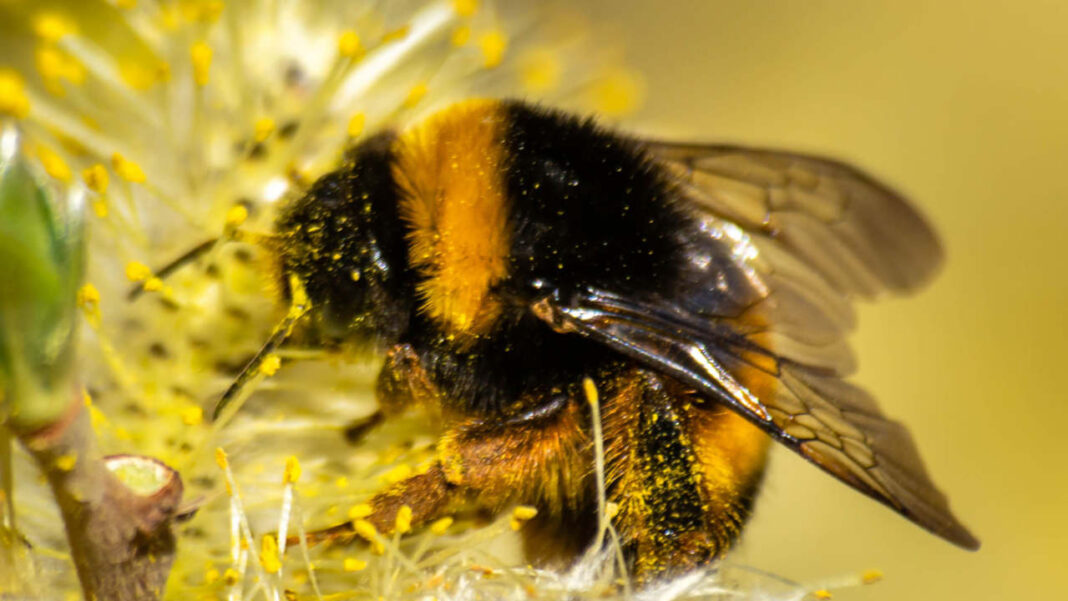
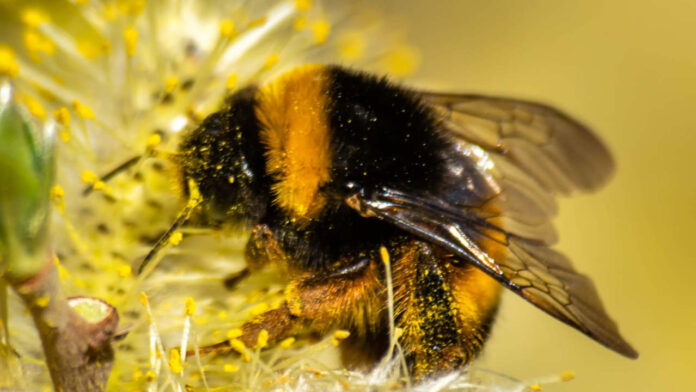
Bumblebees are also hairier than honeybees. Their fuzzy bodies trap more dust and airborne particles, which can carry metal residue back to the nest. Professor Lynn Dicks, senior author of the study from Cambridge’s Department of Zoology, said that even places considered low-risk can still expose bees to harmful metals. She noted that bumblebee colonies have fewer workers, so losing even a few bees can seriously disrupt the whole colony.
Dr Scott added a hopeful message. Bees still need flowers to survive, even in polluted areas. She encouraged people to keep planting flowers anyway. Some food, even with trace contamination, is better than none. The study was funded by the Royal Society.