


Kenya is close to signing a critical minerals agreement with the United States that would allow rare earth elements and other strategic minerals to be processed domestically. The move marks a significant step in Kenya’s efforts to derive greater value from its natural resources through local beneficiation and industrial development.
Kenyan President William Ruto disclosed the development during the G7 Summit on the shores of Lake Geneva. Ruto stated that discussions with U.S. officials were progressing well and that an agreement could be concluded soon.
Speaking to Reuters, Ruto said both parties had agreed that minerals extracted in Kenya should be processed within the country. The proposal underscores Nairobi’s determination to move beyond the export of raw materials and build local industries around mineral processing and value-added manufacturing.
The proposed deal comes as countries across Africa seek to retain a larger share of the economic benefits generated by their natural resources through domestic processing, manufacturing, and value addition.
Kenya has identified deposits of several strategic minerals, including rare earth elements, niobium, lithium, graphite, copper, and nickel. These minerals are increasingly important to industries such as electric vehicles (EVs), renewable energy, defence technology, electronics, and advanced manufacturing.
The agreement also reflects the broader global race to secure critical mineral supplies as major economies seek reliable sources of materials needed for the energy transition and emerging technologies.
The United States and China have both shown interest in Kenya’s rare earth sector, including a rare earth project valued at approximately USD 62 million, which has generated local concerns regarding ownership, environmental impacts, and long-term economic benefits.
The United States and its allies have been working to diversify critical mineral supply chains and reduce dependence on a small number of dominant suppliers in the global minerals market.
For Kenya, local processing could help create employment opportunities, attract investment, and support industrial development while increasing earnings from its mineral resources. In recent years, the country has intensified efforts to promote value addition rather than relying on the traditional model of exporting raw materials with limited domestic economic benefits.
Ruto emphasized that the proposed agreement would be based on mutual benefit for both countries. He added that Kenya’s objective is to ensure that more processing, refining, and industrial activity take place within its borders.
These discussions coincide with growing demands from African governments for greater participation in the mineral value chain. Several countries across the continent have introduced policies aimed at encouraging local beneficiation and restricting the export of unprocessed minerals in an effort to accelerate industrialization.
A successful agreement could strengthen Kenya’s position in the global critical minerals sector while supporting its ambition to become a regional hub for mineral processing and value-added manufacturing.
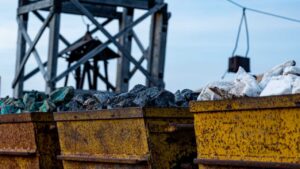
A Strategic Opportunity for Industrial Growth
The proposed agreement comes at a pivotal moment for Kenya’s industrial and economic agenda as President William Ruto intensifies efforts to ensure that the country captures greater value from its mineral wealth rather than simply exporting raw materials. Government officials have emphasized that future mining investments should include commitments to establish local processing, refining, and manufacturing facilities, thereby creating jobs and strengthening domestic supply chains.
Kenya possesses deposits of rare earth elements, titanium, niobium, graphite, and other strategic minerals that are increasingly sought after by advanced technology, renewable energy, and defence industries. As global competition to secure critical mineral supplies intensifies, Nairobi is seeking to position itself as a reliable partner for international investors while avoiding the challenges that have historically limited economic gains from resource extraction in parts of Africa.
Analysts note that cooperation with the United States could provide access to financing, technical expertise, and higher environmental, social, and governance (ESG) standards, helping Kenya develop a more sophisticated and competitive minerals sector. The negotiations also align with broader U.S. efforts to diversify critical mineral sourcing away from concentrated supply chains and build stronger partnerships with emerging economies.
Industry stakeholders argue that successful implementation of the agreement could encourage additional investment in infrastructure, energy, transportation, and workforce development—all of which are essential to supporting large-scale mineral processing operations.
If finalized, the agreement could mark a significant milestone in Kenya’s economic transformation, helping the country evolve from a raw-material exporter into a regional hub for value-added mineral production, industrial growth, and advanced manufacturing.