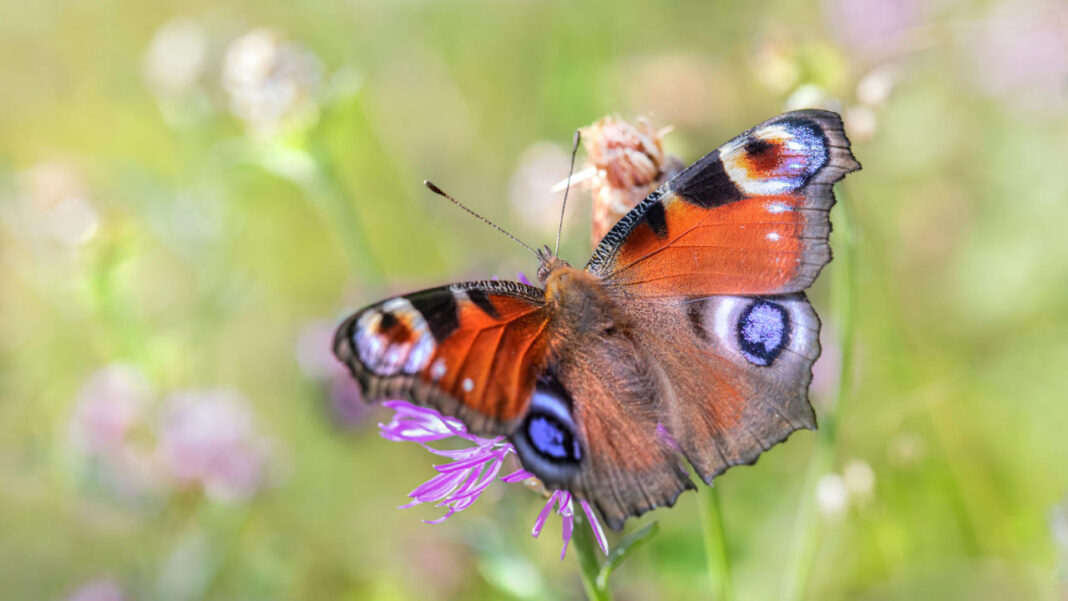

A new study led by the University of Bristol has found that a tropical butterfly may have developed a remarkable way to slow ageing. Instead of ageing quickly like most butterflies, this species appears to delay the ageing process. This helps it live much longer than its close relatives.
The study was published in Nature Communications and focuses on butterflies from the Heliconius group. These butterflies live in the tropical rainforests of South and Central America. Scientists say they are among the longest-living butterflies ever recorded.
Most butterflies only survive for a few weeks after becoming adults. But Heliconius butterflies can live much longer. Researchers found that some species in this group live around three times longer than closely related butterflies. In some cases, they can survive for nearly a year.
One of the most striking examples involved two related species. Heliconius hewitsoni lived 348 days. Meanwhile, Dione Juno survived for only 14 days. That means one species lived about 25 times longer than the other.
The findings suggest these butterflies have evolved a special survival strategy. Instead of simply living longer, they may actually age more slowly. This gives scientists a new way to study how ageing works in nature.
The research was carried out with help from the Smithsonian Tropical Research Institute in Panama. Scientists examined lifespan and ageing across different butterfly species. They used butterfly house records, field studies, and insect experiments to collect data.
Researchers also discovered something even more surprising. At least one Heliconius species showed little or no clear physical decline with age. To test these findings, scientists measured grip strength. This helped them track physical performance over time. They studied Heliconius hecale and compared it with a related species called Dryas iulia.
Older Dryas iulia butterflies became weaker as they aged. This matched the usual pattern seen in many animals. But Heliconius hecale showed no obvious decline. Even older butterflies kept similar physical strength. This suggests some Heliconius butterflies may avoid the normal ageing process seen in most living creatures.
Overall, the study found several important differences. Heliconius butterflies lived longer on average. They also had lower death rates early in life. In addition, their bodies appeared to age more slowly than species outside their group. Scientists have long wondered why these butterflies live so long. One major theory involves diet.
Unlike most butterflies, Heliconius species can feed on pollen as adults. This behaviour is rare. Most butterflies mainly drink flower nectar. Pollen contains protein and other nutrients. Because of these findings, researchers believed pollen feeding might help extend lifespan.
To test that idea, scientists studied diet effects in Heliconius hecale and Dryas iulia. They looked at body weight, muscle strength, and survival over time. They found that Heliconius hecale kept its body mass and muscle function for longer. It also stayed healthier with age.
However, there was another important result. Even when Heliconius butterflies did not receive pollen, they still lived much longer than their relatives. This finding means diet alone does not explain their long lifespan. Other biological or evolutionary changes are also likely involved.
Lead researcher Dr Jessica Foley said insects show huge differences in lifespan. Some adult mayflies live only a few days. Meanwhile, certain ants and termites can survive for decades. This creates an enormous lifespan gap within insects.
She explained that Heliconius butterflies are especially intriguing because they did not just evolve longer lives. They also appear to have evolved slower ageing. That makes them valuable for science. By comparing long-lived Heliconius butterflies with short-lived relatives, researchers hope to uncover the biological processes behind healthy ageing.
Scientists believe this natural comparison could reveal important clues about longevity. In the future, these butterflies may become an important model for studying how ageing slows down and how longer, healthier life can evolve in nature.