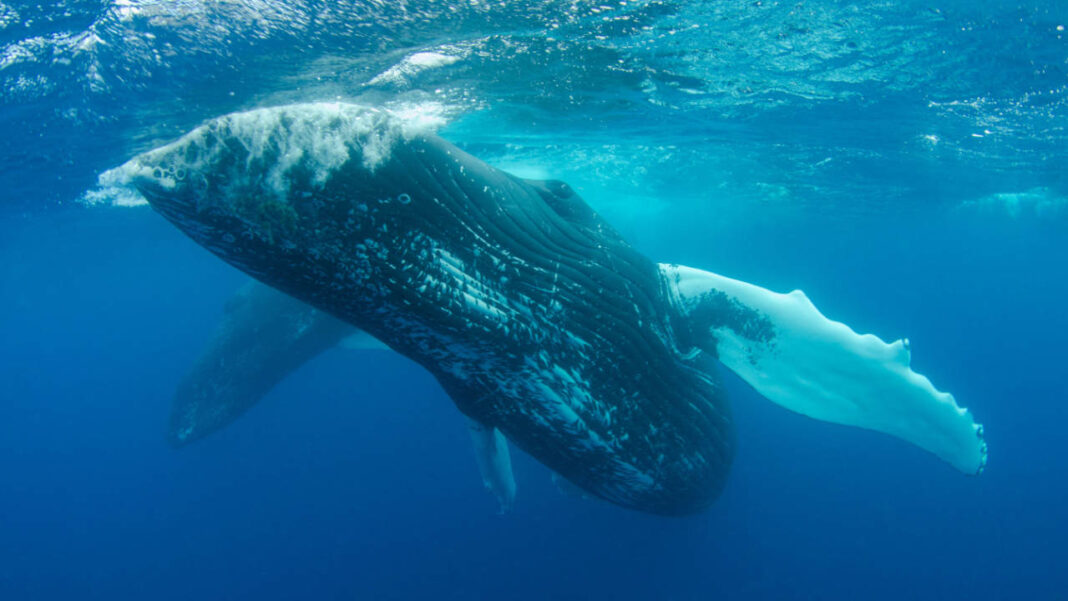

Whales and dolphins live in huge oceans, from warm tropical seas to icy Antarctic waters. These places may look clean and untouched. But even these marine animals are being exposed to PFAS, also called “forever chemicals.”
PFAS are man-made chemicals used in many everyday products. They help make items resistant to water, oil, heat, and stains. Researchers have detected PFAS in non-stick cookware, waterproof clothing, carpets, and various industrial products.
The problem is that PFAS do not break down easily. Once released into the environment, they can remain there for many years. They enter rivers and oceans through factory waste, polluted runoff, wastewater, and firefighting foam.
After reaching the sea, these chemicals move through the food chain. Tiny organisms absorb them from the water. Fish eat those organisms. Bigger predators then eat the fish. At every stage, PFAS levels increase. Because whales and dolphins are top predators, they can store large amounts of these chemicals in their bodies. Even species living far away from cities are affected.
Recent research shows that PFAS levels in cetaceans, which are the group that includes whales, dolphins, and porpoises, have increased globally since 2000. Recent research indicates that PFAS levels in cetaceans, which include whales, dolphins, and porpoises, have increased worldwide since 2000. The Pacific Ocean showed some of the highest contamination levels, especially in humpback dolphins. Scientists are worried because PFAS may harm health. Studies in humans and animals show links to weaker immune systems, hormone changes, and reproductive problems. It can also affect development.
It is challenging to study these effects in whales and dolphins. They live long and travel far. They also face other threats like climate change, noise pollution, and plastic waste. Still, some studies found PFAS may affect dolphin immune systems. These animals are important indicators of ocean health. If harmful chemicals are building up in them, it signals a wider environmental problem.
How are whales tested for forever chemicals?
Testing PFAS in humans is usually done using blood samples. That method is not straightforward with whales and dolphins. Collecting blood from large marine mammals in the wild is extremely difficult. Because of these challenges, scientists often study tissue from stranded or dead animals.
The liver and kidneys are especially useful because PFAS often build up in these organs. Researchers send these samples to specialised laboratories where advanced equipment measures tiny chemical concentrations. Scientists have been using this method for many years. Each study has added more information about PFAS contamination in different species and locations.
Instead of looking at a single region, researchers recently examined the global picture. They gathered PFAS data from cetaceans around the world. Most of the research focused on liver samples because they were available in the largest numbers. This made comparisons between species and regions easier and more reliable.
What were the findings?
A study found significant differences in PFAS contamination by species, place, age and sex. Dolphins and porpoises near the coast had the highest levels because of pollution from cities and industries. Pacific whales and dolphins were more contaminated too. Female whales and dolphins can pass PFAS to calves during pregnancy and breastfeeding.
Female whales transfer some PFAS chemicals to their babies, so males often have more PFAS in their bodies. The study also shows big research gaps. Data from places like India, Indonesia and Africa: Scientists still lack a complete understanding of the global impact of PFAS pollution on marine mammals due to limited data from regions such as India, Indonesia, and Africa. As a result, scientists do not fully understand the global impact of PFAS pollution on marine mammals.
What steps should be taken?
Many questions are still there, but PFAS in whales and dolphins is worrying. More monitoring is needed to understand the long-term effects. Stronger rules are also needed to stop PFAS from going into the environment. Past success shows global action can work.
Chemicals that damage the ozone layer are a significant concern. The ozone layer slowly began recovering after the restriction of chemicals that damaged it. This success offers hope for PFAS as well. The European Union banned certain PFAS chemicals years ago. Studies in the Mediterranean suggest levels of some older PFAS compounds have since declined. That is encouraging, but it is not enough. Overall PFAS contamination in whales and dolphins continues to rise worldwide.
Stronger policies and better chemical controls We need stronger policies and better chemical controls. Forever chemicals are now one of the most significant pollution challenges facing the world. Learning how they affect whales and dolphins can help protect both marine life and ocean ecosystems. What enters the ocean does not simply vanish. PFAS remain for years, continuing to spread through marine food webs.