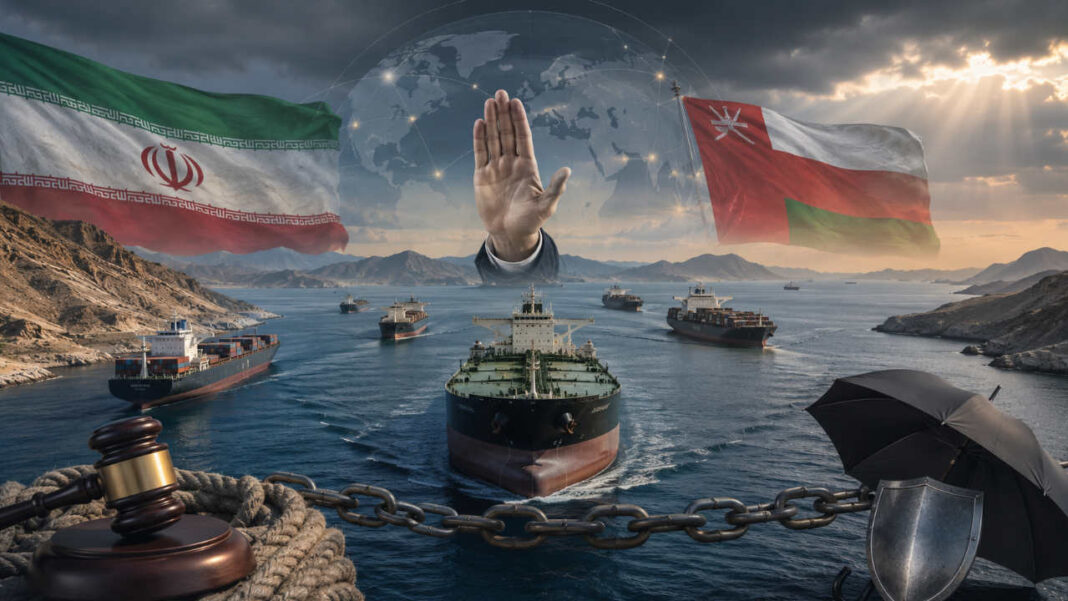

A serious opposition has risen against the agreement that was proposed to restore commercial shipping through the Strait of Hormuz. The serious opposition has been seen to come mainly from the international shipping industry, with warnings that state the arrangement could end up creating major difficulties in the legal, financial, and insurance sectors.
The proposal, which would be discussed between Oman and Iran, would offer Tehran a significant role when it comes to the controlling of vessels that enter the Persian Gulf through the strategic waterway. Fees have been asked by Iran between 5% and 7% of the cargo’s value that is transported through the strait, while Oman has charged a lower price. However, we see an opposition coming to these notions by the United States, as they prefer no tolls whatsoever to be charged.
Shipping companies have stated that the proposed payments could end up putting them in a position of conflict with existing U.S. sanctions. The Persian Gulf Strait Authority, which was established in Iran, is under U.S. sanctions, which means that companies that make payments to the body could face penalties or the freezing of assets. Insurance is another major concern, due to the new clauses that were introduced by the Lloyd’s Market Association, as it could terminate coverage for vessels that pay the proposed fees.
The importance of maintaining a passage that is free and non-discriminatory through the waterway has been highlighted by the international maritime organizations. The European Union has previously expressed criticism regarding measures that restrict freedom of navigation. They have also classified the identification of Iranian actions, which involves vessel screening and tolls, as a major concern.
The Strait of Hormuz is one of the world’s most important energy routes, as it connects the Persian Gulf with the Gulf of Oman. Around one-fifth of global petroleum supplies pass through the waterway, making prolonged disruption a major concern for energy markets and international trade.
Reports have stated that Iran and Oman made progress on identifying a route through the strait, but important disagreements are remaining over who controls shipping, whether fees will be imposed, and how vessels will be protected. U.S. officials have also rejected any arrangement that would leave Iran in control of the waterway.
With these issues unresolved, shipping industry representatives have said that the proposed arrangement is currently impractical, as it raises uncertainty over when normal commercial traffic can safely resume.