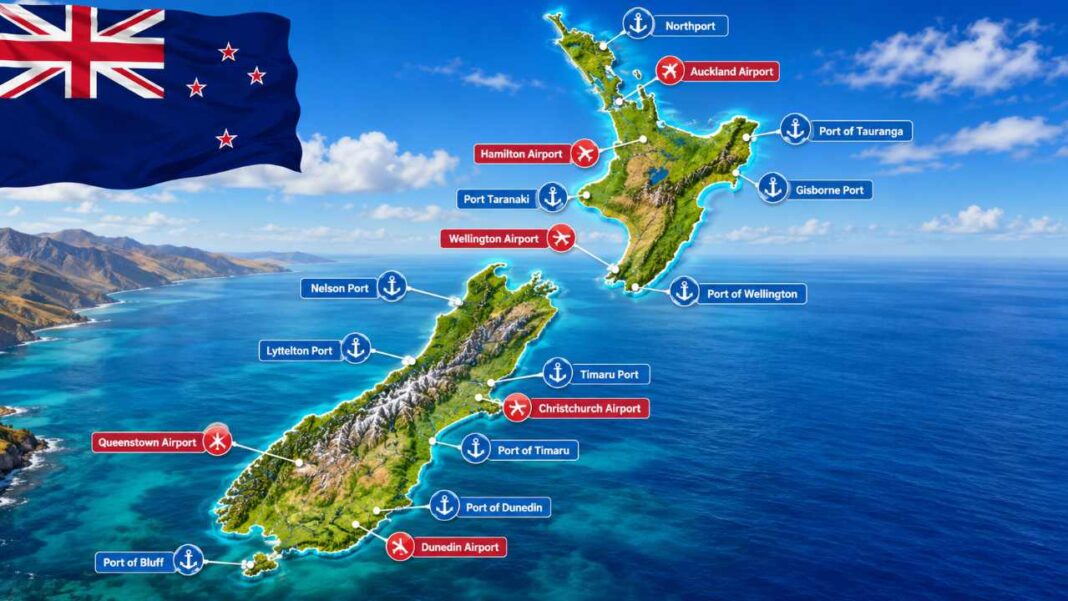

August 2026 has brought a more challenging operating environment for New Zealand (NZ)’s logistics sector. This is with international shipping disruption and severe weather, besides domestic capacity constraints combining to put pressure on freight networks. According to the latest GDF NZ Logistics Market Update, manufacturers and importers are facing tighter vessel capacity, higher ocean rates, and longer lead times as disruptions across Asian ports continue to influence New Zealand supply chains.
Ocean freight remained the sector’s biggest concern during August. Consecutive typhoons disrupted vessel loading and terminal operations across major Chinese gateways, including Shanghai, Ningbo, Qingdao, Yantian, Shekou, and Guangzhou. The resulting backlog has tightened space for New Zealand-bound cargo, with bookings reportedly being made six to eight weeks ahead. Spot rates have also climbed sharply. This increased the cost pressure facing importers already managing longer transit schedules as well as uncertain delivery windows.
Another layer of uncertainty has been added to global maritime congestion. Nearly 11% of the global containership fleet was reported to be sitting at anchorages. They were particularly around major Asian gateways. delayed vessels were averaging more than 5 days behind schedule. Geopolitical risks have also continued to influence routing decisions. This is with Red Sea disruption encouraging vessels to travel around the Cape of Good Hope. These longer voyages increase fuel consumption, transit times besides exposure to additional surcharges for NZ businesses.
NZ’s refrigerated export sector is particularly sensitive to these developments because equipment availability can directly affect the movement of food as well as other temperature-controlled products. The August update highlighted continuing pressure on reefer-container availability, while exporters experience the additional challenge of securing reliable vessel schedules. For businesses dependent on time-sensitive international markets. This is besides the combination of equipment shortages and vessel delays; besides elevated freight costs, advance planning is increasingly important.
Air freight has also experienced similar pressures. Reduced winter capacity, congestion at major Asian and Gulf hubs, and increasing demand for technology-related cargo have restricted available space. High-value shipments connected with artificial intelligence infrastructure and semiconductor supply chains have competed for capacity with freight diverted from ocean services. Perishable goods and pharmaceuticals are consequently facing higher transportation costs, while urgent “must-fly” services remain available but generally command significant premiums.
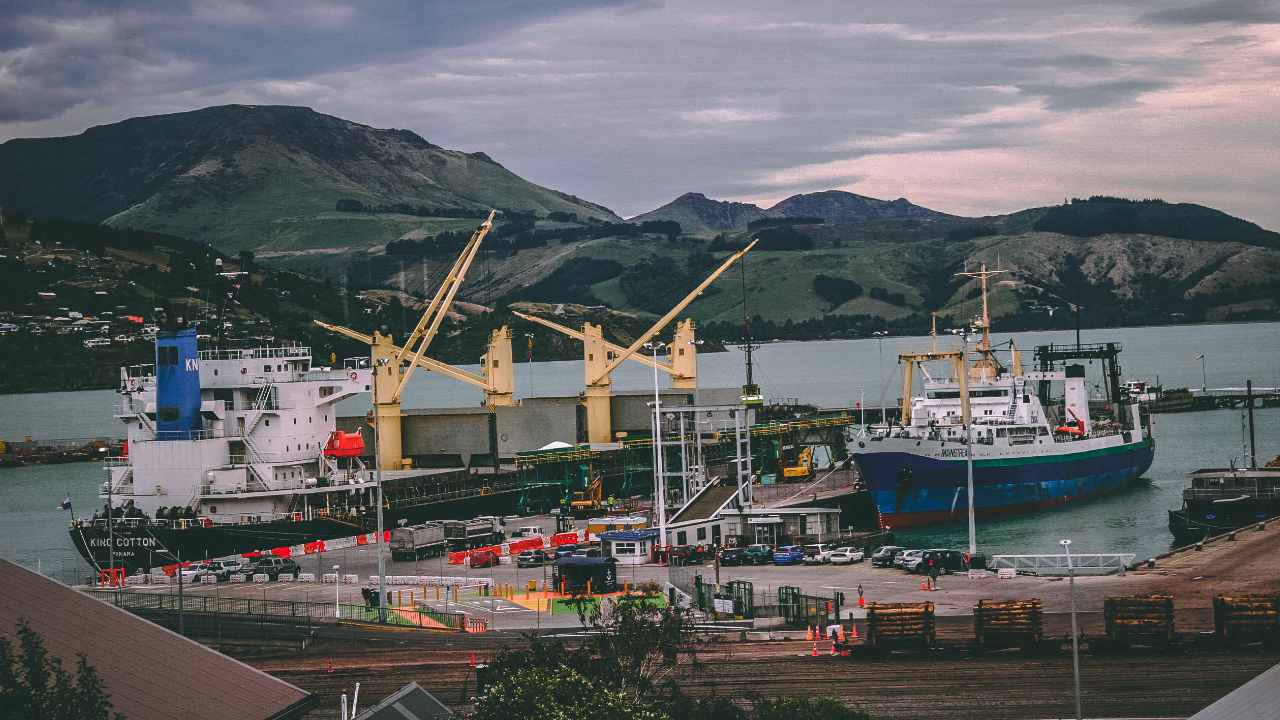
Domestic freight presents a separate challenge. The reported withdrawal of Swire Shipping from New Zealand’s domestic market has reduced dedicated sea-freight options between the North and South Islands. With fewer maritime alternatives, additional pressure could fall on the Cook Strait ferry system as well as road and rail operators. This development highlights the importance of maintaining multiple transport options in a geographically dispersed economy where disruptions to one corridor can quickly affect nationwide supply-chain performance.
Port performance nevertheless provides some positive signals. Port of Auckland’s August operations update reported average on-time vessel arrivals of 74% over the preceding four weeks, while 68% of vessels arriving within their scheduled window subsequently departed on time. The port also reported that terminal operations were tracking steadily. These figures indicate that, despite international disruption, New Zealand’s major gateways continue working to maintain cargo flows and improve schedule reliability.
The broader performance of the Port of Auckland has also been encouraging. Its financial-year results showed container throughput rising 5.5% to 932,209 TEUs, while rail movements increased 64.4% to 172,410 TEUs. Roll-on-roll-off tonnage climbed 27.2%. The results demonstrate the growing importance of integrated road, rail, and maritime connections as New Zealand seeks greater efficiency across its freight network. Increased rail utilization is particularly significant for reducing dependence on road-based distribution.
The Port of Tauranga has likewise demonstrated resilience. The country’s largest port reported a record underlying net profit of NZD 155 (USD 91.45) million for the year ended June ’26. This is despite total trade volumes declining 3% to 24.6 million tonnes. Its hub strategy connects maritime services with inland freight centers besides regional ports. It illustrates how logistics infrastructure is increasingly being designed around network flexibility rather than reliance on a single gateway. Port of Tauranga
Looking ahead, August’s developments suggest that New Zealand businesses should continue prioritising resilience, early booking, and diversified transport options. International freight costs may fluctuate, but congestion, geopolitical uncertainty, and limited domestic redundancy remain structural risks. Recent analysis from HSCM Solutions similarly notes that easing costs does not necessarily mean reduced supply chain risk. For Kiwi manufacturers and importers, the immediate priority is therefore not simply cheaper freight but dependable access to capacity, infrastructure, and alternative routes.