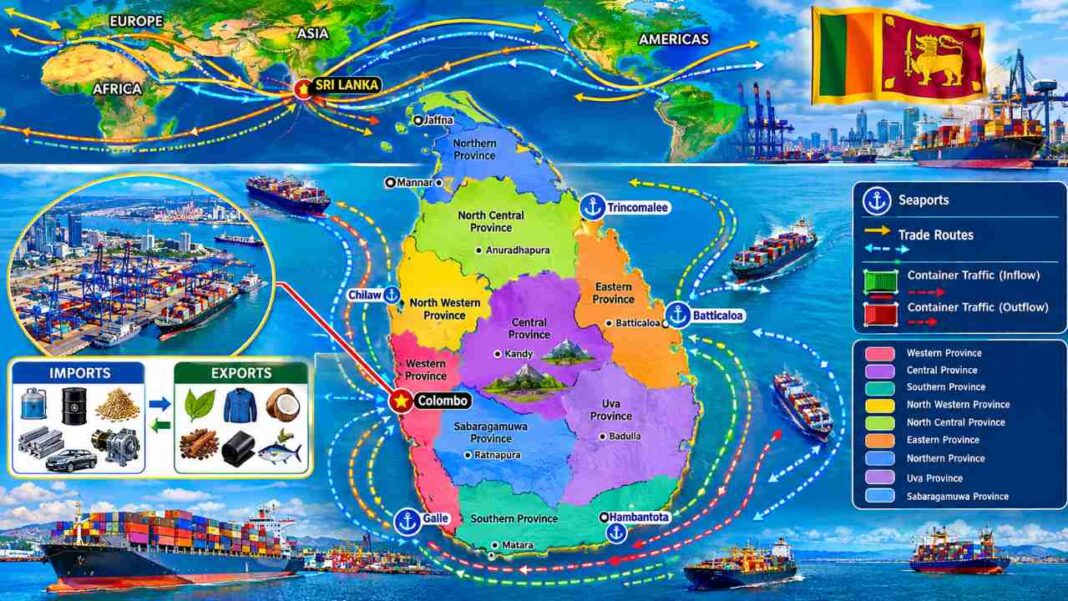

Colombo’s position as a leading transshipment hub in the Indian Ocean is becoming increasingly visible in the latest port figures, but the rapid rise in container traffic is also placing renewed pressure on terminals already dealing with congestion and the prospect of weather-related disruption.
According to the Daily Mirror, transshipment cargo handled at the Port of Colombo reached 638,843 TEUs in August, representing a 7.8% increase from the same month last year, according to data from the Sri Lanka Ports Authority (SLPA). Transshipment consequently accounted for 82.3% of the port’s total container throughput, compared with 79% a year earlier.
Overall container handling also expanded, although at a slower pace. Colombo processed approximately 776,300 TEUs in August, a year-on-year increase of 4.7%. The figures underline how strongly transfer cargo is driving the port’s current growth, particularly as Colombo continues to serve shipping routes connecting South Asia with wider Asian, Middle Eastern, African and European markets.
The first 8 months of the year provide an even clearer indication of the trend. Colombo handled almost 5.995 million TEUs between the 8 months of January and August. That is an up of 10.3% compared with the corresponding period in 2025. Transshipment represented about 4.83 million TEUs. This is with the increase amounting to nearly 85% of the port’s overall gain during that period.
That momentum is significant for Sri Lanka because transshipment activity is closely connected to Colombo’s role as an intermediate hub for cargo moving between major international services and regional feeder networks. The port’s location close to major east-west maritime routes has helped it attract large container services whose cargo is subsequently transferred to destinations around the Indian subcontinent.
However, the higher volumes are arriving at a time when operational capacity remains under pressure.
Reports earlier this month indicated that congestion at Colombo had pushed vessel turnaround times at some deep-draft terminals to as much as 6 days. Cargo displaced from Gulf shipping routes was also being redirected through regional ports, adding another layer of demand to already busy facilities
Industry concerns have also centred on yard utilisation and berth availability. A report published by the Sunday Times earlier in September said yard utilisation at the port had risen to as much as 130%, while vessels were, in some cases, waiting several days before entering the harbour. The newspaper also reported that some terminal turnaround times were approaching 6 days.
The immediate concern is that unsettled weather could make the situation more difficult.
Strong winds, heavy swells and poor visibility may interfere with vessel movements and berthing operations. Even relatively short interruptions may have a cascading effect at a busy transshipment hub because container ships operate according to tightly coordinated schedules. A delayed arrival can affect berth planning, crane allocation, yard movements and subsequent feeder connections.
The effect can extend beyond vessels waiting outside the harbour. When containers remain longer in terminal yards, available storage space may tighten, potentially slowing the movement of newly discharged cargo. That creates additional pressure on terminal operators at a time when throughput is already elevated.
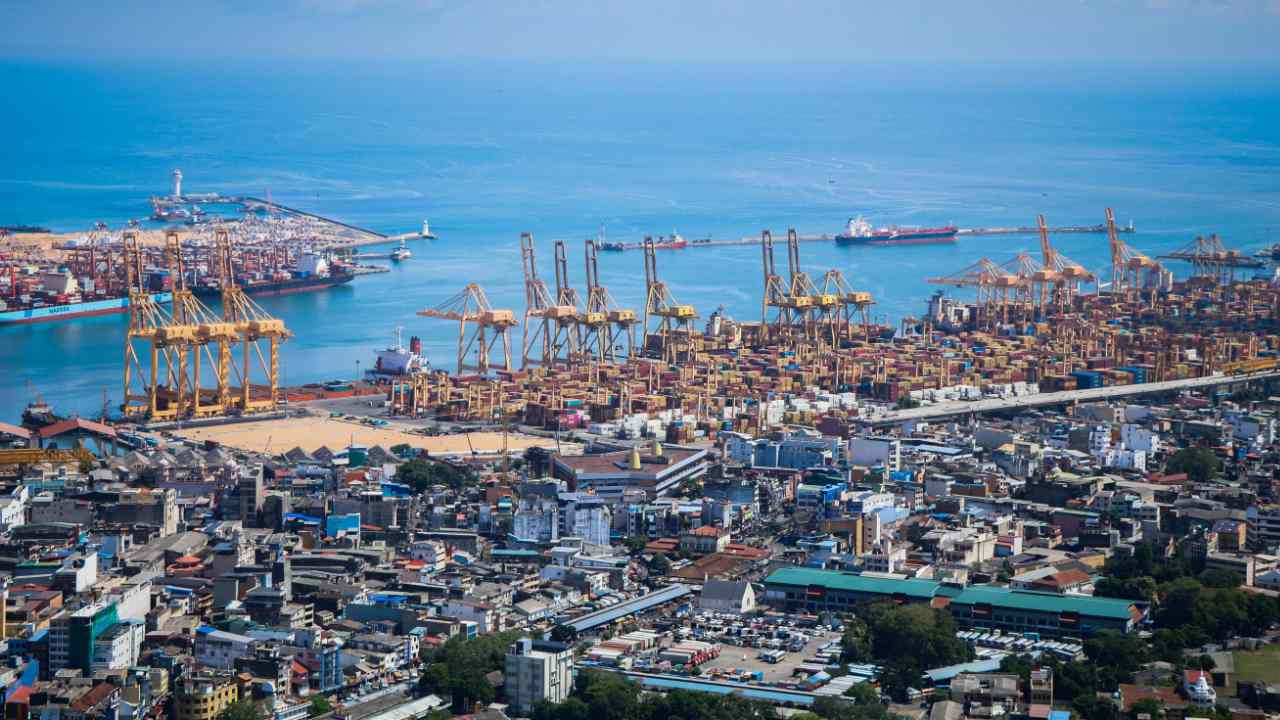
Recent port-congestion monitoring has nevertheless indicated that conditions have improved from the worst levels witnessed earlier in September. Portcast data for 13–19 September placed Colombo in its medium congestion category, with a median vessel waiting time of about 1.79 days. The platform identifies vessel bunching, weather disruptions, yard capacity constraints and terminal slowdowns among the factors that may contribute to congestion.
Terminal performance has also been uneven. Colombo West International Terminal handled 171,875 TEUs in August, an increase of 68.1% year-on-year, while CICT remained the largest terminal with 262,124 TEUs. SAGT handled 159,041 TEUs, while the combined performance of the SLPA-operated Jaya, Unity and East Container Terminals was lower than a year earlier.
The expansion of CWIT is therefore becoming particularly important as Colombo attempts to accommodate continuing growth. Additional terminal capacity may give shipping lines greater flexibility and help distribute container movements more evenly across the port.
The East Container Terminal is another important part of the longer-term capacity equation. Earlier industry reporting pointed to infrastructure limitations at ECT, with the Sunday Times reporting that full operationalisation may provide substantial additional handling capacity.
Colombo’s strong performance is not, however, solely a short-term phenomenon. Colombo port handled approximately 4.44 million TEUs during the first half of 2026. That amounts to an 11.9% increase from the same corresponding period a year back in 2025. Likewise, transshipment amounted to roughly 84.7% of total container traffic during that period.
The challenge now is in ensuring that surging volumes translate into sustainable growth, rather than into persistent delays. Reliability is as important as headline throughput for shipping liners. A port may attract additional cargo because of its geographical advantages. As such, prolonged waiting times may encourage carriers and cargo interests to reconsider routing arrangements.
For exporters and importers using Sri Lanka’s maritime gateway, congestion may also carry wider costs. This is through missed connections, additional storage requirements, and longer transit times, besides uncertainty over delivery schedules.
Colombo’s latest data therefore reflect 2 sides of the same story. Strong transshipment growth confirms the port’s continuing importance in regional shipping. This is while congestion risks demonstrate the operational pressure created when cargo volumes grow faster than available capacity.
Shipping lines, terminal operators, freight forwarders, and exporters will closely monitor the coming weeks, as weather conditions may temporarily reduce operating efficiency. The immediate priority will be keeping vessels and containers moving efficiently, while longer-term investment in berths, yards, equipment and supporting infrastructure may determine how effectively Colombo can absorb the next phase of its transshipment expansion.