
Joint investment is set to modernise the ageing Omoka wharf, improving essential supplies, transport links and economic opportunities for Tongareva
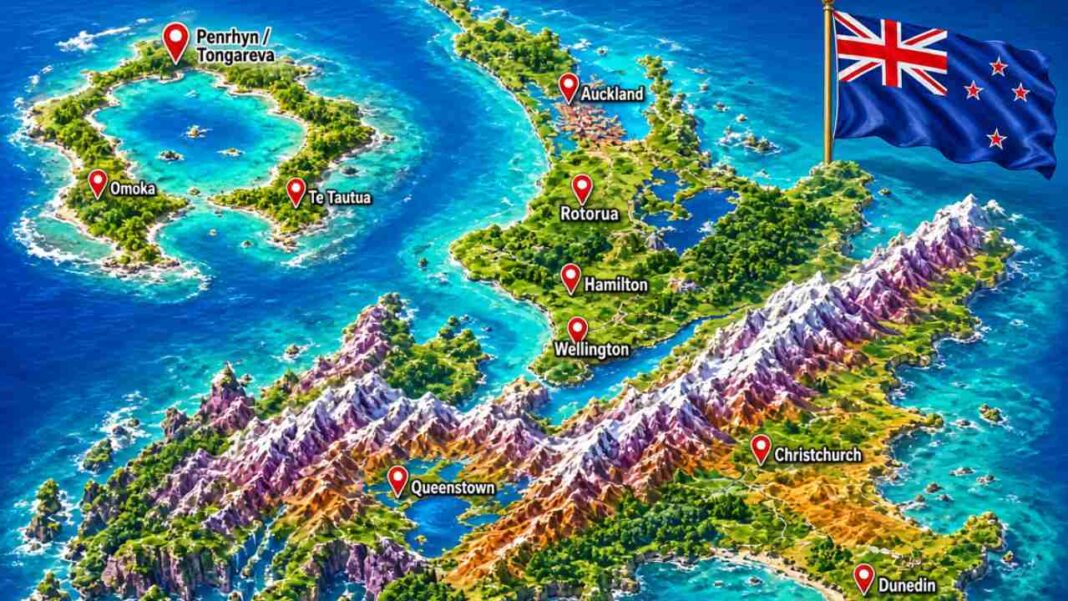
New Zealand (NZ) and the United States (U.S.) are joining the Cook Islands in a major effort to modernise an ageing port on Penrhyn, also known as Tongareva, in a project expected to improve the movement of essential supplies and strengthen connections for communities in the country’s northern islands.
The partnership was announced during the Pacific Islands Forum in Palau, with Washington intending to provide USD 50 million while NZ has committed NZ$17.5 (USD 9.975) million. NZ is expected to help implement the project in close cooperation with the Cook Islands and the U.S.
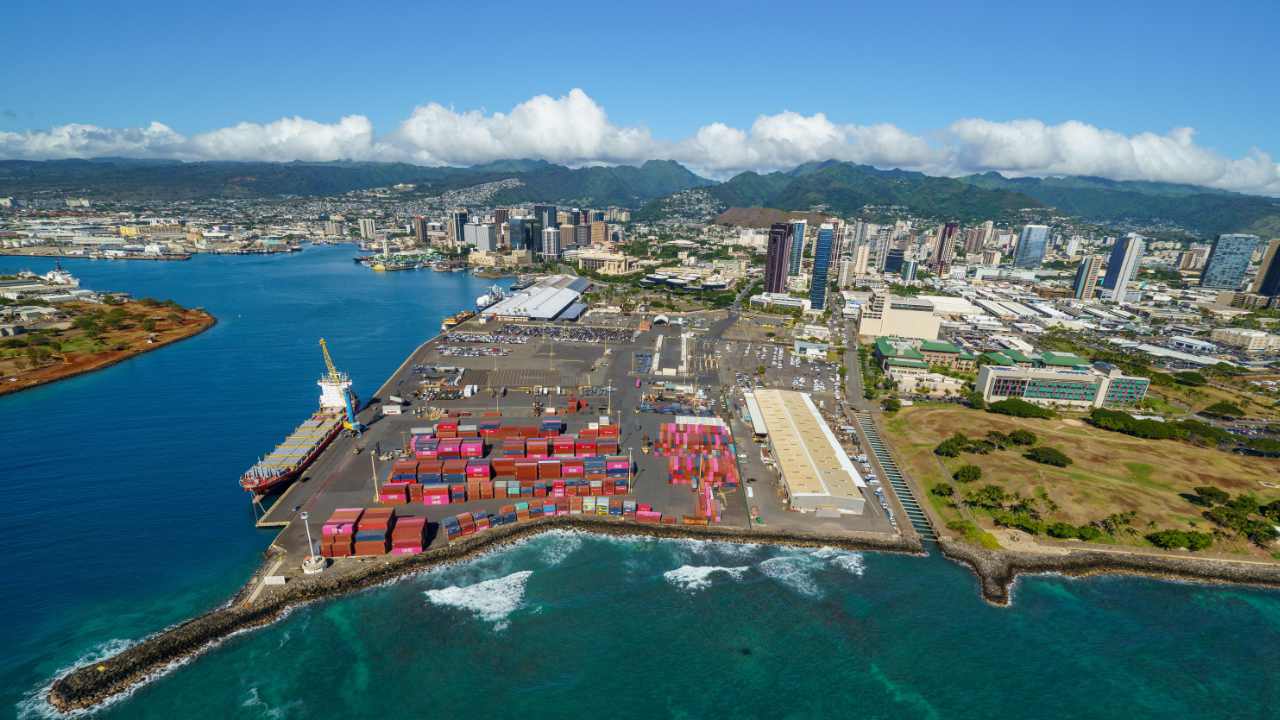
The proposed development centres on the port at Omoka, where infrastructure dating back more than 8 decades remains an important entry point for goods and services reaching Tongareva.
For residents of Penrhyn, the wharf has a significance that goes well beyond commercial shipping. Fuel, food, construction supplies, medicines and emergency assistance are among the items that depend on reliable maritime access. The Cook Islands government has described the port as a lifeline for the island and says upgrading it has been a long-standing priority identified by local communities.
The September announcement has now moved into a practical planning phase. On Tuesday, 22 September, Cook Islands Prime Minister Mark Brown travelled to Tongareva with representatives from the U.S. and NZ for discussions with local residents about the proposed Omoka Wharf project. The visit marked the beginning of feasibility and planning work intended to establish the eventual design and implementation arrangements.
The project also carries an unusual historical dimension. More than 80 years ago, during the Second World War, the U.S. constructed the original port and airfield on Penrhyn. The proposed investment therefore represents a return to infrastructure developed during an earlier period of strategic importance in the Pacific, although the stated objectives of the new project centre on civilian connectivity, safety and economic development.
For NZ, the project reflects its continuing infrastructure and development relationship with the Cook Islands. Wellington says its contribution will draw on NZ’s experience in delivering infrastructure projects elsewhere across the Pacific. The government has also stressed that implementation will be carried out in partnership with Cook Islands authorities rather than treating the project as simply an externally imposed infrastructure programme.
The Cook Islands government has similarly emphasised local participation. Prime Minister Brown has said Cook Islanders should be involved throughout the project, including design, procurement, construction and the longer-term operation of the upgraded facility. The feasibility process is expected to assess how the investment can meet the practical needs of Tongareva and the broader northern island group.
Improved maritime infrastructure may have implications beyond the arrival of basic supplies. A safer and more dependable port should make it easier for vessels to serve Penrhyn and may strengthen transport links between the northern Cook Islands and the rest of the country.
Economic activity is another potential beneficiary. The NZ government says upgraded port facilities are expected to expand transport and economic opportunities in the northern Cook Islands, while the Cook Islands government has linked the project to broader efforts to improve connectivity between its outer islands and the international economy.
The investment is also being announced at a time when infrastructure has become an increasingly important element of Pacific diplomacy. The U.S. has been expanding its engagement with Pacific Island states, while NZ continues to regard the region as a central component of its foreign policy and development relationships.
Reuters reported that the Penrhyn announcement forms part of wider Western efforts to strengthen relationships across a Pacific region where China’s economic and diplomatic presence has expanded. China and the Cook Islands signed a strategic partnership in 2025, while Wellington and Rarotonga have subsequently worked to reinforce their relationship.
At the same time, the Cook Islands government has presented the project primarily in terms of its domestic requirements. Prime Minister Brown said the investment may address a long-recognised need for safe and reliable access to Tongareva and support the country’s wider objective of improving connections among its outer islands.
Wider questions also arise regarding the potential use of new infrastructure in strategically located Pacific islands. Analysts have noted that ports, airports and wharves may acquire strategic significance because of their potential value for logistics and security as well as civilian transportation. Those considerations have generated discussion surrounding the Penrhyn project, although the governments involved have publicly focused on port safety, services, connectivity and economic opportunities.
The project’s connection with possible seabed resources adds another dimension. Reuters reported that improved access may support economic activities, including fisheries and potential seabed mining, in the northern Cook Islands. The U.S. has also linked the initiative with a critical-minerals framework agreed with the Cook Islands earlier in 2026.
Environmental and resource-management questions are consequently likely to remain relevant as the project progresses. The Cook Islands has a substantial marine area and has simultaneously been pursuing international partnerships focused on ocean conservation. At the Pacific Islands Forum, the government announced additional cooperation relating to the protection of its marine environment.
For now, however, the immediate priority is establishing what Tongareva’s port requires. The feasibility and technical studies will need to determine the appropriate design, construction approach and long-term operating arrangements.
If completed as planned, the upgraded Omoka facility may become a significant piece of transport infrastructure for the northern Cook Islands, providing more dependable access for cargo, essential services and passenger movements.
The project therefore combines several strands of Pacific development: ageing infrastructure renewal, outer-island connectivity, economic opportunity and international partnership. For Tongareva’s residents, its most immediate significance is practical — making it safer and easier for the ships carrying necessities to reach the island.
For NZ and the U.S., meanwhile, the initiative provides another avenue for long-term engagement with the Cook Islands while placing infrastructure investment at the centre of their Pacific partnerships. The next stage will be the detailed feasibility and planning process, which will determine how the proposed funding is translated into a functioning port for future generations.