
Many people who live near the coast worry about “forever chemicals” in the sea spray they breathe during the summer. These chemicals are known as PFAS. New research from York University suggests this worry may be smaller than expected.
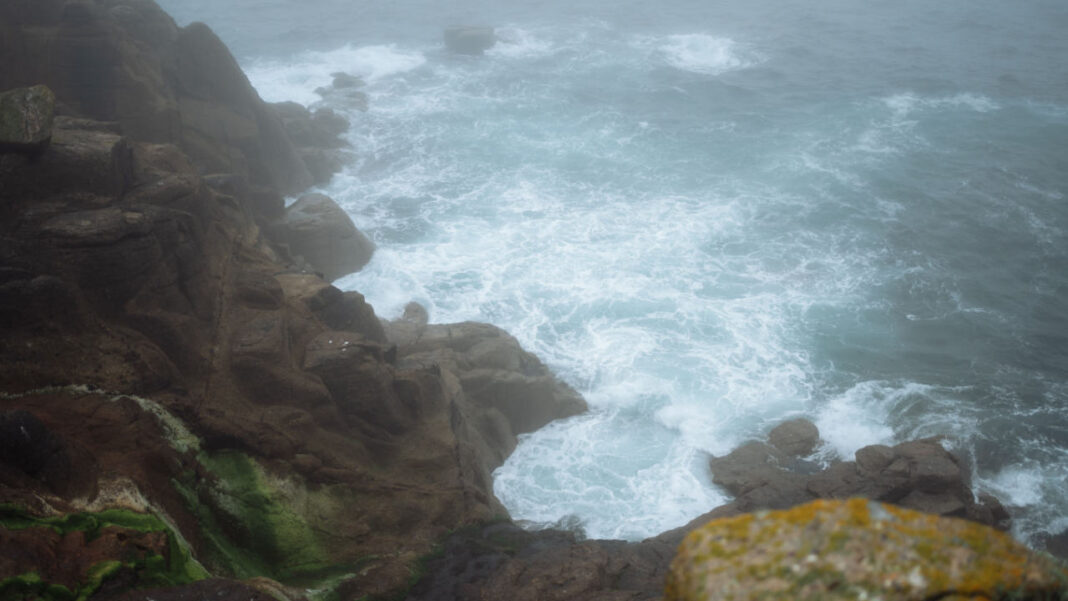
A team led by Professor Cora Young studied the coast of Newfoundland and Labrador. This region is windy. Waves crash hard along its shores. It seemed like the perfect place to find PFAS carried by sea spray. However, the findings revealed a contrasting narrative.
“We expected to see a lot of PFAS from sea spray,” said Young, who holds the Guy Warwick Rogers Chair in York’s Faculty of Science. “We were surprised. We didn’t find strong evidence that sea spray was adding PFAS to the area.”
Why This Study Matters
Earlier research on this topic relied mostly on computer models and lab experiments. Those studies suggested sea spray was a major direct source of PFAS pollution. This new study took a different approach. Researchers went into the field. They collected real samples from the ground.
PhD student Daniel Persaud led the fieldwork. He worked with Young and other scientists. The team expected their results to confirm earlier findings. Instead, they found something unexpected.
How the Research Worked
The scientists gathered two types of samples. The first came from rain and other wet weather events. The second came from dust and particles that settled from the air, even on dry days. This second type is called dry deposition.
They collected samples at several sites. Some were as far as 30 kilometres from the Atlantic coast. All the sites sat within forested watersheds in a region known as the Newfoundland and Labrador Boreal Ecosystem Latitudinal Transect. Researchers chose these spots because ocean winds strongly influence them.
“We expected a strong signal from sea spray because our sites were windy and close to the ocean,” Persaud said. “Instead, the PFAS we measured showed little connection to sodium. We use sodium as a marker for sea spray.”
What They Found Instead
PFAS did show up at every site. But the evidence pointed elsewhere. Scientists believe the chemicals came from the breakdown of other compounds high in the atmosphere. These compounds likely travelled long distances before landing in Newfoundland.
Most of what they found were perfluoroalkyl acids, or PFAAs. This group includes two smaller categories: perfluoroalkyl carboxylic acids and perfluoroalkanesulfonic acids. None of these appeared to come from local sources.
Instead, the researchers believe these chemicals travelled from industrial centres in Canada, the United States, and possibly even farther away. PFAS chemicals show up in firefighting foam, non-stick coatings, and other performance products. Wind can carry them thousands of kilometres, even as far as the Arctic. This raises concerns about how these chemicals build up in the environment over time.
A Wider Lesson About Dry Deposition
One of the study’s most significant lessons involves dry deposition. Many PFAS studies only measure wet deposition, like rain and snow. This research measured both types. The team found that dry deposition mattered more than expected, even in a place that gets a lot of rain.
“This helps us predict where forever chemicals will end up as they move around the world,” Persaud said. “Understanding both wet and dry deposition helps us, and it will help other researchers too.”
Young agreed that dry deposition deserves more attention, whether scientists are studying a rainy coastline, a dry desert, or the remote Arctic.
A Hopeful Result
Because Newfoundland has strong wind, powerful waves, and a long coastline, the researchers see it as a worst-case example. If sea spray isn’t causing major PFAS pollution there, it likely isn’t a major global source elsewhere either.
“This is good news,” Young said. “We were worried that PFAS could keep moving between the ocean and land forever. It looks like that isn’t as big a problem as we thought.”
The research team included scientists from Memorial University, the Canadian Forest Service, Natural Resources Canada, and Environment and Climate Change Canada. Their findings were published in the journal Environmental Science: Processes & Impacts, part of the Royal Society of Chemistry.