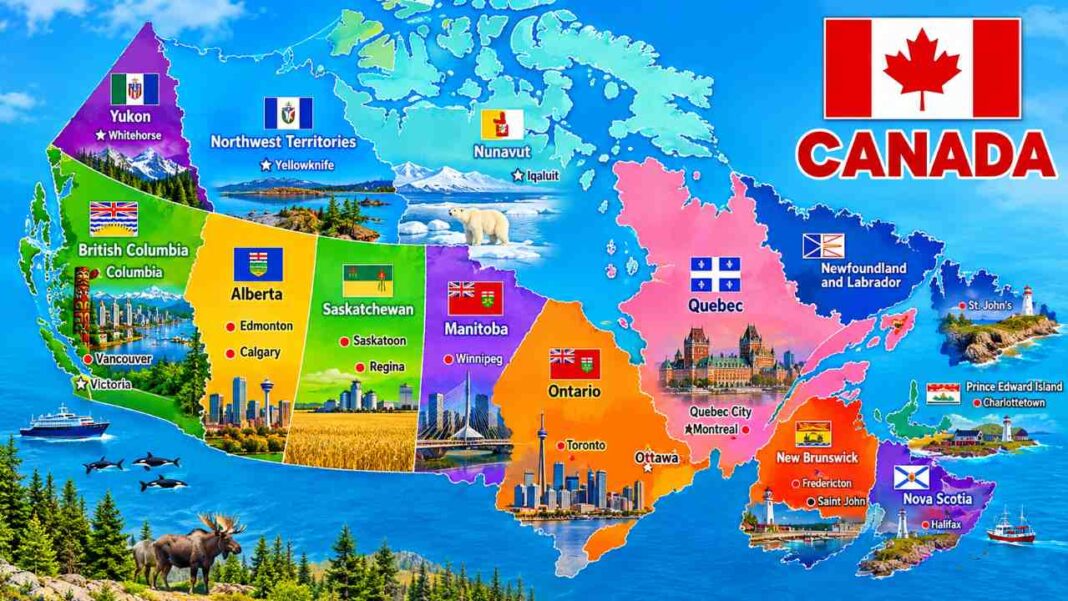
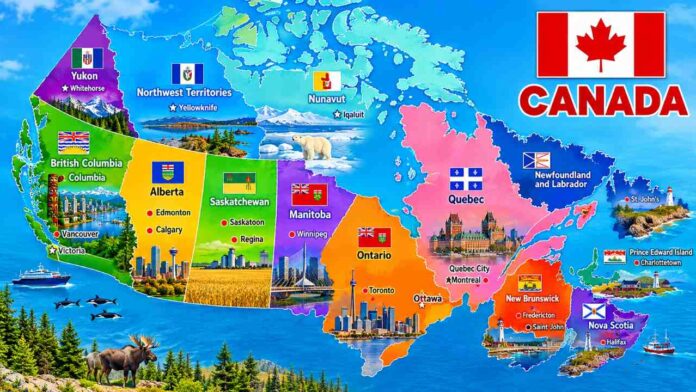

Alberta’s debate over separation from Canada has gained a significant new economic dimension after an independent University of Calgary analysis estimated that establishing an independent Alberta could require between CAD 50 (USD 35.5) billion and CAD 170 (USD 120.7) billion during the first five years of the transition.
The study, commissioned by the Alberta government and prepared by the University of Calgary’s School of Public Policy, examines a range of possible outcomes rather than presenting a single forecast. Researchers modelled 2 broad situations: a relatively cooperative and orderly separation, and a more difficult process involving prolonged negotiations, disrupted trade and greater economic uncertainty.
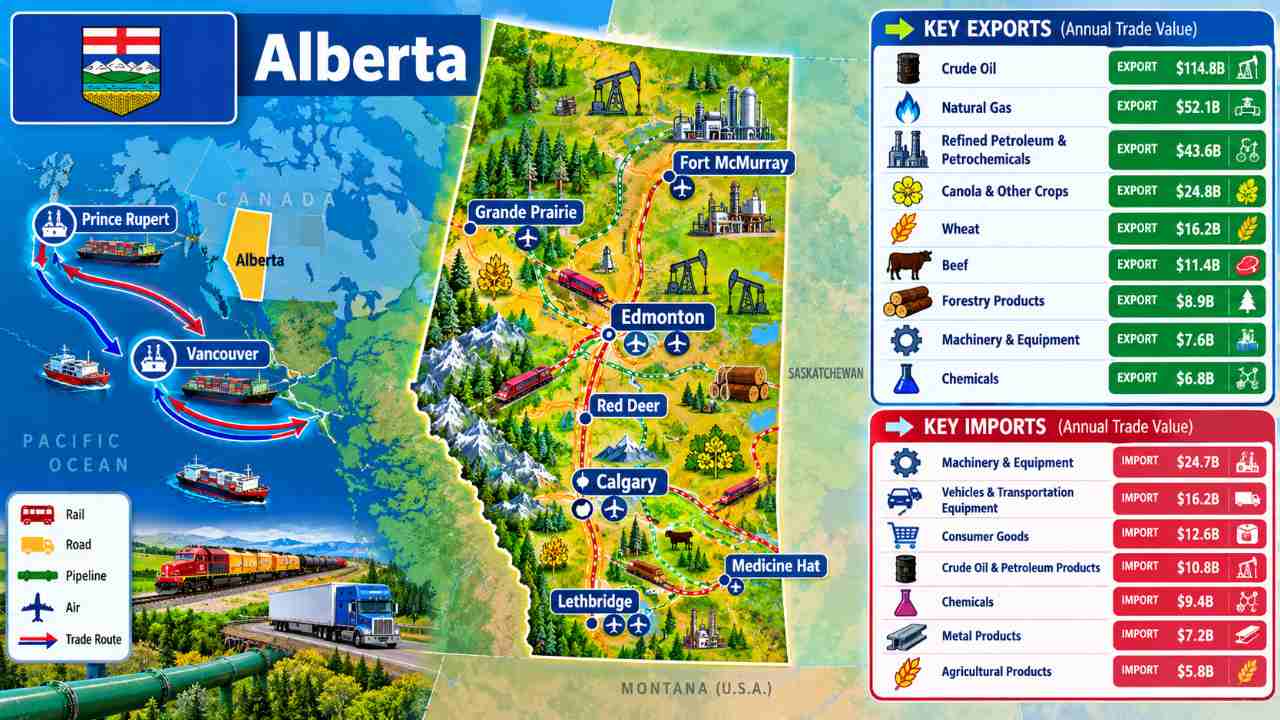
The projected costs may extend well beyond creating new government departments. Alberta may have to establish or assume responsibility for institutions and services currently administered federally while also negotiating the division of Canadian assets and liabilities. The analysis considers expenses associated with infrastructure, staffing, taxation, monetary arrangements, international trade and Alberta’s share of federal debt.
Under the smoother scenario, the report estimates that Alberta’s gross domestic product may be about 2.2% below the level projected without separation after five years. Employment may also be lower, while taxpayers may face higher costs during the transition. Over a much longer period, however, the scenario allows for the possibility of economic gains if trade relationships remain open and the province successfully develops its new institutions.
The more difficult scenario produces substantially larger economic disruptions. The study estimates a 10.1% decline in GDP within five years, alongside a possible 10% reduction in employment. Government debt may rise considerably as Alberta assumes additional obligations and finances the costs of establishing a sovereign state.
The study also stresses that the eventual outcome may depend heavily on negotiations with Canada and other countries, international energy markets, interest rates and policy decisions that cannot be known in advance. The University of Calgary says the project was designed to examine alternative possibilities rather than recommend whether Albertans should pursue independence.
The independent advisory panel reviewing the work similarly highlighted substantial short-term costs and uncertainty over longer-term results. The panel noted that Alberta’s departure may also have consequences for the rest of Canada, including effects on federal finances, trade and economic activity.
The findings arrive ahead of Alberta’s Monday, 19 October, vote, when residents are scheduled to decide whether the province should remain within Canada or proceed toward a further binding referendum concerning separation. The current vote therefore concerns the next stage of the process rather than immediately establishing an independent Alberta.
For Alberta businesses, workers and investors, the report places particular emphasis on uncertainty surrounding trade access, public finances and the institutional arrangements that may accompany any constitutional transition. The CAD 170 (USD 120.7) billion figure is consequently a scenario-based estimate of potential transition costs, rather than a guaranteed bill.