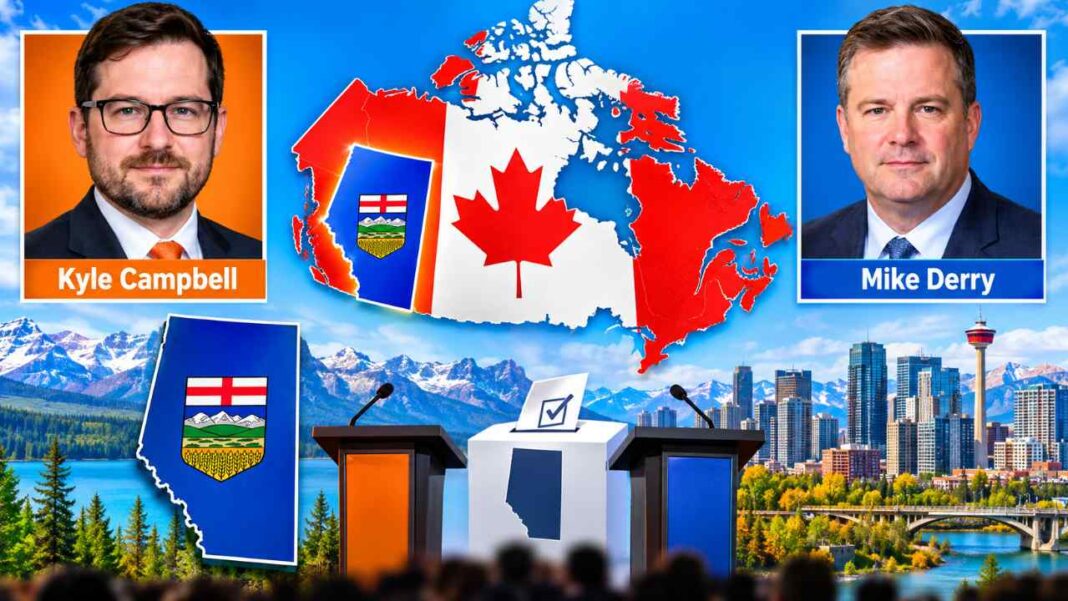

The United Conservative Party (UCP)’s unexpected defeat in the Calgary-Shaw by-election has triggered competing explanations about what drove voters away from the governing party, with Premier Danielle Smith’s office emphasizing a divided conservative vote while opponents and some conservative figures are pointing to the province’s forthcoming referendum.
Kyle Campbell of the Alberta NDP captured the traditionally conservative Calgary riding on Monday, 14 September, defeating UCP candidate Mike Derry by 7,461 votes to 6,879. The result represents only the second occasion in the riding’s history that the NDP has won the seat, following its breakthrough during the 2015 provincial election.
The premier’s office attributed the outcome primarily to 2 factors: lower turnout and the presence of another candidate competing for conservative-leaning voters. Peter Guthrie, a former member of Smith’s cabinet, entered a candidate under the Progressive Tory banner. That candidate, Kyle Joseph, received 978 votes — a total that became central to the UCP’s argument that conservative support had been fragmented.
Guthrie rejected that interpretation, arguing that the UCP could not simply assume those ballots would have transferred to its candidate. Other political voices have instead connected the result with growing attention surrounding Alberta’s upcoming referendum and the broader debate over the province’s relationship with Ottawa. Former premier Jason Kenney has also linked the by-election result to the separation issue.
The referendum is scheduled for October 19 and comes after an independence petition gathered substantially more signatures than the threshold required to trigger a vote. The province has also placed other questions concerning immigration, voting eligibility and provincial-federal relations on the referendum agenda.
For the UCP, the Calgary-Shaw result therefore presents several possible explanations rather than a single definitive cause. Vote totals demonstrate that the NDP narrowly surpassed the UCP, while a third conservative-aligned candidate attracted nearly 1,000 ballots. Determining how individual voters would have behaved in that candidate’s absence, however, cannot be established from the by-election figures alone.
The result has nevertheless intensified scrutiny of Alberta’s political landscape ahead of the October referendum, placing renewed attention on voter turnout, conservative cohesion and the competing political issues shaping public debate.