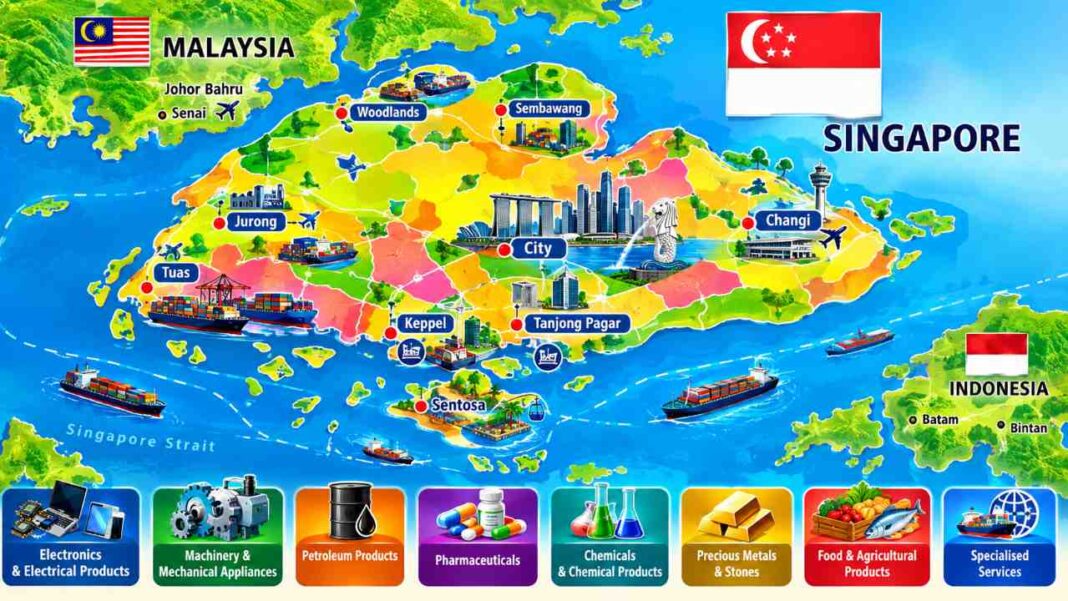

Singapore’s export sector delivered an unexpectedly powerful performance in August, with non-oil domestic exports (NODX) jumping 46.2% from a year earlier as the worldwide expansion of artificial intelligence (AI) continued to stimulate demand for electronics and technology-related products.
The latest figures from Enterprise Singapore underline the growing influence of the AI investment cycle on the city-state’s trade-dependent economy. August’s increase followed a 24.1% year-on-year expansion in July, representing the fifth consecutive month in which NODX growth exceeded 20%.
The scale of the August advance was particularly striking because it exceeded market expectations by a wide margin. A Reuters poll had put the median forecast at 35.3%, while other market surveys had also anticipated a considerably smaller increase. Enterprise Singapore’s monthly trade report is available through its official external trade release.
Electronics Provide the Main Lift
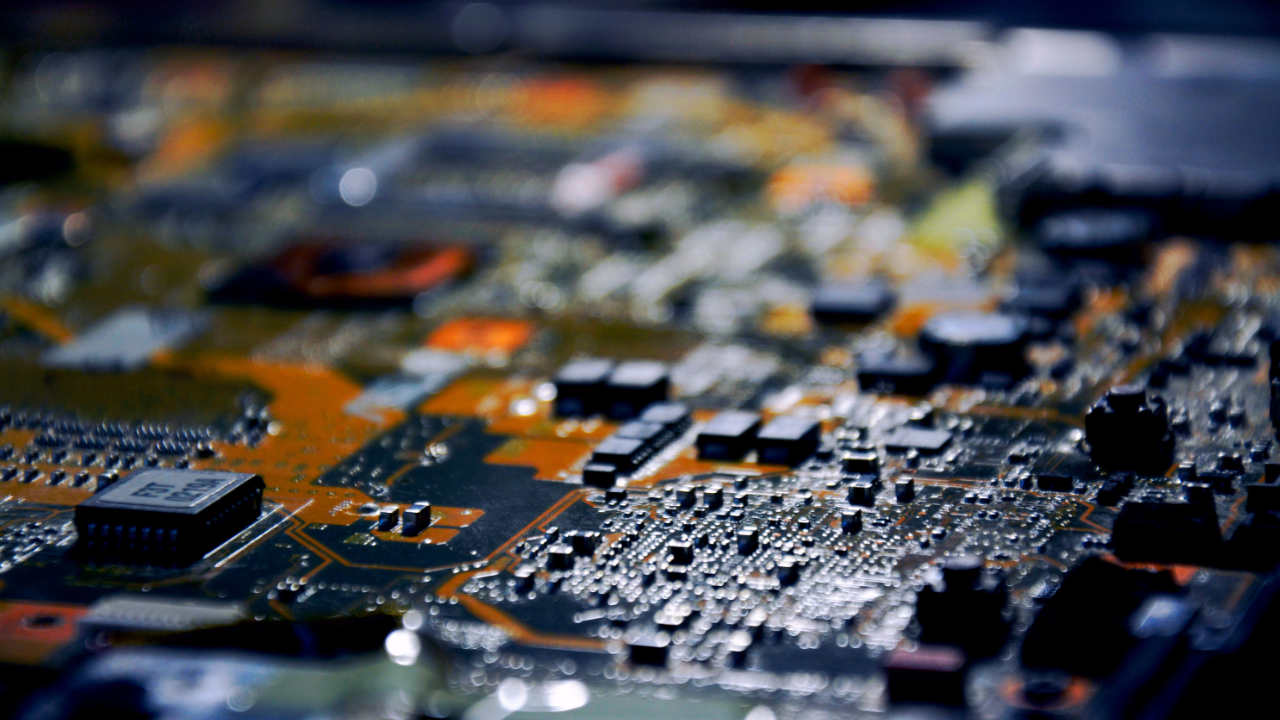
The technology sector was at the center of the export surge. Singapore’s electronics NODX expanded 131.8% compared with August 2025, accelerating from the 112% increase recorded in July.
Integrated circuits, disk media products, and personal computers were among the major contributors. Disk media exports climbed 290.2%, while shipments of PCs increased 237.9%. Integrated-circuit exports rose 90.9%. The figures point to continued demand for components and equipment associated with the rapidly expanding AI computing ecosystem.
The surge in electronics shipments remains a vital economic driver for Singapore, underscoring its pivotal role in Asian manufacturing and global supply chains. For decades, high-value activities—including semiconductor production, precision engineering, and data-storage technologies—have formed the cornerstone of the nation’s external trade.
This momentum has been further accelerated by the ongoing artificial intelligence (AI) investment cycle. Tech conglomerates and data centre operators worldwide continue to demand massive quantities of advanced computing equipment and specialized components.
Broader Trade Growth
Singapore’s economic resilience in August extended well beyond the electronics sector. Non-oil domestic exports (NODX) for non-electronic goods surged by 12%, staging a strong recovery from a 2.4% decline in July.
Several key sectors fueled this rebound. Shipments of specialized machinery skyrocketed by 57.7%, while non-monetary gold exports increased by 67%. Additionally, medical apparatus exports climbed 22.1%.
The broader trade indicators paint a similarly robust picture. Singapore’s total merchandise trade expanded by 44.5% year-on-year in August, up from the 38.3% growth recorded in July, with both imports and exports posting substantial gains. Furthermore, non-oil re-exports grew by 53.3%, building on the 51.3% expansion from the previous month. According to Enterprise Singapore, this sustained re-export growth was primarily driven by the booming electronics market.
A widespread surge in global demand has significantly broadened Singapore’s trade expansion, with shipments increasing to nine of the nation’s ten largest markets during August.
The United States recorded a particularly sharp 91% increase in Singapore’s non-oil domestic exports (NODX). Similarly, exports to South Korea rose by 87.1%, while shipments to China increased by 70.3%. Because these major markets are closely connected to the wider technology and electronics supply chain, they have become vital destinations as global demand for artificial intelligence (AI) hardware continues to expand.
However, Singapore’s export performance was somewhat less uniform across Europe. NODX to the European Union declined by 1.7% in August, though this represented a considerable improvement from the 36% year-on-year contraction recorded in July.
This differing performance among major destinations illustrates how uneven the current global trade environment remains. Technology-heavy markets have benefited strongly from massive AI-related infrastructure investments, while other sectors of international demand have yet to experience the same acceleration.
Forecast Upgraded
The sheer strength of the August trade data has prompted Enterprise Singapore to aggressively raise its outlook for the year.
The government agency upgraded its 2026 forecast for non-oil domestic export growth to between 14% and 16%, a massive leap from its earlier projection of just 3% to 5%. According to reports by Reuters, this new forecast directly reflects the stronger-than-expected performance of the export sector alongside sustained momentum within global electronics.
Singapore’s Non-Oil Domestic Exports (NODX) surged by 22.4% year-on-year during the first eight months of 2026, according to official data released by Enterprise Singapore.This robust growth provides Singaporean manufacturers and trading firms with a substantial boost heading into the final months of the year. Furthermore, it reinforces the nation’s critical role as a regional hub for advanced manufacturing, logistics, and technology supply chains.However, economists caution that despite these impressive headline figures, the accelerated pace seen in August may not be sustainable indefinitely due to base effects.A primary factor behind the sharp increase is the relatively weak baseline from August 2025. Enterprise Singapore noted that NODX had dropped to S$13.3 billion (USD 10.374 billion) during that month, marking the lowest monthly level recorded in 2025. Consequently, a significant portion of this year’s exceptional percentage growth simply reflects that unusually soft starting point.Looking ahead, analysts are closely monitoring whether the current artificial intelligence (AI) hardware investment cycle can maintain its momentum. Singapore’s future export performance will heavily depend on global demand for memory products, advanced semiconductor packaging, and AI-server equipment.
Singapore’s exporters are currently navigating a dual economic reality: a powerful, technology-led upswing in the present, balanced by emerging questions over how long this exceptionally rapid growth in electronics can persist.
Recent trade data demonstrates how rapidly advancements in artificial intelligence (AI) can influence a highly integrated, trade-dependent economy. Singapore does not need to be the final destination for AI end-products to benefit from the global technology boom. Thanks to its established strengths in semiconductor fabrication, electronics production, precision engineering, logistics, and regional distribution, companies based in the country are actively participating at multiple stages of the international supply chain.
For now, the economic indicators point to an export sector capitalizing heavily on this strategic positioning. With Non-Oil Domestic Exports (NODX) surging by 46.2% in August, electronics exports more than doubling, and shipments to major global markets accelerating, Singapore has entered the final stretch of 2026 with considerable trade momentum.
The pivotal question for businesses and policymakers moving forward is whether this extraordinary, AI-driven demand represents a permanent structural shift in the global economy or merely an exceptionally strong phase of the traditional technology investment cycle. Export data captured over the coming months will likely provide a clearer picture of what lies ahead.