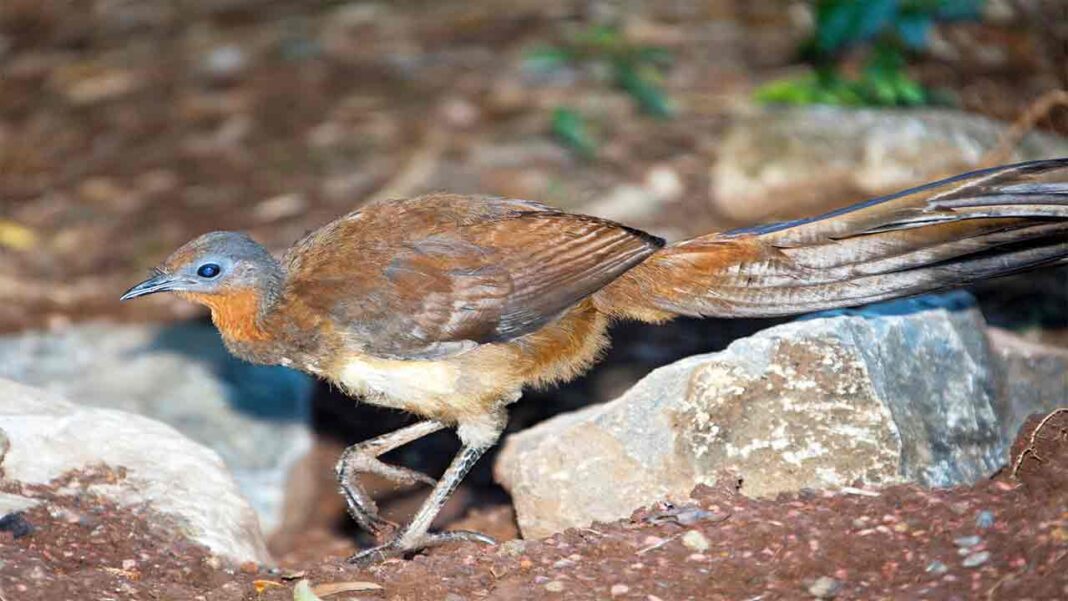
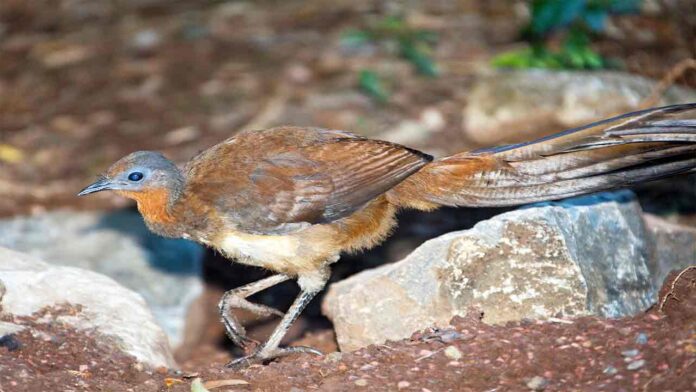

Agriculture & Climate change, Australia (Commonwealth Union) – Lyrebirds are recognized for their ability to pickup sounds in their environment and carry out identical imitations often bewildering observers and onlookers.
Recent research led by Western Sydney University has noted that Albert’s lyrebirds have been badly affected by repetitive habitat loss, with variation in song diversity demonstrating the reducing population health and conservation action requirements.
The study which was published in Diversity and Distributions demonstrates that Albert’s lyrebirds living in fragmented areas have lower repertoire sizes, mimicking fewer model species with lesser vocalization types.
All lyrebirds mimicked species that were widely observed all over the study area, and so repertoire sizes are not limited to the presence of model species.
PhD student Fiona Backhouse and lead researcher from the Western Sydney University, Hawkesbury Institute for the Environment, described the findings as indicating that the composition of mimetic repertoires is likely picked up from listening to other lyrebirds, as opposed to picking it up directly from other model species.
“The smaller repertoire sizes in fragmented areas suggest that there are fewer and more isolated individuals in these areas. The reduced cultural diversity in fragmented, isolated areas could indicate that the health of the local lyrebird populations is under threat,” explained Ms Backhouse.
“It was surprising that these lyrebirds appeared to be partially compensating for smaller repertoires by mimicking additional sounds from the fewer species within their repertoire.”
The findings suggest it is advantageous for male Albert’s lyrebirds to have a large mimetic repertoire, likely helping them to attract a mate, and as such they are accounting for the loss of songs in their repertoire by mimicking additional sounds from the species they already mimic.
Ms Backhouse also says “Albert’s lyrebirds are more restricted in the species they learn to mimic, than in the sounds they learn to mimic. This means that they recognise which sounds come from which species, and that there are “favourite” or “socially acceptable” species to mimic in each population.”
Conservationists often attempt to repopulate endangered species by connecting the species by defragmenting their natural habitats, as often the isolation leads to their inability to find a mate that results in no reproduction which is just one of the factors effecting endangered species.
The destruction of habitats for lyrebirds seems to be leading to similar effects according to the researchers with smaller unconnected areas which specifically impacts these large, solitary birds. As lyrebirds are poor flyers with the inability to migrate large distances, substantial areas of intact habitat and good habitat linking are vital in movement and cultural exchange between populations.
The Albert’s lyrebird is only observed in a small area of a subtropical rainforest in the mountainous regions of Bundjalung Country, on the border between New South Wales and Queensland. As a result of their restricted habitat needs, they are almost completely restricted to rainforest and wet forest and are only rarely seen in surrounding drier woodland.
The downside of habitat fragmentation on vocal cultures is likely to extend across other species having vocal learning abilities, particularly species having poor dispersal abilities.
The continuing habitat loss, specifically for populations already effected, could result in more loss of cultural diversity. As cultures depletes, males will become unattractive to potential mates, or mimetic repertoires may cease being an honest signal of male quality. This maty result in further declines in populations and more culture loss.
Recommendations in tackling the ongoing effects of habitat fragmentation include raising habitat quality and linkage by reforesting marginal areas and fighting climate change.
Many environmentalists across the world have focused more on repopulating area with indigenous species to preserve the habitats rather than introducing newer species as the indigenous species historic existence in those specific areas will indicate that they are better suited to the conditions.