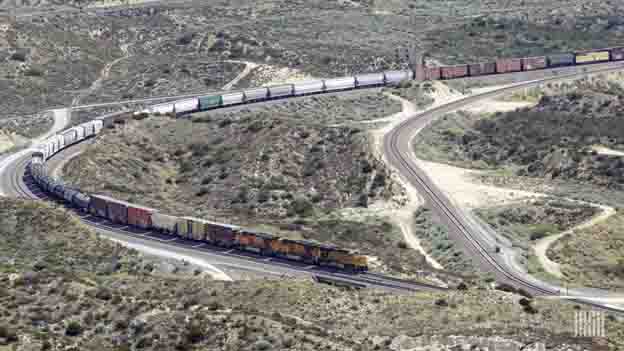

(Commonwealth) _ In recent years, train length and train crew sizes have become a hot topic in the transportation industry, with state legislatures across the United States taking action to address these issues. The debate revolves around safety concerns, efficiency, and the balance between the two. On one side of the debate are those who argue that longer trains and smaller crews are necessary to improve efficiency and reduce costs. They argue that longer trains can carry more freight, which reduces the number of trips required, thereby reducing fuel costs and emissions. Additionally, smaller crews mean fewer labor costs, which further reduces expenses.
On the other side of the debate are those who argue that safety should be the top priority. They claim that longer trains and smaller crews can compromise safety, leading to accidents and injuries. The concern is that longer trains increase the risk of derailment, while smaller crews can lead to fatigue and reduced situational awareness, which can lead to mistakes.
The debate over train length and crew size has led to a flurry of legislative activity at the state level. In California, for example, lawmakers have introduced a bill that would require all trains operating in the state to have a minimum crew size of two people. This bill was introduced in response to concerns about safety, particularly in the wake of a 2013 derailment in Lac-Mégantic, Quebec, that killed 47 people. The train involved in that accident had been operated by a single crew member.
Similar bills have been introduced in other states as well, including Illinois, Maryland, and New Jersey. In Illinois, a bill has been introduced that would require all freight trains to have a minimum crew size of two people, regardless of their length. In Maryland, a bill has been introduced that would require all trains to have at least one certified conductor and one certified engineer on board. And in New Jersey, a bill has been introduced that would require all trains to have at least two crew members, with one of them being a certified conductor.
These state-level efforts have been met with resistance from the railroad industry, which argues that these regulations would be unnecessary and costly. The industry points out that the Federal Railroad Administration has not established any specific crew size requirements, leaving the decision up to the individual railroads.
However, supporters of these bills argue that state-level action is necessary because the federal government has been slow to act. They point to a 2016 rulemaking by the Federal Railroad Administration that would have required two-person crews on most trains, but which was withdrawn by the Trump administration in 2017. They also point to a recent report by the National Transportation Safety Board, which recommended that all trains have a minimum crew size of two people.
In addition to the debate over crew size, there is also a debate over train length. The railroad industry has been pushing for longer trains, with some trains now exceeding 3 miles in length. However, longer trains also increase the risk of derailment and make it more difficult to respond to emergencies.
Some states have taken action to limit train length in response to these concerns. In California, for example, a law was passed in 2018 that limits freight trains to a maximum length of 7,500 feet, or about 1.4 miles. This law was enacted in response to concerns about the safety and environmental impacts of longer trains.
Other states are considering similar limits on train length. In Illinois, a bill has been introduced that would limit the length of freight trains to 7,500 feet or the length of two miles, whichever is shorter. And in Maryland, a bill has been introduced that would limit the length of freight trains to 10,000 feet or the length of two miles, whichever is shorter.