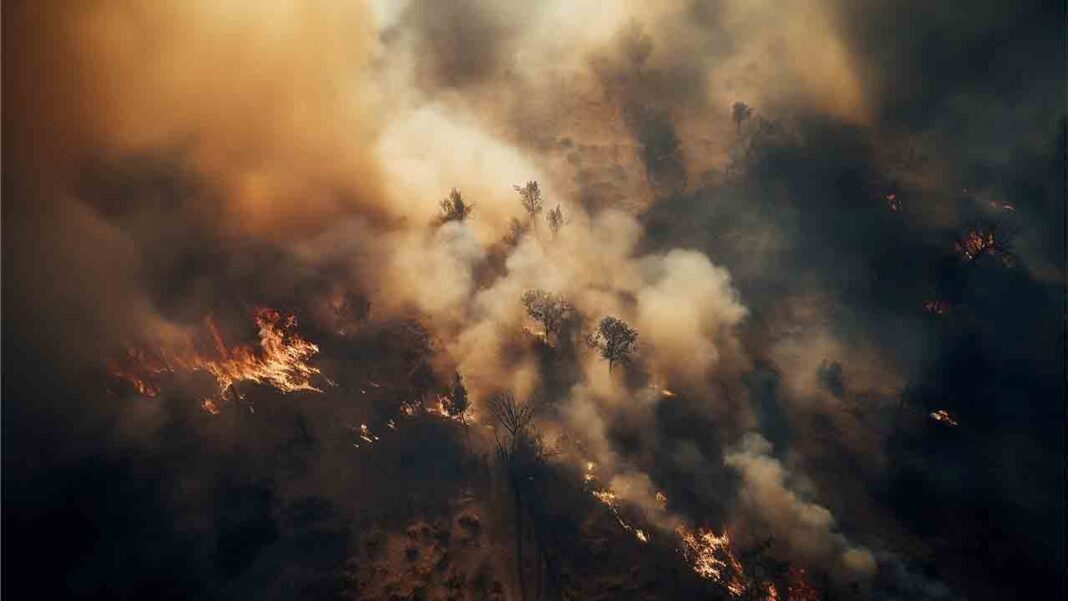

Over 100 fires are burning across Canada, with numerous major wildfires instigating evacuations for hundreds of people and intimidating to overwhelm whole communities. In the area of Manitoba, in eastern Canada, an enormous fire had burned more than 86,000 acres and was less than a mile from Cranberry Portage, local authorities said. More than 500 people there had been removed, according to Manitoba representatives.
I’ve been monitoring wildfires for 40 years, and never seen a blaze travel like this fire, Manitoba Wildfire Service Director Earl Simmons informed in a news conference. The Parker Lake Fire in northeastern British Columbia, western Canada, more than tripled in extent over the weekend to 13,000 acres and is presently approaching the small community of Fort Nelson. The fire was less than 1.5 miles west of the town Monday morning, and winds are anticipated to remain in the impending days and could carry the flames even faster.
As of Monday morning, about 4,700 individuals were under evacuation instructions, as well as in the town of Fort Nelson and Fort Nelson First Nation, Individuals across 80 other properties were also requested to leave, officials added. Evacuation warnings are also in place for portions of Alberta as wildfire MWF-017 blazers about 10 miles southwest of the city of Fort McMurray – a range that was overwhelmed by a wildfire in 2016. By Monday evening, that fire had augmented to more than 16,200 acres.
An evacuation alert was delivered for inhabitants in Fort McMurray, Saprae Creek, Gregoire Lake Estates, Fort McMurray 468 First Nation, and Anzac, conferring to Alberta spokespersons. The fire also caused the Canadian National Railway Company to suspend facilities in some areas. CN has suspended service on our link between Fort St. John and Fort Nelson in British Columbia and north of High Level, Alberta owing to wildfire movement, representative Ashley Michnowski told CNN. We are at work with impacted clients as our workers evaluate damages and recognize any essential repairs.
Decreasing snow, swelling temperatures, and increased droughts are all trademarks of climate change and are likely to keep fueling greater and more forceful fires across Canada, according to Environment Canada. The previous year was Canada’s most overwhelming fire season in history, together with in British Columbia, where fires scorched through hundreds of homes and an extent of Maryland, according to the BC Wildfire Service.
The Parker Lake Fire is not solitary. More than 100 fires are scorching across Canada, 39 of which are classified out of control, according to the Canadian Interagency Fire Centre. Smoke from the blazes has instigated Environment Canada to issue a distinct air quality report spreading from British Columbia to Saskatchewan. It has also triggered smoke to waft down into the northern layer of the US for the initial time this year, and for air quality warnings to be delivered for Wisconsin, Minnesota, and Iowa. Air quality touched “unhealthy” levels in all three states, as well as Minneapolis-St. Paul, according to AirNow.gov. On Monday afternoon, the Twin Cities had the eighth-worst air quality of 119 main cities followed by IQAIR, a corporation tracking air quality globally.
Particulate matter levels this concentrated can cause problems for sensitive individuals or anyone spending lengthy time outdoors, according to the Environmental Protection Agency. Wildfire smoke has been related to upsurges in certain cancers and heart-related matters, among other illnesses. Poor air quality is anticipated to remain in the US through Monday, and possibly longer in parts of Canada nearer to the fires, including Alberta and British Columbia.