
Earth and Habitat (Commonwealth Union) _ Nottingham Trent University has announced a surge in applications from around the globe for its pioneering Master’s Degree program in “smart agriculture,” set to commence this September. This innovative course offers aspiring students the opportunity to address some of the most pressing challenges confronting modern farmers.
With a curriculum designed to explore the transformative potential of artificial intelligence (AI), vertical farming, automation, and precision agriculture, students will delve into strategies aimed at safeguarding food supplies while mitigating energy and fertilizer costs.
Against the backdrop of a burgeoning global population and the looming specter of climate change, the demand for sustainable agricultural solutions has never been more urgent. Successful applicants will join researchers at the university’s Brackenhurst campus, where they will engage in hands-on experimentation within glasshouses and solar-powered shipping containers, devising innovative methods to accelerate crop production.
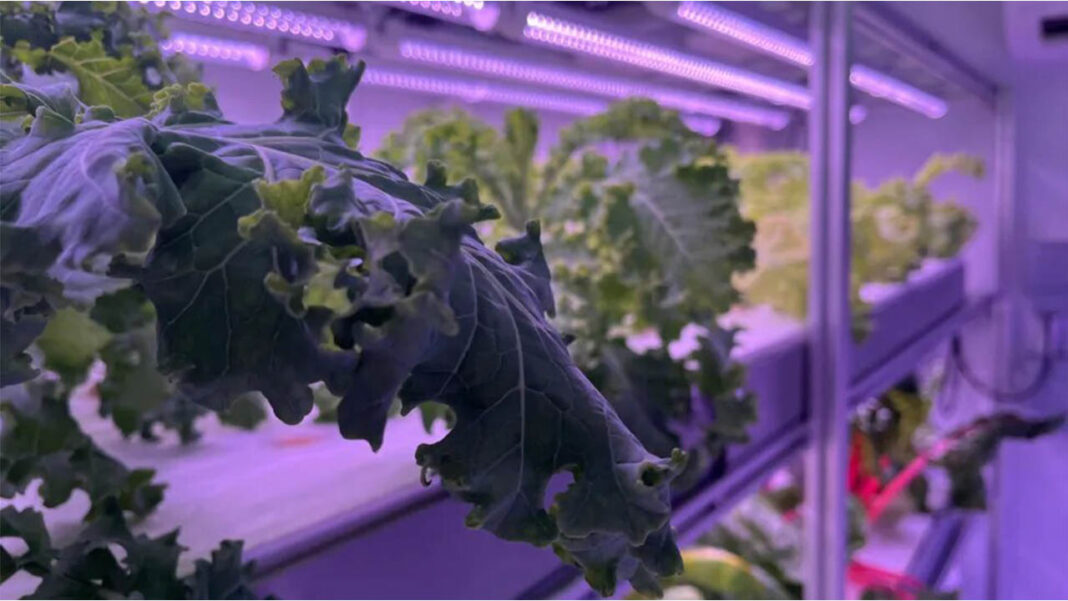
Dr. Gadelhag Mohmad, a senior researcher at the forefront of the program, explains how data collected from twice-daily readings informs the precise adjustments needed to optimize nutrient and lighting conditions in advanced vertical farms. By immersing plant roots in nutrient-rich water, rather than traditional soil, students can cultivate a variety of crops with unparalleled efficiency, harnessing AI to fine-tune resource allocation and minimize waste.
The scope of smart agriculture extends beyond salad crops, as demonstrated by successful rice production enhancements in China. In the UK, commercial interest in adopting similar techniques is burgeoning, particularly among food sector stakeholders seeking to integrate solar-powered shipping containers into distribution centers.
Prof. Chungui Lu, leading the university’s groundbreaking research, highlights the appeal of soil-free crops for supermarkets, citing their pest-resistant, hygienic, and consistently fresh attributes. Moreover, the controlled environment ensures supply chain stability, shielding against weather-related disruptions and ensuring timely deliveries.
With vulnerable crops succumbing to environmental pressures and climate change exacerbating agricultural challenges, graduates proficient in smart agriculture methodologies are poised to play a pivotal role in shaping the future of food production. Nottingham Trent University aims to equip students with the requisite skills to navigate this dynamic landscape, fostering sustainability and nutritional resilience in the face of adversity.
Acting Deputy Dean, Julia Davies, underscores the course’s emphasis on managing vertical farms and promoting sustainable supply chains, reflecting the evolving needs of the agricultural sector. For Prof. Lu, the program heralds a new era in agriculture, marked by innovation, sustainability, and resilience. Indeed, smart agriculture is not merely a discipline—it is the future of farming.