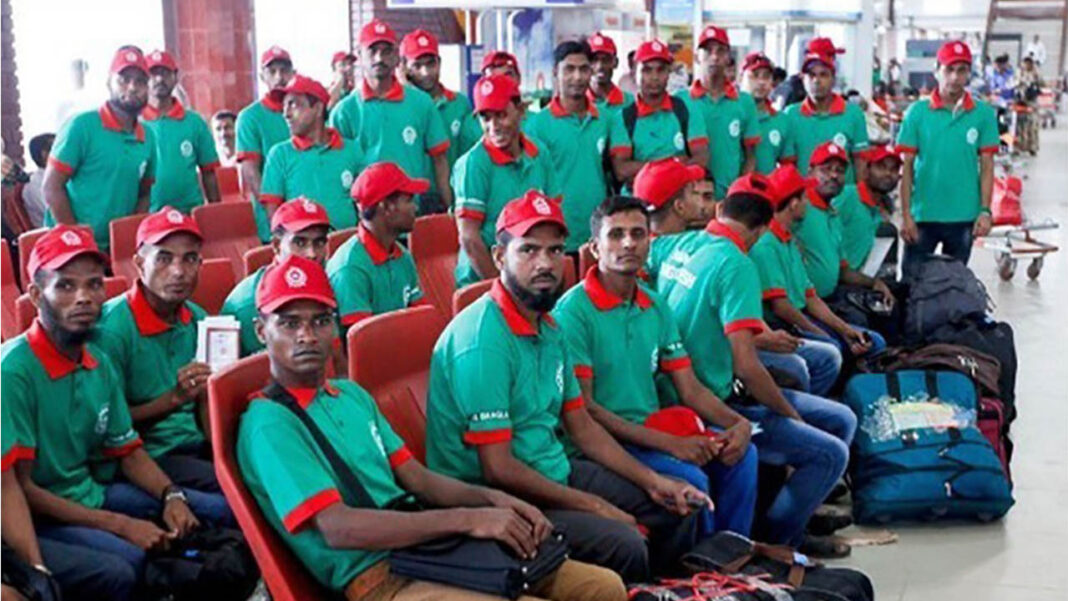

Bangladesh (Commonwealth Union)_ In recent years, Bangladesh has witnessed a notable surge in the number of foreign nationals seeking employment within its borders, underscoring both the country’s industrial growth aspirations and the shortcomings in its domestic education system. According to recent data from the Bangladesh Investment Development Authority (Bida) agency, the issuance of work permits to foreign nationals has seen a steady increase, reaching 16,303 approvals in the fiscal year 2022-2023, a rise of approximately 8 percent compared to the previous year.
Also read: Elite guests turn heads at Anant Ambani Radhika’s lavish wedding
This influx of foreign workers, hailing from 101 different countries, highlights a strategic response to the nation’s demand for skilled professionals, particularly in managerial and technical roles crucial for industrial development. The majority of these permits were issued for new work assignments, emphasizing the ongoing need to fill critical skill gaps within Bangladesh’s industrial workforce. Key sectors benefiting from foreign expertise include the garment and automobile industries, where Indian professionals, in particular, are sought after for their specialized skills in engineering and management. Abdul Matlub Ahmad, President of the Indo-Bangla Chamber of Commerce and Industry, noted that these professionals play a pivotal role in training local talent and driving business expansion through foreign direct investments and joint ventures.
Also read: India-Sri Lanka enhance bilateral cooperation
Despite the advantages brought by foreign professionals, concerns have been raised regarding the dependence on international expertise. Critics argue that this reliance could potentially hinder the development of local talent and exacerbate economic challenges such as the outflow of foreign exchange reserves. Moreover, Transparency International Bangladesh (TIB) has highlighted significant financial losses due to undocumented foreign employment, suggesting a need for stricter regulation and supervision in managing the workforce composition.
Khondaker Golam Moazzem, Research Director at the Centre for Policy Dialogue, attributes the steady increase in foreign workers to the flexibility and perceived competence they bring to Bangladesh’s labor market. However, he also underscores a critical issue: the apparent inadequacy of domestic educational institutions in producing graduates with the requisite skills demanded by industry. This sentiment is echoed by Ferdaus Ara Begum, CEO of Business Initiative Leading Development, who identifies a persistent skills gap in the local workforce exacerbated by deficiencies in tertiary education.
Furthermore, concerns about the quality and relevance of education provided by public universities have led to allegations that graduates often leave the country after receiving training, seeking better opportunities abroad. This brain drain not only underscores the dissatisfaction among local professionals but also poses a challenge to efforts aimed at reducing dependency on foreign talent. In response to these challenges, stakeholders advocate for reforms aimed at enhancing the quality of education and aligning syllabus with the needs of a rapidly evolving industrial landscape. Moazzem recommends prioritizing investments in education to equip local graduates with competitive skills, thereby reducing the reliance on foreign professionals and preserving foreign exchange reserves.
Despite the benefits brought by skilled foreign workers, including contributions to economic growth and expertise transfer, there remains a consensus among experts that sustainable development hinges on empowering the local workforce through targeted educational reforms. By addressing these systemic challenges, Bangladesh can foster a more balanced and resilient labor market, ensuring long-term prosperity and reducing dependency on foreign expertise. Furthermore, while the rise in foreigners working in Bangladesh underscores immediate industrial needs, it also highlights the imperative for comprehensive reforms in education and workforce development. Hence, through strategic investments and policy initiatives, Bangladesh can nurture a skilled workforce capable of driving sustainable economic growth in the years ahead.