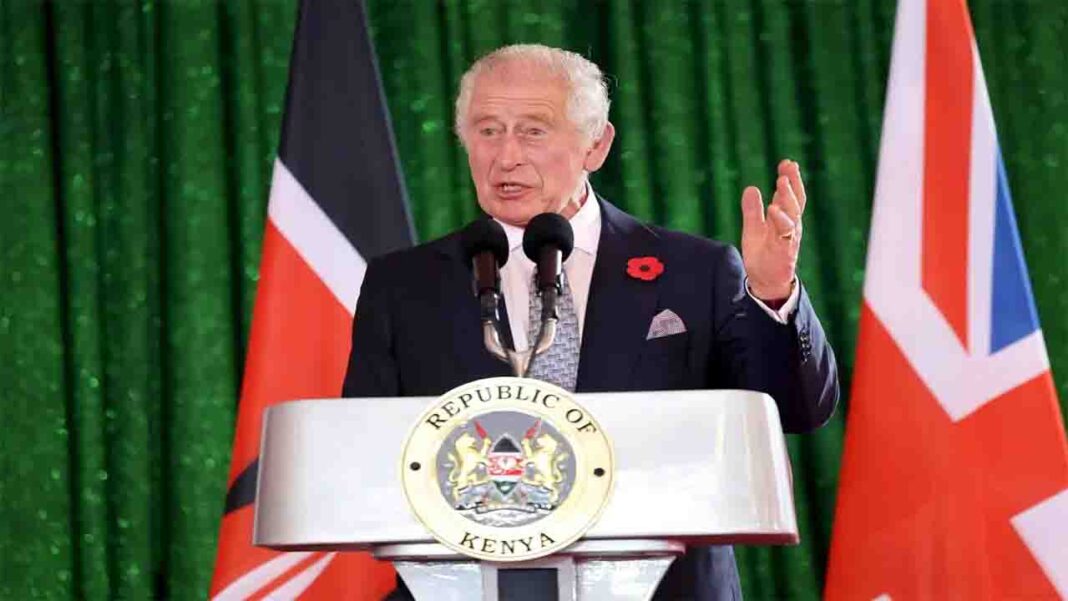

Africa (Commonwealth Union) _ King Charles III unequivocally acknowledged the atrocities committed against Kenyans during British colonial rule, emphasizing that there is “no excuse” for the abhorrent and unjustifiable acts of violence. While speaking at a state dinner hosted by Kenyan President William Ruto, the British monarch expressed his desire to meet those whose lives were profoundly affected by colonial abuse. He recognized the painful struggle for independence and sovereignty waged by Kenyans, pledging an honest and open approach to history to strengthen the friendship between the two nations.
The visit, occurring just before the 60th anniversary of Kenya’s independence, marks King Charles III’s first as the reigning monarch in a Commonwealth country. The British embassy highlighted the robust partnership between the United Kingdom and Kenya, emphasizing the visit as an opportunity to discuss the most painful aspects of their shared history.
Among the tragic episodes was the Mau Mau revolt, where British colonial repression resulted in over 10,000 deaths between 1952 and 1960, including 32 settlers. In 2013, after prolonged legal proceedings, London agreed to compensate over 5,000 Kenyan victims of Mau Mau abuse. Despite the financial restitution, organizations like the Kenyan Human Rights Commission (KHRC) continue to demand more. The KHRC called for an unconditional public apology from the King on behalf of the British government for the brutal treatment inflicted on Kenyan citizens throughout the colonial period (1895-1963) and urged reparations.
While King Charles III’s acknowledgment serves as a step towards addressing historical injustices, expectations for a comprehensive apology and reparations persist among Kenyan veterans and human rights organizations. The visit highlights the intricacies involved in reconciling historical grievances and building a renewed and transparent relationship between the UK and Kenya. Addressing historical issues requires careful navigation, understanding, and commitment from both parties to foster a constructive and mutually beneficial diplomatic connection. The visit serves as a tangible step in this ongoing process of diplomatic engagement and signifies the importance of acknowledging and addressing historical complexities in the pursuit of stronger bilateral ties.