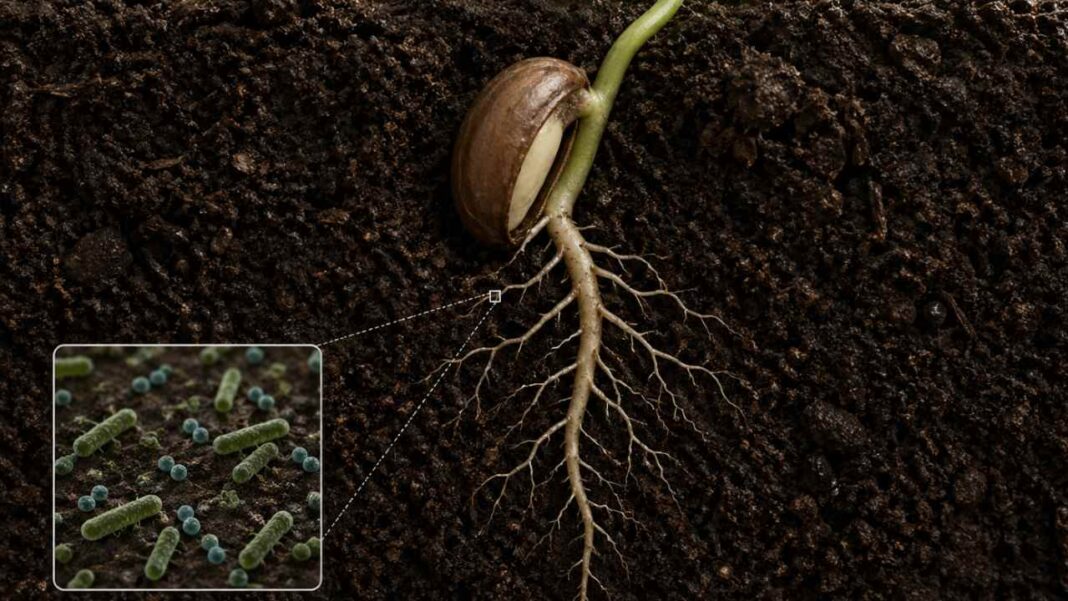

A newly discovered bacterium could change the way farmers grow crops. Scientists have found that a certain type of microbe can help plants grow better while reducing the need for chemical fertilisers.Today, many farmers depend on chemical fertilisers and biostimulants. These fertilisers only provide short-term nutrients like nitrogen or potassium to plants while harming long-term ecosystem stability. These fertilisers are often made from chemicals which can destroy soil health, leading to reduced microbial activity and nutrient depletion over time. Bio-stimulants work differently. They do not feed the plant directly but help it grow stronger and healthier by enhancing the plant’s ability to absorb nutrients and resist diseases.
Researchers from a Spanish university studied soil to find helpful bacteria. The study is published in the Journal Microbiology Society. Their goal was to discover natural ways to help plants grow better. During their research, they found a new bacterium called Variovorax palleresanus. This bacterium has special and useful abilities. This bacterium can use sulphur that is already present in the soil. Normally, plants cannot easily absorb sulphur in its natural form. The bacterium changes it into sulphates, which plants can take in and use. This means farmers may not need to add as much chemical sulphur fertiliser.
The scientists collected soil samples from many places. These samples had different levels of acidity and sulphur. In the lab, they grew microorganisms from the soil. They watched how these microbes behaved in different conditions. A colour change in the test mediums showed which ones could process sulphur.
After choosing the most effective bacteria, the researchers carried out more tests. They carefully studied how each one affected plant growth. Their goal was to find which bacteria gave the strongest results. Next, they moved their work into a greenhouse. This step was crucial. Plants in real conditions often react differently than in a lab. Soil, light, and temperature can change the outcome.
The findings were very positive. The plants grew healthier and stronger than expected. This showed that the bacteria worked well outside controlled lab settings too. Plants treated with the bacterium Variovorax palleresanus grew better and looked healthier. They had a stronger metabolism, which helped them develop more efficiently. The crops also produced up to 30 per cent more yield. This is a big improvement compared to many bio-stimulants used today.
This bacterium does more than just process sulphur in the soil. It also produces natural plant hormones called auxins. These hormones play an important role in controlling how plants grow. They help roots develop and support overall plant structure. In addition, the bacterium creates special compounds that help plants absorb iron from the soil more easily. Iron is important for plant health and growth. These compounds also act as antioxidants, which protect plants from damage. As a result, plants become stronger, healthier, and more productive over time.
Field trials were also carried out to confirm the findings. The bacterium was tested on different crops, mainly vegetables. These trials took place in several regions with different soil types. In all cases, the bacterium performed well. Scientists noticed that its effectiveness did not depend on soil conditions. This finding is important because it means the bacterium could be used in many different farming environments. Farmers would not need to worry too much about soil type when using it.
Before this discovery, no bacteria from this group were known to process sulphur in this way. This makes Variovorax palleresanus unique. Because of its potential, researchers are now working to secure patents for it in Europe. This discovery could help make farming more sustainable. Reduced chemical fertiliser use can lower costs and protect the environment. At the same time, farmers can still increase their crop yields by utilising natural methods, such as incorporating beneficial bacteria into their farming practices.
In the future, this bacterium may become a natural alternative to some agricultural chemicals, potentially providing farmers with a sustainable way to enhance soil fertility and crop productivity without relying on synthetic inputs. It shows how science can discover simple solutions in nature. By using beneficial microbes, agriculture could become both more efficient and more eco-friendly.