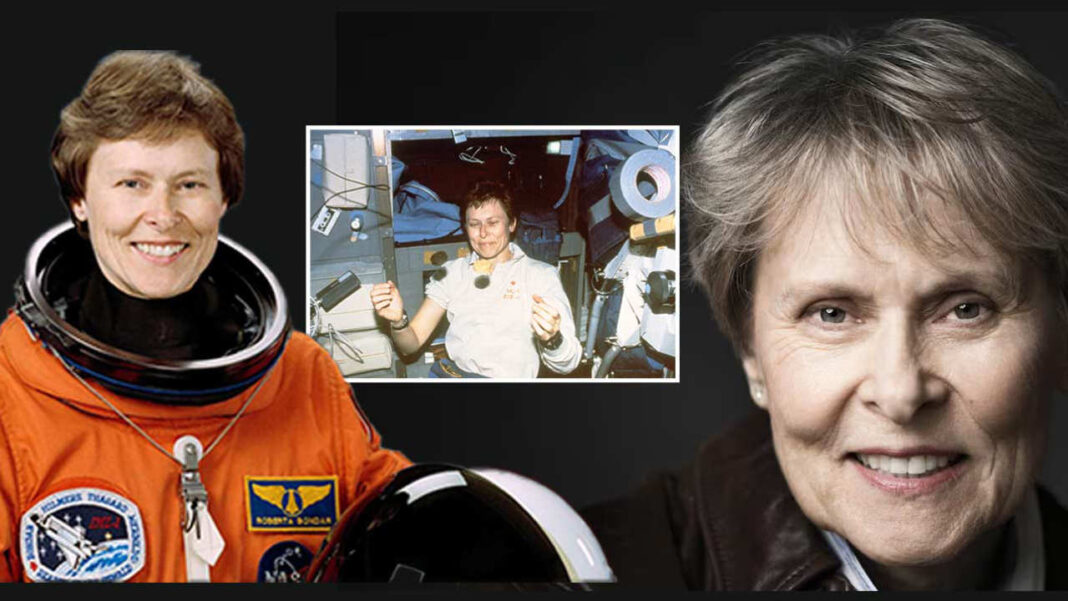
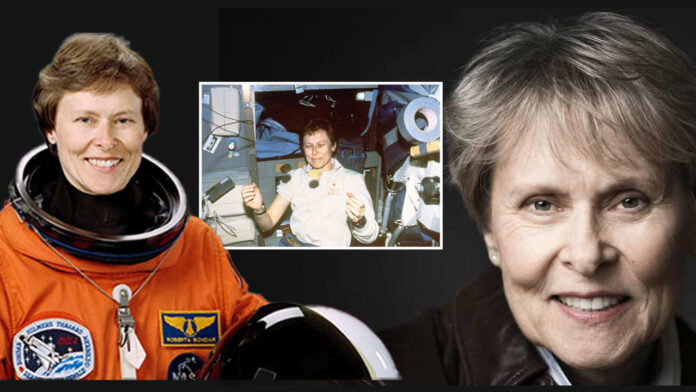

Born in Sault Ste. Marie, Ontario, on December 4th, Dr Roberta Bondar became a prominent Canadian neurologist, astronaut and photographer who was known best for being the first Canadian woman in space in 1992 as she boarded Space Shuttle Discovery mission STS-42. As she grew up in a family that strongly valued education and curiosity, her career was marked by a combination of medicine, neuroscience research, space science, and advocacy for the environment, which makes Bondar one of Canada‘s most influential figures in science.
While her father was of Ukrainian descent, her mother pursued her career in teaching. With both backgrounds, the two parents encouraged Roberta’s intellectual interests from an early age, making sure to teach her morals, values and respect. Fascinated by nature as a child, Roberta often spent her time observing plants, animals and the great outdoors, which massively helped her to shape her appreciation for biology and life sciences quite early on in life. The small seeds of curiosity later bloomed and developed into a disciplined interest in understanding how living systems function, which established the foundation for her path in her future academics.
Bondar pursued her education in Canada and the United States and later earned a Bachelor of Science degree in zoology and agriculture, followed by a Master of Science in experimental pathology. She continued to complete her PhD in neuroscience by specialising in the study of the nervous system. She also proceeded to become a licensed neurologist and worked in both clinical practice and research after her academic training. Her medical career was primarily based on understanding neurological disorders and how the human body responds to different environmental conditions, an area that would later become highly pivotal in her astronaut work.
In the year of 1983, Bondar was appointed by the Canadian Space Agency as part of the first group of Canadian astronauts. After gaining the necessary training in Canada, the United States and Japan for nearly a decade, she was finally chosen for a space flight. She ended up flying aboard Space Shuttle Discovery on mission STS-42, in January of 1992, which made her the first Canadian woman and the first neurologist to ever travel into space. She conducted a series of scientific experiments during the mission, which focused primarily on how microgravity affects the human body, plants, and other types of biological systems. The research which was presented by her contributed massively to a better understanding of space medicine and human adaptation which goes far beyond the Earth’s environment.
Following her return from space, Bondar retired from the astronaut program, but she continued her scientific and academic work. She shifted her focus toward environmental research and photography, using her camera to document natural landscapes and highlight ecological changes affecting the planet. Her photography work has been exhibited and published throughout the entire world, which shows everyone clearly how deep her concern for environmental preservation and sustainability runs, especially how even after her retirement, it shows that her career and aspiration are not just something she pursued for her future, but it is in her blood.
Dr Roberta Bondar’s life shows a unique blend of her own curiosity and discipline, along with her desire for exploration. She has made adventure her aspiration, never failing to uncover what’s right behind the next window. From her early fascination with nature as a child in northern Ontario to her groundbreaking journey into space, she has consistently pushed the boundaries of human knowledge and achievement. Her entire life story sends a message to youngsters throughout the world: Do what you love, make it an adventure, and keep discovering it.