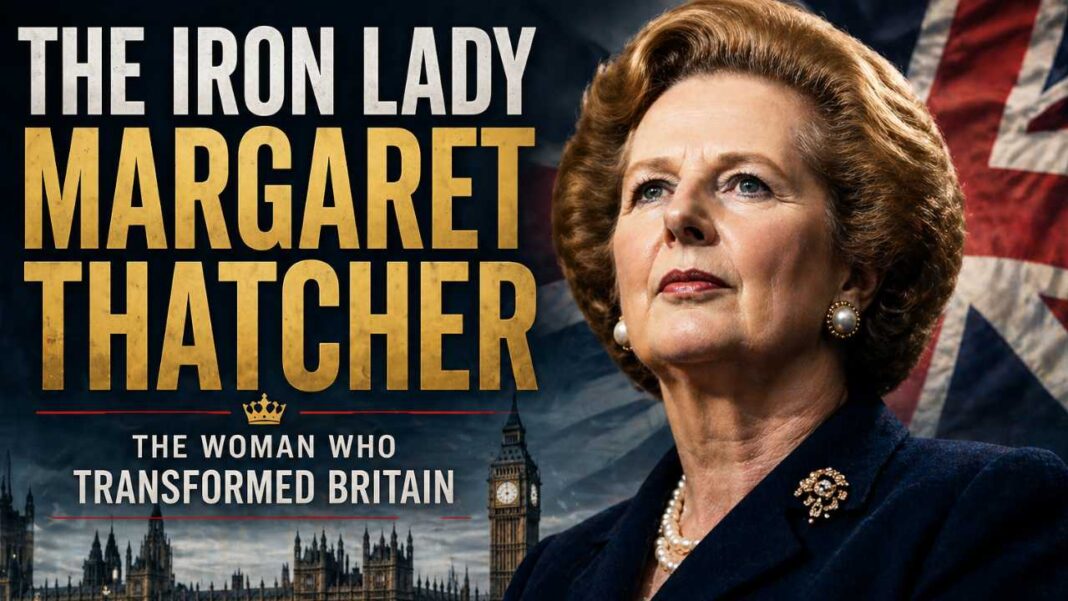

Remaining as one of the most inspiring and influential figures who also holds quite a lot of controversy as well, Margaret Thatcher was a political figure that was quite remarkable in the 20th century. By serving as a prime minister from the year 1979 to 1990 in the United Kingdom, she was known to be the first woman who held the office in Britain as well as Europe. The politics of Britain were not only reshaped by her leadership, but they were also redefined, leaving a lasting impact on the entire globe.
Born on October 13th in the year 1925, Margaret Thatcher’s birthplace was Grantham, England, where she was raised in a very modest home. Her father was a grocer and a local politician, which was a main reason for her interest in public service to be evoked at such an early age in her life. Proceeding to pursue her studies in chemistry at the University of Oxford, she ended up becoming one of the first female presidents of the Conservative Association at the university. She went on to work as a research chemist before training as a barrister who specialised in tax law after her graduation.
In the year 1959, Thatcher entered Parliament as the Member of Parliament for Finchley. Over time, she steadily increased her influence and rose through the ranks of the Conservative Party, eventually becoming the Secretary of State for Education and Science. By defeating Edward Heath, she also made history in 1975 by becoming leader of the Conservative Party, which marked the start of her side’s to leadership nationally.
In 1979, Thatcher led the Conservatives to victory and became prime minister. Her leadership style was firm and uncompromising, earning her the nickname “Iron Lady,” originally given to her by Soviet critics due to her strong anti-communist stance. As prime minister, she introduced a series of economic reforms aimed at reducing government control and promoting free-market policies.
Often referred to as “Thatcherism,” these policies included the privatisation of state-owned industries, a reduction in trade union power, and a strong focus on controlling inflation through free-market economic principles. While her supporters credit her with modernising the British economy and encouraging individual enterprises, some analysts argue that her policies ultimately increased unemployment and widened social inequality during the early years of her leadership.
One of the defining moments of her premiership was the 1982 Falkland Islands War, which boosted her popularity and contributed to her re-election in 1983 with a large majority. She went on to win three consecutive elections, making her the longest-serving British prime minister of the 20th century.
As one can see, her time in office was not one without controversy, as policies such as the introduction of the poll tax ended up sparking public protest, which ended up spreading widely and caused internal divisions inside her party. Due to the lack of support and pressure she felt politically, she ended up resigning as Prime Minister in the year 1990.
Thatcher continued to remain an influential figure in politics globally and within the Conservative Party even after she left parliament. Her ideas kept continuing to shape many debates regarding politics and economy throughout many years.
Margaret Thatcher’s legacy remains deeply divided. To some, she is a symbol of strong leadership and economic reform; to others, she represents social division and hardship. Regardless of perspective, her impact on Britain and the world is undeniable, securing her place as one of history’s most significant political leaders.