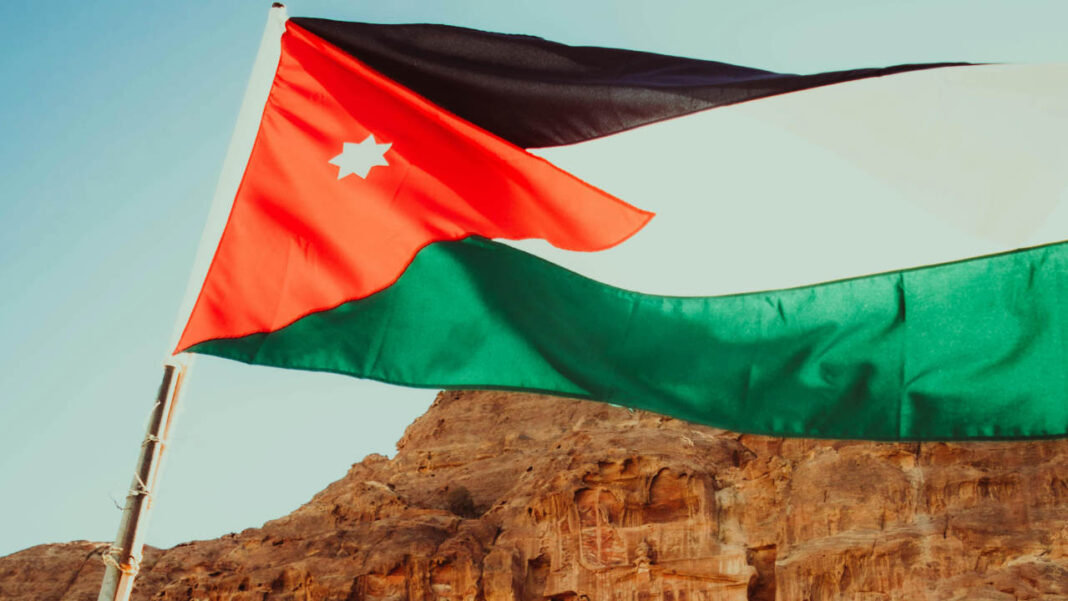

Over the last few years, the Middle East has experienced some of its most fragile and complicated geopolitical scenarios; in response to that, two powerful and influential Arab monarchies—Jordan and Bahrain—are sending the region a clear and loud message that diplomacy must come first before any type of conflict or confrontation.
King Abdullah II (Jordan) and King Hamad bin Isa Al Khalifa (Bahrain) recently had a conversation where they both expressed the need for de-escalation in light of heightened tensions in the Middle East. They also stated that failure to resolve current crises could create instability beyond the borders of the Middle East, thus warning all of the parties involved of the potential for regional instability.
This call to diplomacy is not simply a symbolic statement but rather an indication of a new consensus in the region that military options now have become too dangerous to utilize as a path to resolution. With a multitude of ongoing military conflicts, ongoing humanitarian crises, and an increase in geopolitical rivalries, the leaders of Jordan and Bahrain are positioning themselves as advocates of political solutions, restraint, and open dialogue.
The significance of this intervention lies in its timing; tensions within the Middle East have historically demonstrated how quickly localized disputes can escalate into larger-scale conflicts that can disrupt energy markets and trade routes throughout the world and destabilize many economically fragile countries. Experts have long warned that a single miscalculation with regard to diplomacy in the region could lead to international consequences.
Jordan has always been known as one of the most reliable moderate voices in the Middle East. Additionally, Bahrain has continuously been recognized as a significant regional player in terms of political influence exceeding its geographic area. Thus, the combined efforts of these two countries provide a strong message to the region that leaders are increasingly focused on preventing conflict rather than simply reacting to it.
Additionally, both monarchs reaffirmed their support for any international initiatives aimed at restoring stability, stating that the only viable solution going forward is through dialogue, not by using force. The continued commitment by both monarchs to work together indicates that the next phase of regional diplomacy will be much more actively engaged and that Arab capitals are increasingly consulting one another to develop strategies to help avert any wider regional conflict.
When news headlines are dominated by discussions of war and military strategy, the initiatives being proposed by Jordan and Bahrain are a welcome voice of reason and calm in what have become very turbulent times globally. In fact, when looking at today’s Middle East, perhaps no action has been more strategically advantageous than attempting to promote calm.