
Farmers in Bangladesh are facing a significant threat that has been growing. The threat arises from increasingly unpredictable weather, as a strengthening El Niño is expected to bring further changes to rainfall and temperatures across the country. The pattern of climate that keeps developing could place additional pressure on crops, increase farming costs, and worsen financial difficulties for small-scale farmers.
Bangladesh has already experienced significant disruptions to its traditional agricultural calendar. Floods that came early, dry periods that continued for a long term, sudden heavy rainfall, and unusually high temperatures have been the main reasons for farmers to find it difficult to predict when they should begin planting, irrigate, and harvest their crops.
The problem is especially serious for small farmers. These farmers make up around 91% of the farming community in Bangladesh. Many of them have limited savings to absorb losses from a failed harvest. This situation leaves these individuals vulnerable to debt, and, in some cases, they even end up losing farmland.
El Niño is adding another layer of uncertainty to the situation. The World Meteorological Organization has given out warnings that the current event could even end up worsening with time. If it increases, the possibility of heatwaves, drought, and extreme rainfall in different parts of the world could worsen. Its outlook, which runs from August to October, indicates a greater probability of below-normal rainfall across the Indian subcontinent.
However, for Bangladesh, the concern is not simply whether rainfall increases or decreases. The timing and intensity of rainfall are equally important. Recent weather patterns have demonstrated how rainfall can concentrate into short periods, leaving farmers with long dry spells followed by damaging downpours.
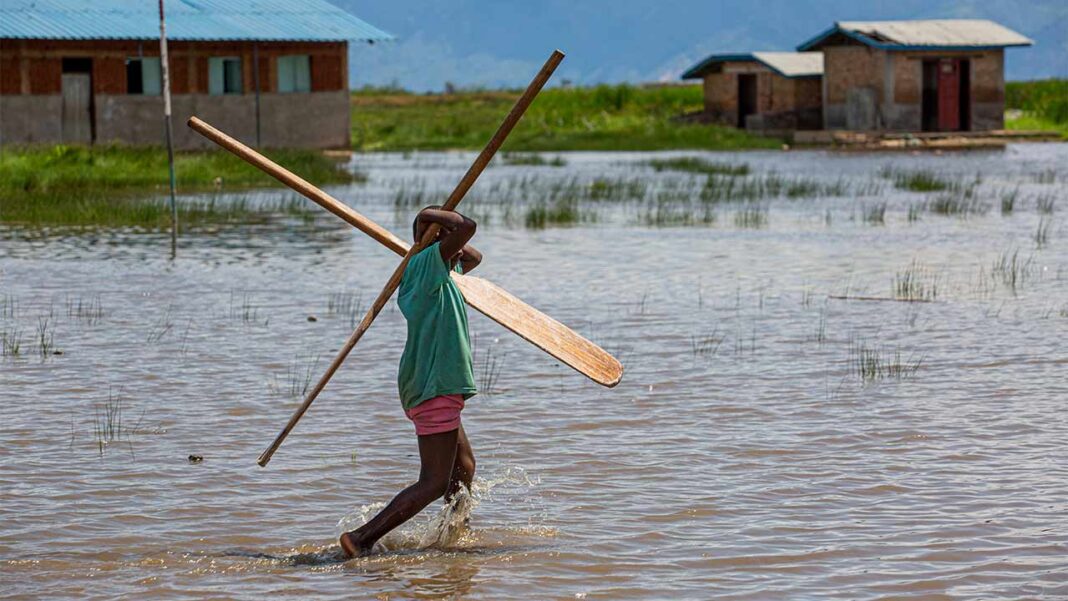
The consequences for agriculture have already been substantial. Flooding, which took place between late April and early May, ended up destroying crops all throughout Bangladesh’s hot wetlands, with Agriculture Ministry figures estimating that 49,073 hectares of farmland were damaged and nearly 213,000 tons of Boro rice were lost. The further flooding that proceeded in July also ended up affecting approximately 82,000 hectares. This includes Aus rice, Aman seedbeds, and vegetables, all of which are staples for each citizen in the country.
Other agricultural sectors have also suffered. Fisheries authorities estimated losses of around 4 billion takas after thousands of fish farms and ponds were affected, while the livestock sector recorded further losses. Together, preliminary losses in fisheries and livestock were estimated at almost 4.88 billion takas.
The strengthening El Niño could increase these challenges for not only people in Bangladesh but for the entire world population. Lower rainfall between August and October may force farmers to rely more heavily on irrigation, raising production costs. Temperatures reaching 35 to 37 degrees Celsius could also place crops under additional stress. If the weather pattern continues to follow into winter, potatoes, onions, and other cool-season crops could suffer, while prolonged heat could affect the following Boro rice season. Farmers and citizens will have a hard time facing this scarce situation, as it restricts accessibility, and they would not be able to afford bare necessities.
Authorities are encouraging farmers in flood-prone areas to use early-maturing rice varieties that can be harvested before flash floods arrive. Agricultural agencies are also working with research institutions and disaster-management authorities to provide farmers with advice and early warnings.
As El Niño strengthens, Bangladesh faces the challenge of protecting both agricultural production and rural livelihoods. For farmers who unfortunately have only limited financial resources, however, trying to adapt to an increasingly unpredictable climate may prove just as difficult as surviving the weather itself.