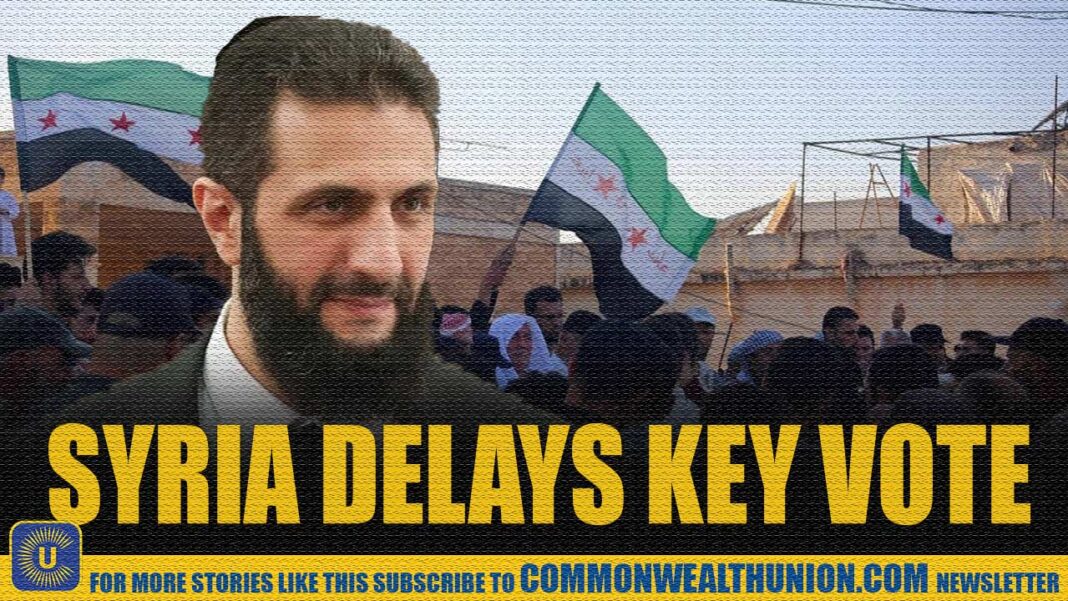

Syria’s first parliamentary elections under President Ahmed al-Sharaa’s Islamist government will not take place in the provinces of Sweida, Hasaka, and Raqqa next month, after the Higher Committee for People’s Assembly Elections said voting would only be possible in areas under full government control. The announcement came just weeks before ballots were due between September 15 and 20, marking the first vote since the new administration replaced that of Bashar al-Assad in December.
The electoral commission claimed that the decision was linked to the lack of a “safe environment” in the three provinces. In Sweida, longstanding disputes between the Druze minority and Sunni Bedouin tribes have escalated. July saw some of the most violent clashes in recent years, leaving hundreds dead. Government forces were deployed to the southern city, and Israel carried out airstrikes, which it said were intended to stop the mass killing of Druze by Syrian troops. Druze factions in the area have rejected Damascus’ deployment, maintaining that they want to oversee their security.
The postponement also extends to Hasaka and Raqqa in the north, where large areas remain under the influence of the Syrian Democratic Forces (SDF). Kurdish officials criticized the exclusion, stating the regions were stable enough compared to other parts of the country. They argued the decision represented political marginalization rather than a genuine security precaution.
The delay highlights broader challenges faced by President Sharaa as he attempts to consolidate authority. After dissolving parliament in January, he approved an interim constitution in March and granted himself the power to appoint one-third of the 210 seats in the People’s Assembly. The remaining members are to be chosen through appointed local bodies. While Sharaa has sought international investment for reconstruction, critics argue the framework concentrates excessive authority in the presidency and does not fully reflect Syria’s diverse religious and ethnic makeup.
The commission confirmed that seats allocated to Sweida, Hasaka, and Raqqa would remain vacant until conditions allow for voting.