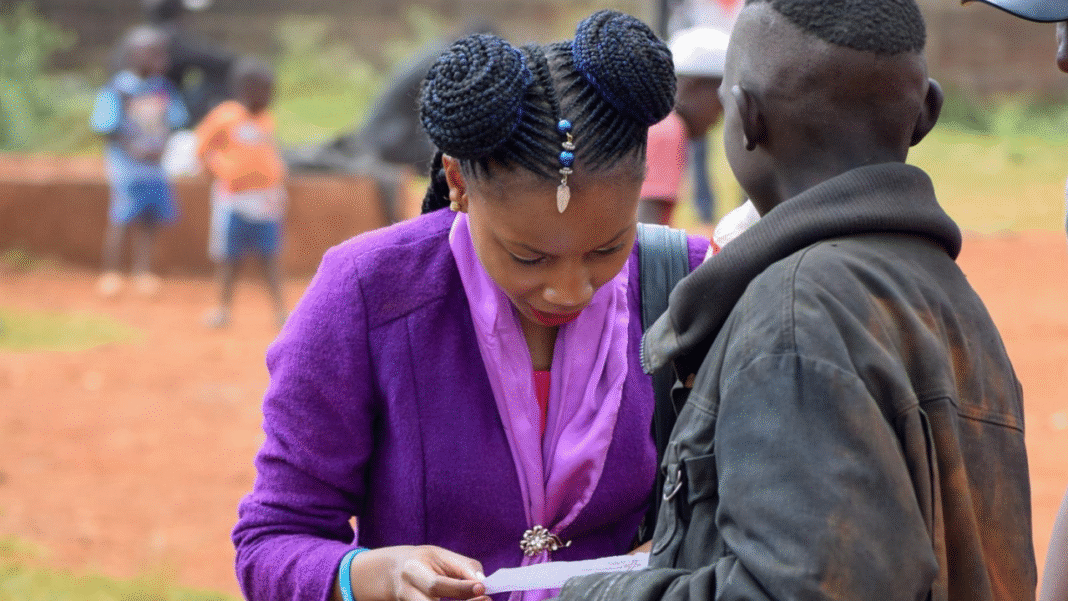

(Commonwealth)_ In 2015, in Bungoma County, Kenya, a scandal put into perspective the life of adolescents brought up in farming communities. Families, especially those who cultivated sugarcane and maize, received their crop payments late, often taking months to receive their returns. The effect was desolate: no cash, parents could not afford school fees, and therefore the children were ejected from school. They all ended up on the street, and they were subjected to drugs, gangs, or street life.
The cycle illustrates what has been described as “double victimisation.” Young people are victimized by the system when there is no assistance and no hope and criminalized by the law for what they become to be. They are not assisted but criminalized.
Sensing the requirement to change at once, youth activists across the Commonwealth set out to create some other way of reauthorizing the narrative and constructing solutions. Among the things it did was step forward to launch a new online platform that brought to the forefront positive news on young people transforming their communities. Among these was the story of a high school student who started a branding business through her school club so that she could earn some additional money. Her determination finally earned her a scholarship to the African Leadership Academy, demonstrating the potential for the ingenuity of youths to flourish given some encouragement.
But systemic issues persist. The story of one little girl stayed with me during a 2019 tour of a juvenile prison in one of Kenya’s coastal areas. She had been arrested for stealing bananas she did not even own because she was hungry. In response to her desperation, punishment was prioritized over assistance or social services. Her story exposed an uncomfortable truth: if behavior is caused by need or poverty, criminalization can never be the first response.
The problem frequently extends beyond Kenya. Sierra Leone‘s loitering laws continue to criminalize people for being in public spaces simply because they are poor. Ugandan courts ruled similar laws to be disproportionately harsh on homeless and poor citizens in 2022. Societies illustrate how inadequately defined or outdated mechanisms of law in the majority of countries consolidate inequality and exclusion.
At the same time, there are youth solutions for the Commonwealth that are a forcefully expressed alternative. In Nigeria, a youth organization, Agrivine, aligned with the Commonwealth to implement schemes of sustainable agriculture mentorship. With more than 10,000 young people reached in 56 countries, the project offered concrete alternatives to joblessness and demonstrated the tenacity of innovation in breaking through structural barriers.
A young Indian entrepreneur assisted in crafting a rural innovation lab from waste and ended up becoming an engineer. His case demonstrates that investing in creativity and resilience at grassroots levels eschews marginalization and propels long-term development.
Kenya’s Youth Policy 2019 identifies particular tasks for Kenyan youth, ranging from deepening democracy to propelling economic development. Young leaders in the country are taking up the vision. For instance, Food4Education now provides healthy, affordable food to over half a million schoolchildren every day. Besides restoring children’s right to education through preventing dropping out, it also generates employment in communities and initiates health benefits.
These stories bring us to only one sure conclusion: criminalization will never succeed in ending poverty. Governments must do their best to eradicate wrongful and misguided crime and substitute it with fair legislation that protects more than it penalizes. Rewards such as free lunches, easy access to ID documents, and safe transport should keep children in school. Youth entrepreneurship has to be promoted with capital, guidance, and exposure to opportunities to prove innovation. First and foremost, where desperation due to poverty drives a child to desperation, the initial response should be support and compassion, and not incarceration.
Across the Commonwealth, young people already are proving themselves to be beacons of dignity, justice, and equality. They are showing us that there are answers, and with the right kind of guidance, spirals of exclusion can be halted. It is now the turn of institutions and governments to return that level of imagination and courage in policies that value lived experience.
If the Commonwealth invests in policy on facts of their youth, the region can be globally renowned not for criminalizing poverty, but for preventing it. Not only would this change restore justice, but it would also release the massive potential of the young who need to be empowered in order to thrive.