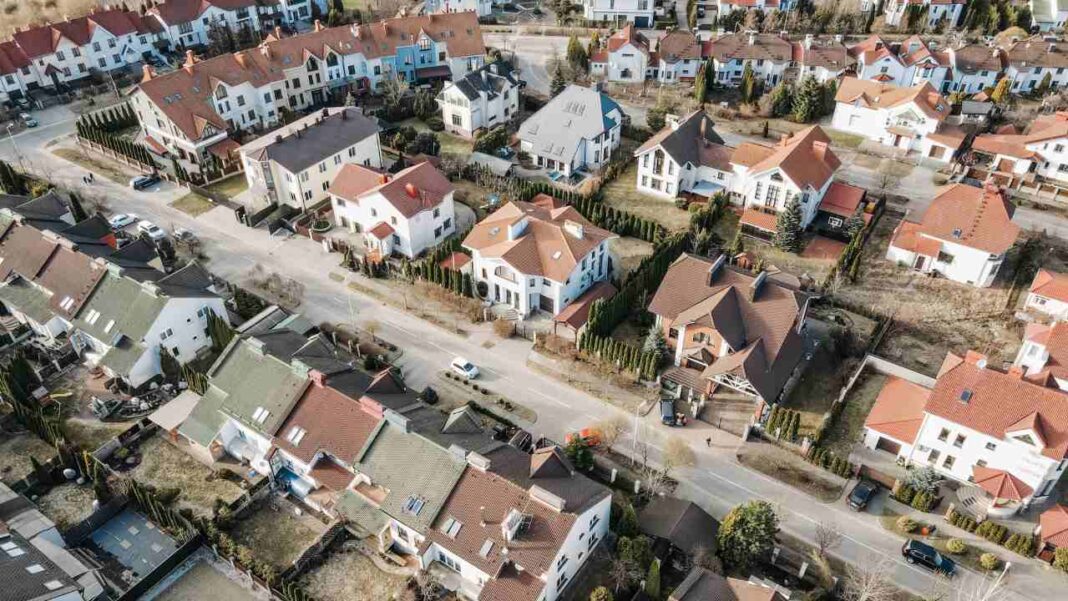

Australia’s housing system has stopped moving to the beat of panic buying as it used to. Investors rushing to auctions after getting little time to think has become a thing of the past. National auction clearance rates are now very close to the 50 per cent mark, and open home attendance has fallen to record levels. While the market remains alive, it is not moved by fear anymore. Now buyers are becoming aware that the chase for real estate has changed into a waiting game.
According to data provided by Cotality, in the current auction week. The auction clearance rate in the country went down to 50% from the previous week when the clearance rate was 54.8%. Even though this is a sub-par figure from the perspective of history, it signifies some improvement in the trends seen in late June and early July. Tim Lawless, who holds the position of research director at Cotality, noted that the poor clearance rates can be attributed to the lowered withdrawal rate according to which fewer auctions are cancelled before taking place. This, however, does not change the fact that in general, the picture is somewhat bleak as already mentioned previously, auction volumes were up by 4.7% from the week before, but still 12.6 % lower than the previous year.
The deceleration is not consistent across the entire country, but the national sentiment is clear. Melbourne topped the list with 599 auctions, followed by Sydney with 444 and Brisbane with 163. Adelaide has shown resilience, while Canberra has declined sharply, with Perth and Tasmania practically disappearing from the auction scene. Canberra’s preliminary clearance rate reached 27.8%, which is the lowest preliminary number it has had since March 2019, showing how quickly some markets cooled down. On the other side, Melbourne has obtained the highest preliminary clearance result in five weeks at 56.5% but has not yet fully recovered.
One interesting pattern of the market has been seen in the attendance at open homes. Ray White concluded their analysis on the topic, showing that in the period between June 14 and July 11, the attendees averaged 2.1 persons, which is significantly less than last year’s 3.6 average. In other words, the market shows a considerable slowdown. Ray White’s chief economist Nerida Conisbee explained the situation, saying that the market suffers from the impact of three increases in interest rates this year, the negative consumer sentiment, as well as the global geopolitical issues. The Reserve Bank of Australia reports that the cash rate went up to 4.35 percent in 2026. Moreover, the information provided by the bank indicates that the financial situation has constrained due to those increases.
With the advent of changes and updates in policies comes the need to be extra careful, most importantly for the investors. According to Consbee, not only do the different changes in the federal budget, including the changes in the negative financing and taxes, lead to the uncertain environment, but he also emphasised that the decline in the market was already noticeable before the budget. On the other hand, Price, an agent, adds that the issue is more complicated than just a policy change – the high rates of borrowing, as well as high rates of inflation and high living expenses, have limited the possibilities of potential buyers and lowered their confidence levels too. For instance, in South-East Queensland, the attitude towards buying has changed from “the fear of missing out” to “Let’s wait and see.”
However, just because the market has cooled off does not mean it has completely died. Conisbee explains that a property needs just one determined purchaser, and properties that are well priced will continue to attract considerable interest from potential buyers. The more significant change comes in the way buyers themselves think: they no longer rush to the finish line. Instead, buyers are now comparing prices and being more demanding regarding what value they are getting from their purchases. Thus, determining how things will play out in the spring selling season will be of great importance. If buyers become more positive about the market, it may lead to stabilization of the activity, whereas, in the opposite case, the market would have to deal with the prolonged cooldown stage.