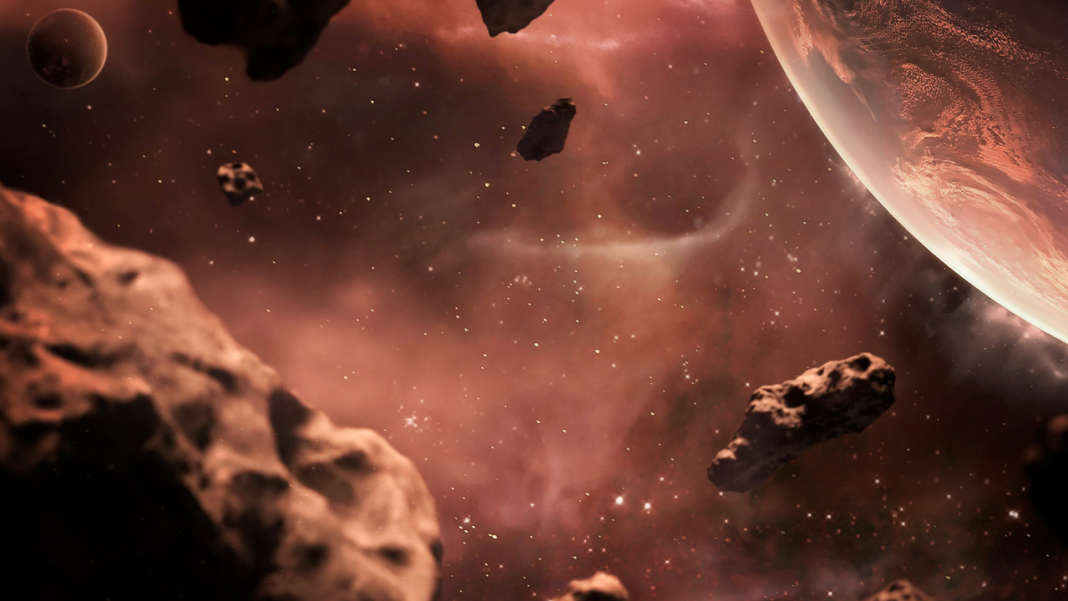

The discovery of natural glass fragments, known as tektites, scattered across South Australia provides strong evidence of a massive asteroid impact about 11 million years ago. A recent study details these unique fragments as “time capsules from deep in Earth’s history”, documenting a catastrophic event that scientists were completely unaware of until now.
Tektites form when a meteorite hits Earth with enough energy to melt surface rocks, sending molten debris flying over large distances. The Australian fragments have unique chemical compositions and an ancient age, which sets them apart from other known types, especially those connected to the younger Australasian tektite field.
The research, published in Earth and Planetary Science Letters, was led by Anna Musolino of Aix-Marseille University and co-authored by Professor Fred Jourdan from Curtin University. Their analysis indicated that these glasses recorded an impact event that is entirely different and older than others found in the region. Professor Jourdan highlighted that the tektites provide an important record of a major ancient impact. The strength of this collision was enormous, melting the surface and sending streams of molten rock more than 1,500 miles away.
The team’s findings reveal a significant, previously undocumented chapter in Earth’s history. An asteroid hit the planet with such tremendous force that it left a unique geochemical signature, found in these glass fragments. The odd characteristics and age of the tektites suggest a separate impact event linked to a volcanic arc zone, setting them apart from the more recent Australasian tektites that cover much of Southeast Asia and Australia.
Despite the clear evidence in the tektites, the impact crater is still missing. The scale of the event, which melted surface material and scattered debris across a vast area, suggests that the crater seems to be immense. However, its location remains untraceable, and scientists think that more detailed research on the terrain of South Australia and nearby areas could eventually reveal clear evidence of the impact structure.
This discovery is important not just for adding to geological history, and as Professor Jourdan clearly mentioned, understanding past impacts is crucial for modern planetary defence. Researchers can enhance their models and assess future asteroid threats to Earth by studying the effects of ancient collisions. The recently discovered Australian tektites provide a crucial point of reference for comprehending the magnitude and mechanisms of large-scale impacts and the dispersion of debris.
In conclusion, the unique glass fragments scattered across the Australian landscape have unravelled the mystery of a forgotten cosmic collision. The work by Musolino and Jourdan marks the discovery of a new phase in Earth’s geological history and raises the urgency to identify the elusive, massive crater responsible for these remarkable “time capsules” in South Australia, and ongoing investigations into this mysterious area will likely deepen our understanding of planetary impact events and guide efforts to tackle future celestial threats.