
Science & Technology (Commonwealth Union) – As we see the non-stop evolution of quantum computing, it is likely to undermine the long-standing encryption methods that currently protect sensitive information from cyber threats. In response, researchers and policymakers are developing post-quantum cryptographic systems designed to withstand these emerging risks.
Scientists at MIT have created a highly efficient microchip capable of enabling post-quantum security in wireless medical devices such as pacemakers and insulin pumps. These devices—whether wearable, ingestible, or implanted—typically lack the power capacity needed to run such complex security algorithms.
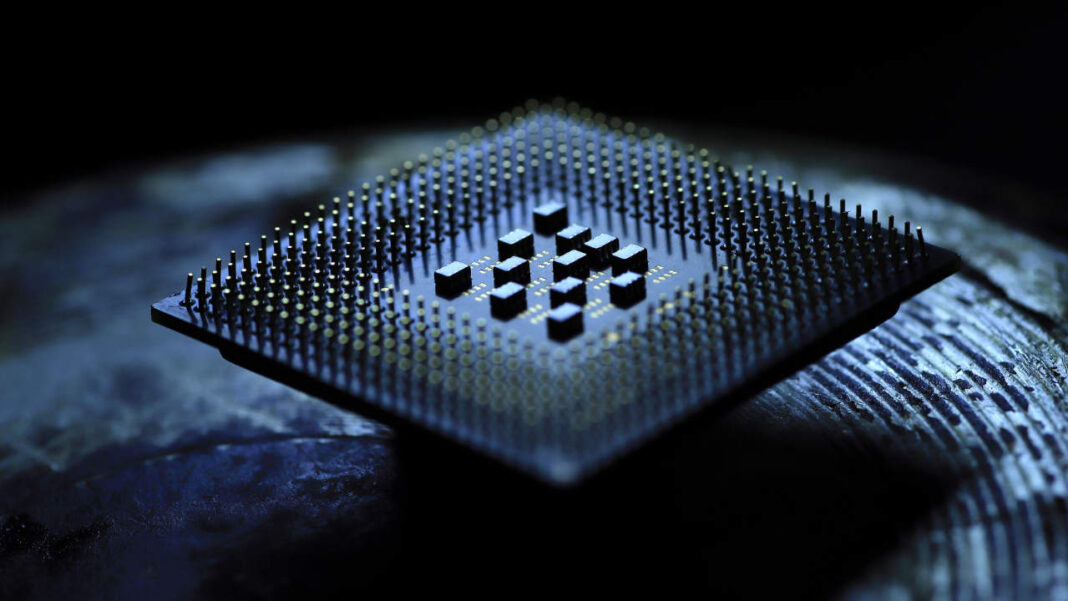
The newly designed chip, roughly the size of a needle’s tip, also features integrated safeguards against physical tampering methods that can circumvent encryption to access sensitive data, including personal identifiers or device credentials. It is much more energy-efficient than earlier designs.
Looking ahead, this innovation could allow future wireless medical technologies to remain secure in a world shaped by quantum computing. It may also extend to other low-power edge devices, including industrial sensors and smart tracking tags.
Seoyoon Jang, a graduate student in electrical engineering and computer science (EECS) at MIT and the lead author of the chip study indicated that compact edge devices are now widespread, and medical devices are particularly exposed to cyberattacks because their limited power capacity makes it difficult to support high-level security features and their work shows a highly practical hardware approach to safeguarding patient data.
Jang collaborated on the paper with Saurav Maji PhD ’23, visiting scholar Rashmi Agrawal, EECS graduate students Hyemin Stella Lee and Eunseok Lee, as well as Giovanni Traverso—an MIT associate professor of mechanical engineering, a gastroenterologist at Brigham and Women’s Hospital, and an associate member of the Broad Institute of MIT and Harvard—and senior author Anantha Chandrakasan, MIT’s provost and Vannevar Bush Professor of Electrical Engineering and Computer Science. The findings were recently presented at the IEEE Custom Integrated Circuits Conference.
The enhanced security is a key factor as well. Jang notes that many wireless medical technologies, including ingestible biosensors used for monitoring health, still lack robust security because current protection methods demand significant computational resources.
However, implementing post-quantum cryptography (PQC) can dramatically raise energy requirements, sometimes by 100 to 1,000 times.
Adopting post-quantum cryptography (PQC) is becoming critical, as organizations such as the National Institute of Standards and Technology are preparing to retire conventional encryption methods and replace them with more secure PQC standards. At the same time, many experts argue that fast progress in quantum computing hardware makes the transition even more urgent.
To make these typically energy-intensive PQC methods viable for wireless biomedical devices, MIT researchers developed a specialized microchip—an application-specific integrated circuit (ASIC)—that significantly lowers power consumption while maintaining strong security guarantees.
Jang indicated that while PQC is highly secure from an algorithmic standpoint, protecting devices from physical attacks often requires extra safeguards that can double or triple energy use.
She further pointed out that their goal is to create a chip that can defend against both types of threats while remaining highly energy-efficient.
Wireless biomedical devices frequently operate with unstable power sources, making them vulnerable to interruptions that can disrupt and even collapse an entire security process. The MIT team’s solution improves efficiency by halting the chip early, instead of letting it continue executing a process that is likely to fail.
Jang pointed out that in the end, the methods they developed allow post-quantum cryptography techniques to be implemented without increasing overhead, while also enhancing resistance to side-channel attacks.
“As we transition into post-quantum approaches, providing strong security for even the most resource-limited devices is essential. This work shows that robust cryptographic protection for biomedical and edge devices can be achieved alongside energy efficiency and programmability,” explained Chandrakasan.