
Science & Technology (Commonwealth Union) – The inspiration from nature in real world applications is not new. From the self-cleaning ability of the lotus leaf to the bird wings inspiring planes and other flying machines.
An international team of researchers, led by computer scientist Andreagiovanni Reina at the University of Konstanz, has discovered that a simple decision-making strategy borrowed from nature can help robot swarms rapidly achieve agreement — even when some of the information shared among robots is unreliable. Published in Nature Communications, the study reveals that this biologically inspired interaction mechanism could improve the resilience of robot groups operating in unpredictable real-world environments filled with noisy or misleading data.
The researchers examined two basic strategies that robots can use when they receive information that contradicts their own decision. The first approach is called direct-switch where the robot immediately updates its current choice with the newly received information. This method is very memory and computationally efficient, but it has a serious disadvantage: inaccurate or contradictory signals can cause robots to constantly change their decisions, thus preventing the swarm from reaching a stable consensus.
The second strategy, called cross-inhibition, introduces a crucial stage of hesitation before the robot changes its mind.
Instead of instantly accepting conflicting information, the robot briefly enters an undecided state, allowing time to evaluate whether the new evidence should be trusted. Reina indicated that the important element is this temporary uncertainty and a robot does not immediately copy information that challenges its own view; it pauses before committing to a new choice.
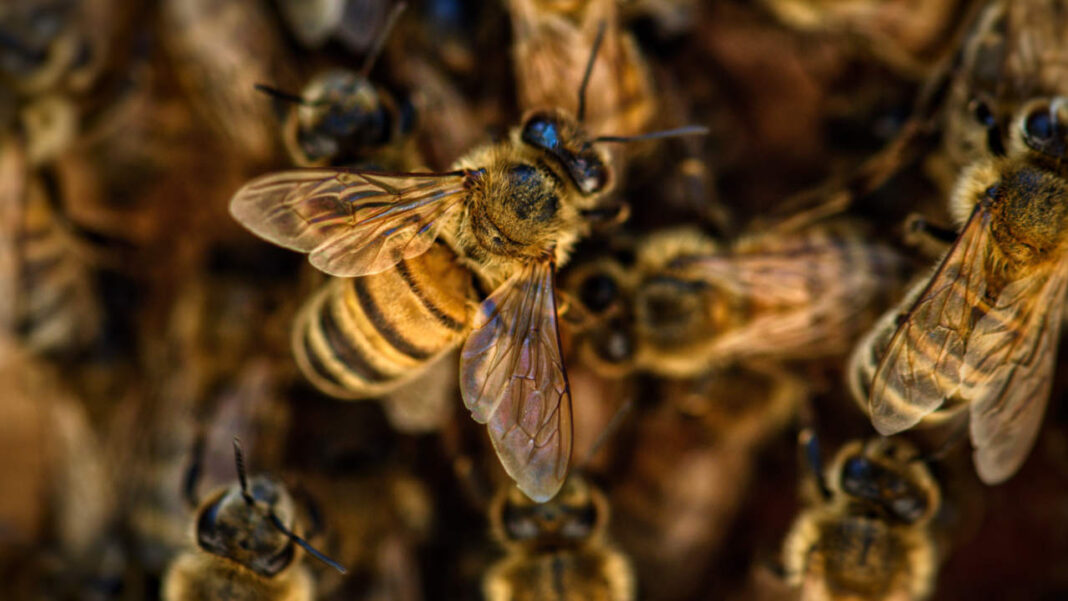
He pointed out that this mechanism was inspired by the behaviour of honeybee colonies during nest selection and bees promoting one potential nesting site can send inhibitory signals that reduce support for competing locations. Reina pointed out that this simple form of biological competition prevents the colony from becoming permanently divided and helps it eventually select a single destination. Researchers found that the same principle can be applied to robot swarms, enabling them to overcome unreliable information and coordinate more effectively.
The researchers explored various scenarios where the information shared within a robot swarm could become unreliable. Some robots, for instance, might strongly favor a particular choice while disregarding evidence that challenges it. Others could occasionally depend on their own limited sensory data instead of the collective knowledge of the group. Communication between robots could also be compromised through hardware failures, signal errors, or intentional interference from outside sources.
The findings showed that under these disruptive conditions, the direct-switch strategy often resulted in unclear outcomes, with only weak majorities forming or the swarm remaining stuck without reaching a decision. In comparison, the cross-inhibition approach consistently helped the robots achieve stronger and faster consensus. This benefit remained even when the swarm had to select from several possible options or when the number of robots increased.
A particularly unexpected discovery was that a certain level of disruption could actually improve the decision-making performance of cross-inhibition. A small amount of unreliable information prevented the swarm from quickly committing to an inferior choice, increasing the likelihood of selecting the better option. Reina indicated that this suggests that resilient collective systems do not necessarily need to remove every form of noise and in some situations, imperfections can help a swarm avoid making a poor decision.
Cross-inhibition is not a mechanism found only in honeybees; comparable forms of inhibitory competition can be seen across many layers of biology, from neural circuits in the brain to molecular networks that regulate processes such as the cell cycle. Although these systems operate in very different ways, they follow a shared “winner-takes-all” principle: competing options block each other’s activity until a single dominant outcome is selected. Reina indicated that the repeated appearance of this pattern across vastly different biological scales could reveal a fundamental strategy for converting conflicting signals into a decisive choice — a strategy that could also inspire the development of more efficient and reliable robot swarms.