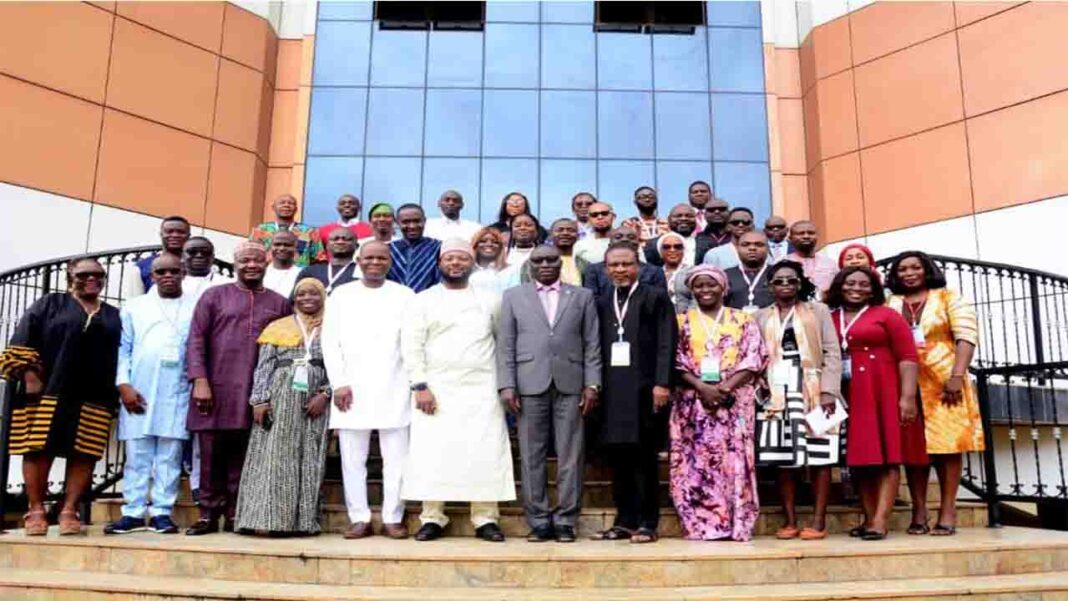

Africa (Commonwealth Union) _ To address the rising challenges of cybercrimes, terrorism financing, and money laundering in Nigeria, stakeholders have proposed the adoption of new technologies, emphasizing the role of regulatory technology (RegTech). At a Fin-Crime Summit held in Lagos, experts discussed the potential of technologies like artificial intelligence, machine learning, big data, and advanced cognitive analytics/algorithms to enhance customer identification, verification, and regulatory frameworks. The summit, organized in honor of Ehi Eric Esoimeme’s professorship, highlighted the need for Nigeria to overcome barriers hindering the swift implementation of these technologies in the financial system.
Esoimeme, an expert in public law and financial crime compliance, identified several challenges, including the absence of reliable government data, outdated national risk assessments, and a lack of explicit guidance on financial technology usage. He emphasized the impact of cyber-attacks, insider fraud, and ineffective information sharing on the effectiveness of anti-money laundering and combating the financing of terrorism (AML/CFT) efforts by financial institutions.
To address these challenges, Esoimeme recommended regular updates to the national risk assessment, timely maintenance of beneficial ownership information by the Corporate Affairs Commission (CAC), and institutional and operational reforms within financial institutions. These reforms include adequate staffing for cybersecurity monitoring, process automation to mitigate cyber-attacks, and dedicated human and technological resources to minimize risks.
Esoimeme also highlighted cross-border financial crime risks, such as bribery/corruption, illicit finance activity, modern slavery, drug trafficking, and trade-based money laundering, as priorities for the African Continental Free Trade Areas (AfCFTA). Rezaul Karim, Assistant Vice President – Compliance at HSBC Bangladesh, outlined the consequences of ineffective anti-money laundering leadership and discussed strategies for building and leading anti-money laundering teams. Prof. Paul Allieu Kamara emphasized the importance of prioritizing anti-money laundering in AfCFTA implementation to address complex problems.