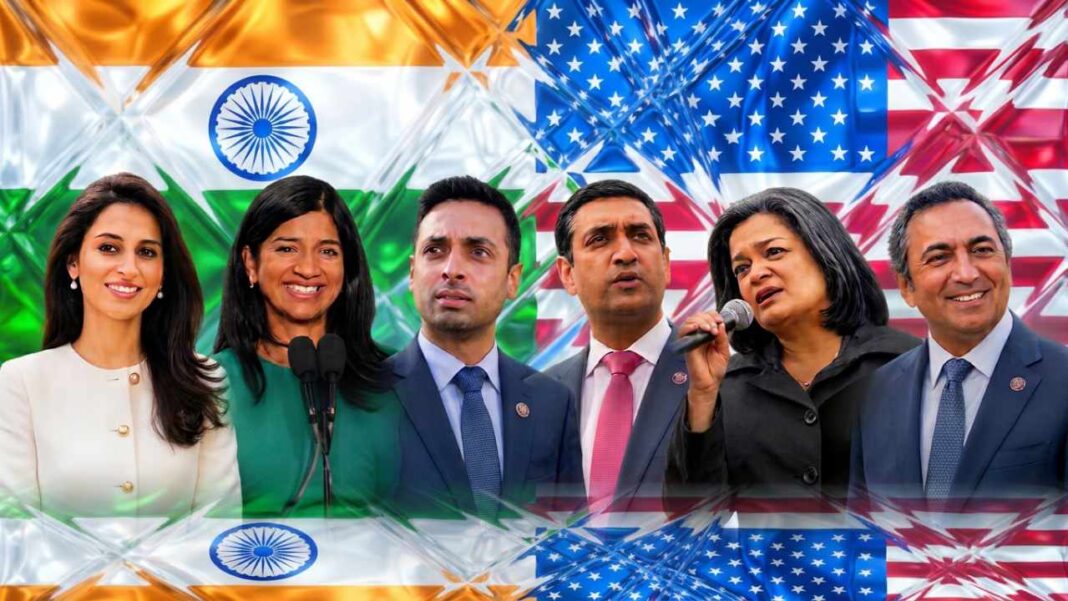
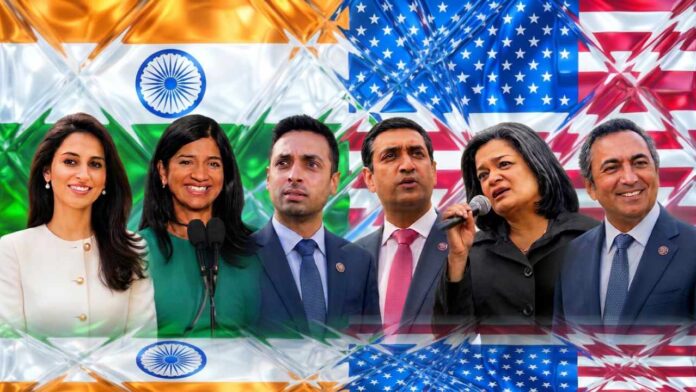

USA (Commonwealth Union)_ The 2026 US midterm elections have once again highlighted the growing political influence of Indian-Americans, with several candidates of Indian origin securing important victories at the federal, state and local levels. Despite facing political resistance, social prejudice and challenges surrounding immigration and identity, the community has continued to establish itself as an increasingly influential force in American public life. The victories of established lawmakers, alongside the entry of new faces into politics, reflect a community that is becoming more confident and politically active.
Accordingly, Indian-American Democratic lawmakers Ami Bera, Ro Khanna, Pramila Jayapal and Suhas Subramanyam won re-election to the US House of Representatives. In addition to the community’s representation in Washington, Pia Dandiya also made her congressional debut. Their victories were part of a larger Democratic victory, as the party seized control of both chambers of Congress and struck a blow to President Donald Trump’s administration. The results are important beyond individual electoral victories. They demonstrate how the children of immigrants have moved from professional success in fields such as technology, medicine and business into positions of political leadership. More importantly, they underline the growing ability of Indian-Americans to influence national debates, public policy and the direction of American politics.
Also read: A proud moment for India: Indian social worker Reema Nanavaty wins a prestigious US award!
Ami Bera
Ami Bera has secured an eighth term representing California’s 3rd Congressional District, defeating Republican challenger Robb Tucker. Bera, a trained physician, has become one of the country’s highest-ranking Indian-American politicians. He was elected in 2012 and has been a prominent figure in Congress, particularly in health care and foreign policy. A Los Angeles native and the son of Gujarati immigrants, his political rise is a tale of the opportunities a second-generation American can aspire to and of the growing prominence of such Americans in the country’s leadership.
Ro Khanna
Ro Khanna has won another term from California’s 17th Congressional District, which includes the heart of Silicon Valley. Khanna, the son of Indian immigrants, has become a powerful voice in the Democratic Party, particularly on issues of technology, economic policy and foreign relations. His re-election underscores the political clout of Indian-Americans in California, where the community has a strong presence in business, technology and public affairs.
Suhas Subramanyam
Suhas Subramanyam has won Virginia’s 10th Congressional District, beating Republican Dave Beckwith. Subramanyam is a younger generation Indian-American politician who served as an adviser in the administration of Barack Obama. His victory reflects the community’s growing influence beyond traditional Democratic strongholds and demonstrates its ability to build support among voters from different backgrounds.
Pramila Jayapal
Pramila Jayapal has secured another term representing Washington’s 7th Congressional District. Since winning election to Congress in 2016, she has become a leading voice for immigration reform, access to healthcare, and the rights of marginalized populations. Her political views have been criticized on occasion, including over differences in India’s domestic policies. However, her re-election demonstrates the importance of her political base and the continued support for her legislative priorities.
Pia Dandiya
Pia Dandiya’s victory in Florida’s 22nd Congressional District marks another important moment for Indian-American representation. A former teacher and high school principal, Dandiya secured 51.9 per cent of the vote against Republican Casey Askar. Having grown up in Palm Beach County, she represents a new generation of Indian-American leaders whose political identities are shaped by both their immigrant heritage and their experiences of growing up in the United States.
Pooja Sethi
Indian-American political participation is not limited to Washington. Pooja Sethi’s political career in Texas is indicative of the increasing participation of the community in state legislatures, which make decisions on subjects like education, taxation, healthcare and economic development that directly affect the residents.
Aruna Miller
In Maryland, Lieutenant Governor Aruna Miller secured another term alongside Governor Wes Moore. Born in Hyderabad, Miller moved to the United States as a child and later built a career in civil engineering and public service. Her continued political success illustrates how Indian-Americans are increasingly reaching senior positions in state government.
Also read: Thirteen years of learning, one incredible invention: Meet India’s flying car innovator!
Nabeela Syed
Nabeela Syed has won Illinois Senate District 26, defeating Republican Darby Hills and turning a Republican-held seat Democratic. Having entered the Illinois House of Representatives at just 23, Syed represents a younger generation of politically active Indian-American leaders. Her success also highlights the growing participation of women and minority communities in American politics.
Jyot Singh
In Georgia, Jyot Singh made history by becoming the first Sikh American elected to the state General Assembly. His victory in House District 97 is another example of the expanding political reach of the Indian diaspora.
Other Indian-American candidates who won
Several other candidates of Indian origin also recorded important victories in state and local contests. Accordingly, Arvind Venkat retained his seat in Pennsylvania, while Ram Villivalam continued his political journey in Illinois. Additionally, Rohit Malhotra’s victory in a special election for the Fulton County Commission in Georgia further strengthened Indian-American representation in local government.
Indian-American candidates who lost elections
However, the community’s electoral performance was not uniformly successful. Accordingly, Republican Vivek Ramaswamy, backed by Trump, lost the Ohio governor’s race to Democrat Amy Acton. Several other Indian American candidates, including Mahesh Ganorkar, lost their races. The results show that having Indian ancestry alone does not guarantee electoral success. Political ideology, local issues, party affiliation and voter preferences remain decisive factors.
Trump faces voter discontent
The wider election outcome represents a significant political challenge for Trump. Democrats have gained control of both the House and the Senate, ending Republican control of Congress. The result reflects widespread voter dissatisfaction over economic pressures, living costs, governance and concerns about the direction of the country. The change in congressional control could make it considerably harder for Trump to implement his legislative priorities. Democratic lawmakers will have more opportunities to scrutinize administration policies, grill government decisions and probe matters of public concern. Although Trump retains presidential authority, the new balance of power will require his administration to navigate a more challenging political environment.
What the results mean for the future of the Indian diaspora?
The growing political success of Indian-Americans sends a significant message about their shifting place in American society. Though there are fears of immigration restrictions and racial discrimination and political rhetoric targeted at minority communities, Indian-Americans are showing they can still play in the political system and win elections. Their influence is also extending beyond traditional areas of professional achievement. They are playing an ever-greater role in shaping the decisions on immigration, education, healthcare, foreign policy, technology and economic development. Their political success could encourage younger Indian-Americans to pursue careers in public service and seek greater representation at every level of government.
However, the future impact of the community will depend not only on ethnic identity but also on the ability of the community to cultivate relationships with larger segments of American society. Its members have different political views, and their electoral success on both sides of the political divide is an indication that the diaspora is not a politically homogeneous group. But eventually, the 2026 midterms are about more than just a string of wins by Indian American candidates. They are a reflection of the increasing maturity of a community that has developed from an immigrant population to a major force in the American political arena. For Trump, the results mean more congressional opposition and more scrutiny. For the Indian diaspora, it is a clearer opportunity to influence the country’s political future while building a stronger voice in the world’s most powerful democracy.