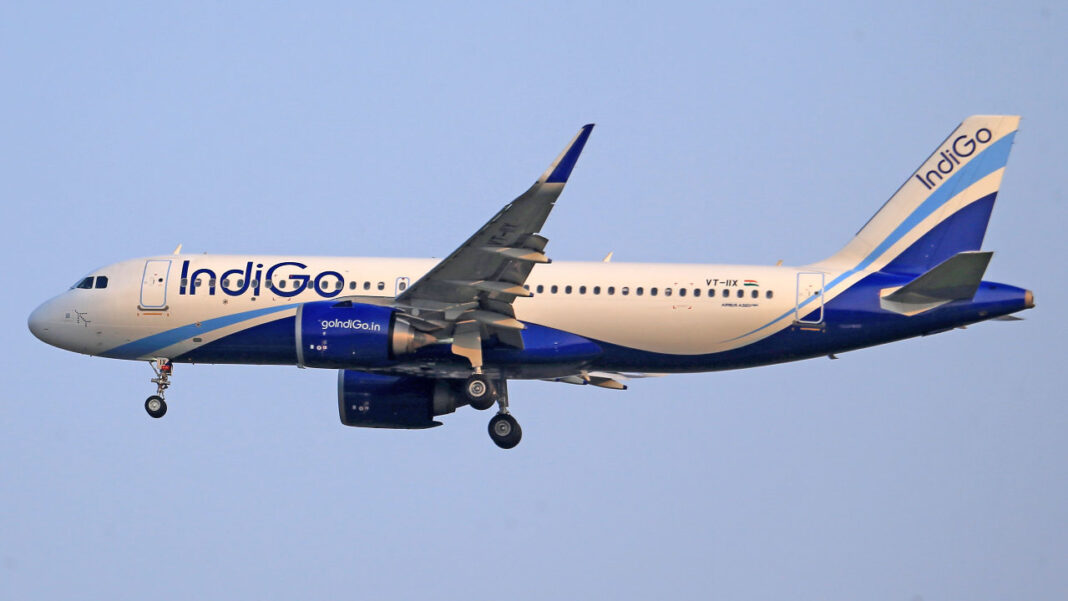

The Indian aviation industry seems poised for a new and potentially defining era, with signals emanating from Moscow. As reported in News.az, Vadim Badekha, chief executive officer of the United Aircraft Corporation, said that Indian carriers are evaluating the transition from narrow-body to regional turboprop or regional jets, with expressions of interest in acquiring between 100 and 200 Russian-made passenger airplanes, specifically the Il-114-300 Regional Turboprop and the SJ-100 Regional Jet. Badekha characterized India’s level of interest as substantial and the first time that a nation has endorsed these jets.
The timing of this potential acquisition is also significant, as the Indian aviation sector continues to be on the rise with one of the largest and fastest-growing passenger markets in the world today. Global demand for air travel continues to grow. The International Air Transport Association reported that in January 2023 total passenger volume had increased 3.8% year over year, and they project that by year-end 2026 the passenger volume will increase by 4.9% year over year and that Asia-Pacific will lead the way at 7.3%. Therefore, you can see how airplanes built to fly efficiently on thinner regional routes are becoming more important as strategic assets than as niche items.
The two Russian models are also relevant in this context. According to UAC, the Il-114-300 is a new variant of the existing Il-114 airframe designed specifically as a turboprop regional passenger aircraft with capabilities for “regional air services.” As such, it may be used to supplant some of the older turboprop aircraft that are currently in use for local air service on short-haul routes across the country. The Superjet 100, by contrast, is the newest development in the Superjet family. It is intended as a regional passenger aircraft for both short- and medium-haul operations. In each instance, the aircraft are not long-haul flag carriers but rather vehicles intended for service between two companion cities (i.e., commuters), feeder routes, and/or to connect regional airlines, creating an integrated air transportation network that is neither busy nor very effective.
The commitments expressed by the Russian side appear to go beyond mere interest and into active industrial cooperation. According to News.az, UAC has signed a Memorandum of Understanding with India’s HAL to assess options for the licensed production of the SJ-100. Badekha previously indicated that India could manufacture the first aircraft within three years. Additionally, UAC has stated that it aims to publicly display both the Il-114-300 and the SJ-100 import-substituting versions for the very first time outside the Russian Federation at Wings India 2026 in Hyderabad in January 2026 and that it has already entered into a Framework Purchase Agreement for six Il-114-300 aircraft with Flamingo Aerospace (FC-2). These promotions and partnership arrangements will help provide the impetus to establish credibility in one of the more competitive markets for commercial aircraft.
The other side of this coin, however, is that India seems to be interested in buying aircraft and trying to use that value to create a stronger bargaining position in future negotiations with the airlines. As the airline industry is constantly changing, we also have to deal with substantial increases in demand for air travel on domestic routes, where airlines are constantly experiencing changing costs, capacity, and profitability on their routes. The more choices that airlines have for aircraft suppliers, the greater their bargaining power will be and the greater variety of aircraft types they will have in their fleet. In addition, per Reuters (2023), the two largest airlines in India place record numbers of aircraft orders, and the country has a considerable amount of residual, untapped air travel capacity. The perception of a significant amount of potential will continue to grow. Should Russian aircraft offer economic, availability, and maintenance advantages, their contribution toward meeting India’s needs in the future with respect to aviation capacity will be substantial.
To this point, while it does not represent a signed mega-deal, it does provide an indicator of Indian airlines exploring alternatives to the traditional Airbus/Boeing duopoly in terms of regional options for aircraft supplies. That within itself represents a newsworthy item. Given the size and restlessness of the Indian aviation market, even the mere indication of preliminary interest could represent the first breath of wind preceding a dramatic shift in the aviation environment across India.