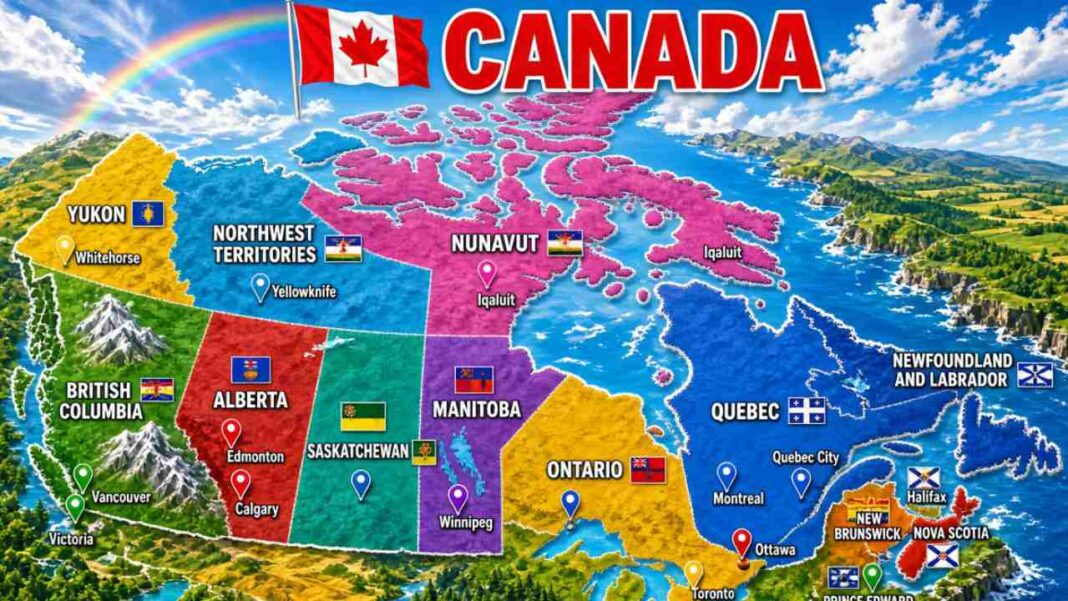

Canada’s Defence Minister, David McGuinty, has sought to place Prime Minister Mark Carney’s recent remarks about a hypothetical U.S. military action against Canada in the broader context of routine defence planning, saying that armed forces regularly examine a wide range of potential threats.
McGuinty said on Friday, 25 September, that military organisations around the world assess different risk scenarios, even when individual situations are considered highly unlikely. Carney’s interview, in which he described Ottawa‘s consideration of U.S.-led military action as an “extreme tail risk,” prompted his comments.
Carney told The New York Times that it would be irresponsible for a government not to prepare for exceptionally serious possibilities while making clear that such a scenario was not regarded as the normal or expected course of events. He did not disclose details about the government’s assessment.
The discussion has attracted attention because Canada and the United States (U.S.) have maintained an unusually close defense relationship for decades. The 2 countries cooperate through institutions, including NORAD, while their economies and supply chains are also deeply interconnected.
McGuinty emphasized that the long-standing security relationship remains important. He declined to provide operational information about any contingency assessment, instead characterizing the issue as preparation for a low-probability scenario rather than evidence of an imminent threat.
The comments follow earlier reports that Canadian military planners had examined a theoretical U.S. invasion scenario. Such planning is intended to test preparedness and identify vulnerabilities rather than predict that a particular event may occur.
The issue has also emerged against a backdrop of repeated comments from U.S. President Donald Trump about Canada becoming the 51st American state. Trump has previously said that his approach would involve economic pressure rather than military force. Separately, U.S. Admiral Samuel Paparo dismissed the prospect of an American invasion of Canada as unrealistic.
The latest debate, therefore, centers less on an expected military confrontation and more on how governments prepare for extreme contingencies while maintaining established alliances. Canadian officials continue to stress that contingency planning does not automatically indicate a forecast of future conflict.