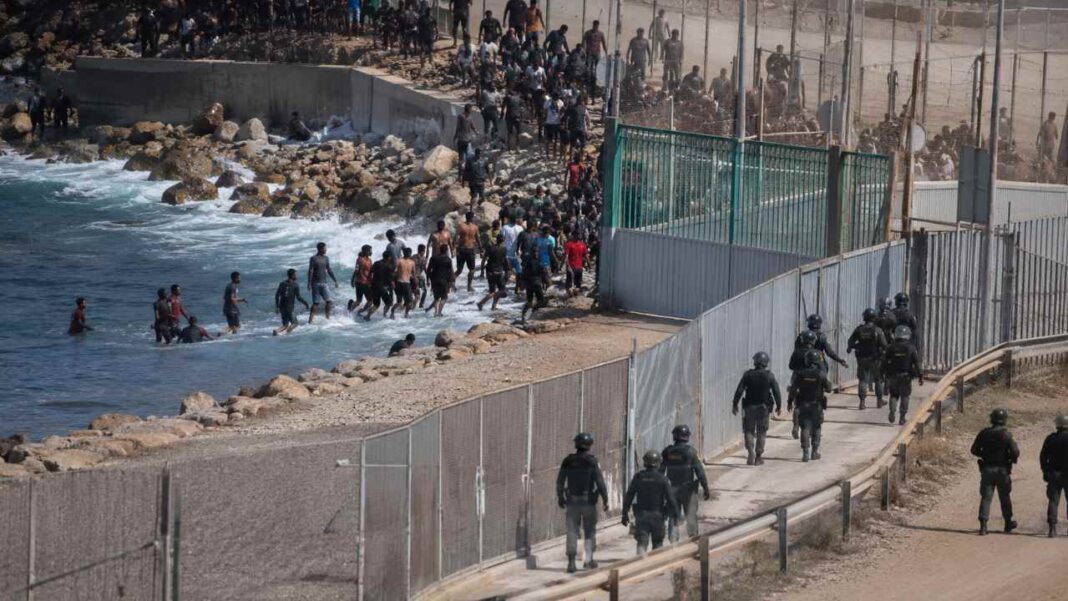

Security has been significantly increased along the borders of Morocco and Spain after calls were made regarding social media for another mass crossing into the Spanish enclave of Ceuta. This action is brought right after the unprecedented illegal migration surge which took place in late July. Around 72,000 people made a great effort and attempted to swim or climbed over the border breakwater to reach Ceuta from Morocco in this invasion.
Authorities in Morocco have sent out security personnel to take their place along the border in order to monitor anything that could come through after messages circulated online. The messages encouraged more people to attempt another crossing on August 15, 2026. The source of the messages remains unclear and has not yet been found, but precautions have been taken by officials in order to prevent another repetition of the previous event. Spain has also strengthened security and has made stark, clear warnings against any new attempt to enter its territory illegally.
The July surge occurred partly due to false claims spreading on social media that Spain’s borders were open to large numbers of people, allowing them to travel towards Ceuta, and was driven by economic improvement and misinformation. As a result of the misinformation, many attempted to swim around the border barriers or cross by land. Local authorities were highly unprepared for this chaotic movement which led to numerous deaths. At least 80 people have been reported to have been found dead in connection with this incident, while at the same time, hundreds have been requiring medical treatment.
The crisis has also created other issues such as political tensions between Morocco and Spain. Ceuta and neighbouring Melilla are Spanish territories that are located on the northern side of the African coast, although Morocco claims both territories. Spain, however, has rejected any negotiations over their sovereignty, stating clearly that the cities are an integral part of Spanish territory.
Social media footage has emerged of distressed locals complaining about feeling unsafe and concerns over security. Despite the bulk of the illegal migrants being repatriated, reports indicate that many still remain in Spanish territory.
With another potential crossing being promoted online, Morocco and Spain are facing renewed pressure to prevent further loss of life. The two countries will also face continued challenges in managing illegal migration.