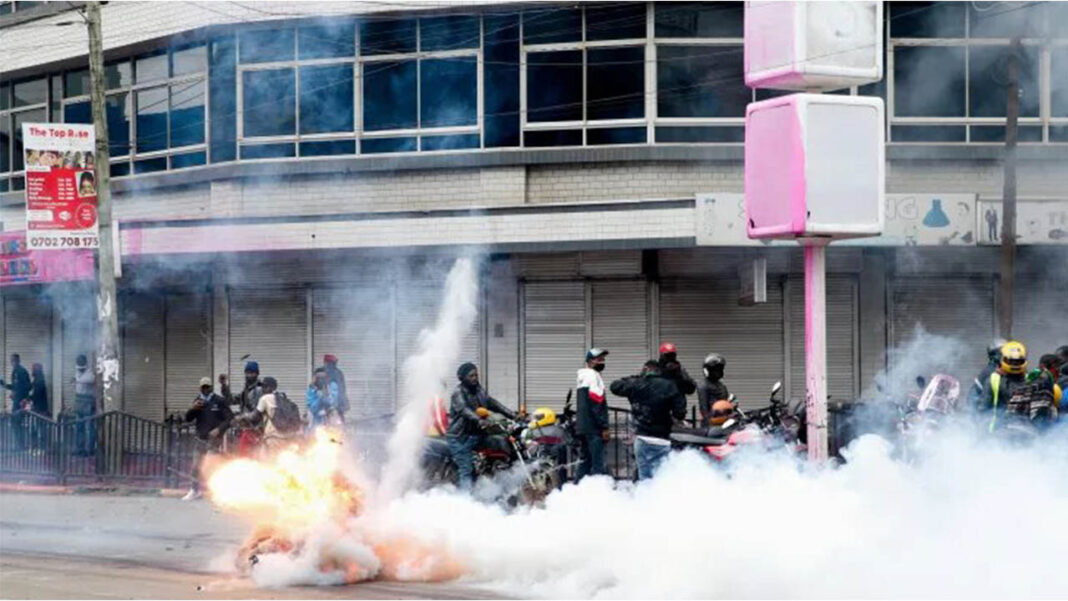
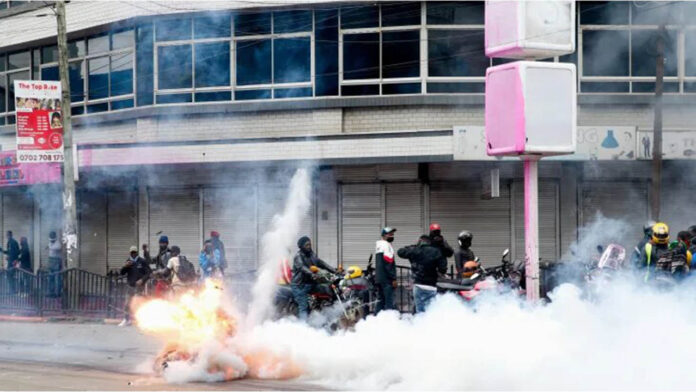

Africa (Commonwealth Union) _ In a dramatic escalation of civil unrest, Kenyan police resorted to tear gas on Tuesday, July 16, to disperse protests against President William Ruto, despite his recent reforms. Activists, enraged by proposed tax hikes, spearheaded a call for a nationwide shutdown, marking the largest challenge to Ruto’s two-year tenure.
Even after Ruto retracted $2.7 billion in tax increases and overhauled his cabinet, discontent persists. Protesters accuse Ruto of mismanagement, corruption, and responsibility for the deaths of demonstrators in previous rallies. On Tuesday, the unrest saw about 200 protesters in Kitengela, near Nairobi, burning tires and chanting anti-Ruto slogans. Similar scenes unfolded in Nairobi’s city center and Mombasa, where police deployed tear gas to control the crowds.
Ruto has announced plans for talks to address the protesters’ grievances, but these have yet to commence. Many activists are boycotting the discussions, demanding immediate and concrete action on corruption and other pressing issues. The president’s spokesperson has remained silent on the escalating situation.
Kenya’s economic woes are intensifying, with over 30% of the country’s revenue being used to service debt. President Ruto is under pressure from international lenders to reduce deficits while contending with a populace grappling with soaring living costs. What began as peaceful protests have turned increasingly violent, resulting in over 40 deaths according to human rights organizations.
Adding to the controversy, Ruto recently accused the Ford Foundation of funding the protests, a claim he has not substantiated with evidence. The Ford Foundation has categorically denied these allegations, maintaining that it does not finance protests and adheres to a non-partisan stance.
The ongoing protests highlight a nation at a crossroads, grappling with economic hardship and governance issues. As Ruto attempts to navigate these challenges, the persistence and scale of the protests underscore a deep-seated dissatisfaction that reforms alone have yet to quell. The situation remains fluid, with the potential for further unrest if substantive dialogue and solutions are not swiftly implemented.