
A warm welcome marks the beginning
India (Commonwealth Union)_ Prime Minister Narendra Modi commenced his three-day trip to Indonesia with a special welcome in Jakarta, emphasizing the close and expanding partnership between the two nations. In a rare diplomatic gesture, Indonesian President Prabowo Subianto personally received Modi at the airport, accompanied by four senior ministers. The prime minister’s aircraft was escorted by Indonesian Air Force F-16 and Sukhoi-30 fighter jets as it entered Indonesian airspace, reflecting the importance Indonesia attached to the visit. A ceremonial guard of honour and a traditional welcome were extended upon arrival, setting the tone for a visit aimed at bolstering strategic relations.
Modi expressed gratitude to President Prabowo and the people of Indonesia for their warm reception, saying he would always remember the welcome. The visit was designed to bolster India’s Act East Policy and its MAHASAGAR Vision, while increasing cooperation in the Indo-Pacific region. Both countries reaffirmed their commitment to promoting a free, open and inclusive Indo-Pacific through closer collaboration in defence, trade, maritime security and regional development.
Also read: The horrific prison revolt: What triggered Sri Lanka’s deadliest prison riot?
Celebrating shared cultural heritage
Soon after his arrival, Prime Minister Modi attended a cultural programme that showcased the deep historical links between India and Indonesia. Performances included Indonesia’s famous Wayang Kulit shadow puppetry based on the Ramayana, a Bharatanatyam recital by Indonesian students and a Buddhist devotional dance. Modi also watched a graceful Bharatanatyam performance by Jakarta’s Samanvaya Group and praised the artistes for preserving India’s classical traditions far from home. He said such performances highlighted the age-old cultural connect between the two countries and praised the commitment of Indonesian artists in preserving Indian heritage. The programme showcased how Indian traditions continue to influence Indonesian society, especially in the fields of art, dance, literature and religious heritage, considering that the two countries are separated by thousands of kilometres.
Modi connects with the Indian diaspora
Prime Minister Modi also interacted with the Indian diaspora in Jakarta, who gave a rousing welcome to the PM. Addressing the gathering, he acknowledged them for being ambassadors of Indian culture and contributing to Indonesia’s development.
While addressing the gathering, Modi highlighted India’s economic growth amid global challenges. He said that sustained reforms had helped India maintain strong economic growth and improve the lives of millions through expanded social welfare programmes. According to him, over one billion people now benefit from various social security schemes introduced over the past decade. He also underlined the importance of education and cultural exchanges between the two countries.
Referring to Nalanda University, he said several Indonesian students were pursuing higher studies there, strengthening educational ties between India and Indonesia. Adding a lighter touch to the event, Modi remarked that Bollywood films, including the popular movie Kuch Kuch Hota Hai, continue to enjoy a loyal fan base in Indonesia, reflecting the cultural closeness between the two nations. President Prabowo, who attended the event, spoke warmly about India’s influence on Indonesian civilisation. He recalled being the chief guest at India’s Republic Day celebrations earlier and said Indonesia had much to learn from India’s development journey. He also spoke of his own Indian ancestry while praising the centuries-old relationship between the two countries.
Also read: From ceremonies to agreements: Defining moments of Modi’s Seychelles visit!
Historic address to the Indonesian Parliament
One of the most significant moments of the visit came when Prime Minister Modi became the first Indian prime minister to address the Indonesian Parliament. His speech focused on strengthening the long-standing partnership between the two democracies and building a shared future based on mutual trust and common values. Modi described India as the “Mother of Democracy” and said democratic traditions remained central to India’s identity. He stressed that India and Indonesia were natural partners connected by history, culture, trade and shared aspirations. Recalling over two thousand years of civilisational exchanges across the Indian Ocean, he said the sea had never divided the two nations but had always acted as a bridge linking their people. He pointed out that even the names India, Indonesia and the Indian Ocean reflect the historical ties connecting both countries.
The prime minister also highlighted the common cultural symbols such as the Ramayana, the Mahabharata, Nalanda University, Wayang performances and Indonesia’s world-famous Borobudur and Prambanan temples. According to him, these shared traditions continue to strengthen relations even in the modern era. Modi also drew parallels between India’s vision of becoming a developed nation by 2047 and Indonesia’s Golden Indonesia 2045 programme. He called for deeper cooperation in trade, digital technology, food security, energy, connectivity and innovation to achieve these national goals. Referring to Indonesia’s national motto, Bhinneka Tunggal Ika or “Unity in Diversity,” and India’s philosophy of Vasudhaiva Kutumbakam, meaning “The World is One Family,” Modi said both countries shared values that promoted peace, inclusiveness and harmony. He concluded by saying that the partnership between India and Indonesia was not only based on historical friendship but also on a shared commitment to shaping a stable and prosperous Indo-Pacific region.
Bilateral discussions with the Indonesian president
Prime Minister Narendra Modi and the President of Indonesia Prabowo Subianto held wide-ranging talks at the Istana Merdeka in Jakarta and agreed to enhance the Comprehensive Strategic Partnership between India and Indonesia. Discussions included expanding cooperation in defence, trade and investment, maritime security, digital technology, connectivity and critical minerals. The two leaders reaffirmed their commitment to a free, open and inclusive Indo-Pacific and expressed support for reforms in global institutions such as the United Nations Security Council. They also agreed to closely coordinate with each other in international forums such as G20, BRICS, ASEAN and the Indian Ocean Rim Association to further the interests of developing countries.
Bilateral trade is already strong and the talks focused on economic cooperation, with the two countries discussing how they could boost investments and strengthen supply chains for sectors like steel, renewable energy and critical minerals. India pointed to Indonesia’s large nickel reserves, vital for electric vehicle batteries and clean energy technologies, as an important area for future cooperation. The leaders also underlined the importance of improving maritime security and agreed to co-develop the strategically important Sabang Port close to the Strait of Malacca. The project is expected to improve regional connectivity while strengthening maritime cooperation between the two countries. Both sides also adopted a firm stand against terrorism, calling for stronger international cooperation and a zero-tolerance approach towards globally designated terrorist organisations.
Also read: The 2026 best island on earth revealed: Sri Lanka takes the top spot!
Defence partnership – The BrahMos deal
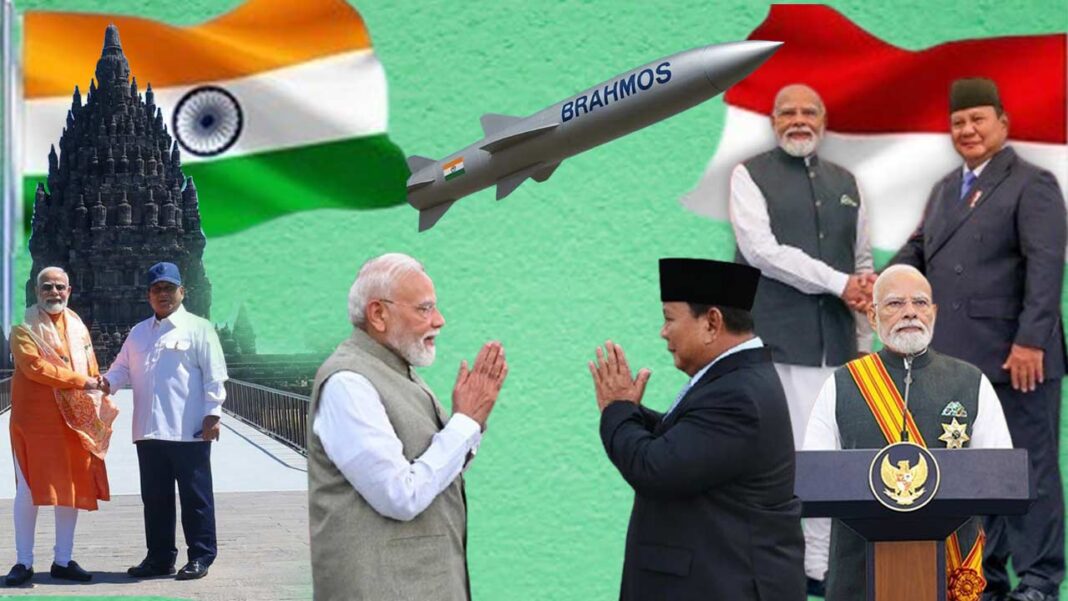
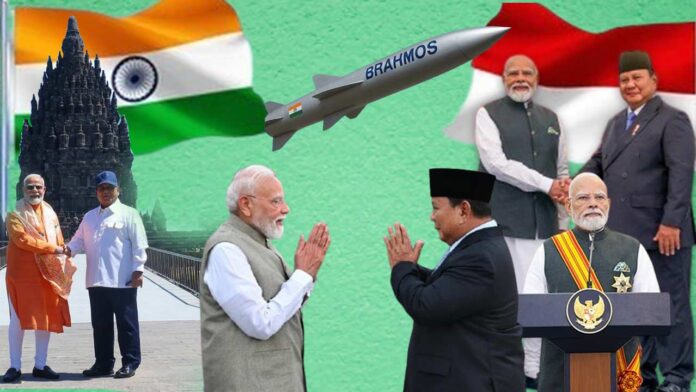
Defence cooperation emerged as one of the biggest outcomes of the visit. India and Indonesia have agreed in principle to purchase an additional battery of the BrahMos supersonic cruise missile system as part of deepening defence cooperation between the two countries. The talks also focused on the supply of Astra Mk-1 beyond visual range air-to-air missiles for Indonesia’s fleet of Su-30 fighter jets. The number of missiles will be determined during contract negotiations but the deals mark another milestone in India’s expanding defence exports. The BrahMos missile system is a joint venture between India and Russia and is emerging as one of India’s flagship defence products. Indonesia is the latest country to step up defence ties with India through advanced military technology. The visit was part of New Delhi’s wider strategy to build stronger security partnerships across Southeast Asia while bolstering regional stability in the Indo-Pacific.
A series of agreements signed
The visit also produced a wide range of agreements aimed at expanding cooperation beyond defence. India and Indonesia signed several Memorandums of Understanding and implementation agreements covering telecommunications, healthcare, disaster management, outer space, education, research, food security, digital governance and critical minerals. The agreements included cooperation in technology and telecommunications, regulation of medical products, peaceful uses of outer space, disaster management, steel supply chains, election technology and counter-terrorism. Additional understandings were reached on coast guard cooperation, healthcare workforce development, official statistics, peaceful uses of nuclear energy and the conservation of Indonesia’s cultural heritage. These agreements reflected the shared commitment of both governments to build a stronger partnership that supports economic growth, technological innovation and regional resilience.
The MoUs signed before the two leaders are as follows:
- MoU on Cooperation in Technology and Telecommunication Services
- MoU on Cooperation in Medical Product Regulation
- MoU on Cooperation in Peaceful Exploration and Uses of Outer Space
- MoU on Cooperation in Disaster Management
- MoU on Cooperation in Mineral and Technology for Steel Supply Chain
- MoU on Cooperation in Management and Use of Technology in General Elections
- MoU on Counterterrorism Cooperation
Several agreements were also signed during the bilateral meeting, including:
- Implementation Agreement (IA) on Dialogue between Coast Guard as an Extension of MoU on Maritime Safety and Security Cooperation
- Letter of Intent (LoI) on Official Statistics, Capacity Building, and Strategic Collaboration
- Implementation Agreement (IA) on Healthcare Workers’ Professional Development Collaboration as a derivation of the MoU between Ministry of Health of the Republic of Indonesia and Ministry of Health and Family Welfare of the Republic of India
- Agreement on Cooperation for Peaceful Uses of Nuclear Energy
- Letter of Intent (LoI) on Conservation and Restoration of Prambanan Temple Compounds, Indonesia
Also read: The 30-day jail rule could unseat top leaders: India’s new bill targets jailed PMs and CMs!
Modi honoured with Indonesia’s Highest Civilian Award
During the visit, President Prabowo Subianto conferred Indonesia’s highest civilian honour, the Bintang Adipurna, on Prime Minister Modi in recognition of his contributions to strengthening bilateral relations. The award is presented to individuals who have made exceptional contributions to the unity, prosperity and development of Indonesia. It became the 35th international honour received by Prime Minister Modi during his tenure. Accepting the award, Modi expressed gratitude to the president, the Indonesian government and its people. He dedicated the honour to the people of India, saying it symbolised the deep friendship and trust shared between the two countries. The recognition also highlighted the growing importance of India-Indonesia relations and reflected the steady progress made in expanding cooperation across multiple sectors.
A visit to the 1000-year-old Prambanan Temple and the restoration project
A key symbolic highlight of the visit to Yogyakarta was the joint inauguration of a conservation and restoration project by Prime Minister Modi and President Prabowo at the Prambanan Temple, a UNESCO World Heritage site. The 9th century Hindu temple complex dedicated to Lord Shiva, Vishnu and Brahma is one of the most impressive examples of classical Hindu temple architecture in Southeast Asia. The vulnerability of the temple complex to damage from earthquakes and natural disasters highlighted the importance of the conservation work, with India providing assistance in restoring some of the smaller temples in the complex through the Archaeological Survey of India.
Modi said the project was a symbol of India’s dedication to preserve the shared cultural heritage that links the two countries. During his visit, Modi offered prayers at the temple and called it a permanent symbol of the centuries-old civilisational bond between India and Indonesia. He said the restoration project would strengthen people-to-people connections while preserving an important part of the region’s history for future generations. The initiative also forms part of India’s broader Act East Policy, which seeks to deepen cultural and historical engagement with Southeast Asia alongside strategic and economic cooperation.
A visit focused on the future
Prime Minister Modi concluded his Indonesia visit by describing it as a major step towards a stronger strategic partnership. He thanked President Prabowo and the people of Indonesia for their warm hospitality and said the discussions had opened new opportunities for cooperation across defence, maritime security, critical technologies, artificial intelligence, digital innovation and capacity building. The visit demonstrated that India and Indonesia are expanding their relationship beyond traditional diplomacy. The combination of strategic cooperation and cultural engagement signalled both countries’ intent to forge a partnership that contributes to regional peace, economic growth and long-term stability.
From strengthening defence ties and boosting economic cooperation to celebrating centuries of shared heritage, Modi’s visit reflected India’s broader effort to deepen its engagement with Southeast Asia under the Act East Policy. The results further cemented the growing strategic convergence between New Delhi and Jakarta, making both countries key players in determining the future of the Indo-Pacific. Wrapping up his three-day visit, Prime Minister Modi left for Australia, continuing India’s diplomatic outreach in the Indo-Pacific region and capitalising on the momentum generated by his interactions in Indonesia.