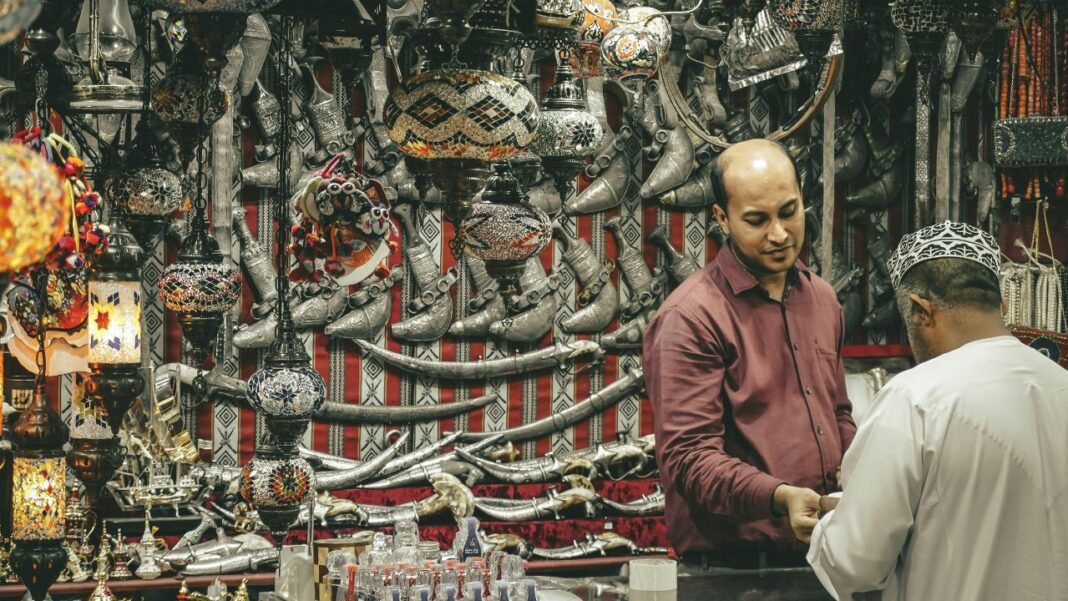

Leading up to Eid, parts of Oman commence their celebration in a significant and literal “descent” from a mountain or settlement by way of people congregating in shared public squares and neighbourhoods, which heritage specialists indicate is captured by the Arabic word for “market” (Habta), an ancient Arabic term meaning “to come down.”
Each public participation is in keeping with cultural customs and celebrates the preservation of Arab heritage through trade and barter among Oman citizens. It is not simply a matter of shopping at a typical retail outlet; rather, it represents the production of a ritualistic market where the community engages in economic activity, domestic life, and a show of community to one another, all combined to create one large event to be held annually.
There are different types of Habta markets in every geographic region of Oman, but in all of them, there is a common theme: a narrow time frame (intensity) to conduct trade that moves an abundance of materials (livestock and whatever would be considered part of the traditional Eid celebration). In a report prior to Eid Al-Fitr in 2012 on markets operated by Habta, many types of goods were being offered in Habta markets (gifts, fresh nuts, kids’ toys and items needed for their home) and thus served to transition each citizen from the final days of Ramadan to the beginning of Eid.
The ramp-up in activities during Eid also has an impact on the economy. As Eid Al-Adha (Festival of Sacrifice) gets closer in Oman, livestock will be bought and sold in larger quantities because of the seasonal increase in demand for livestock during Eid festivities. The livestock trade in Oman typically sees much of the livestock sourced from outside Oman, such as sheep, goats and cattle from Somalia, Sudan, Kenya, and Australia, as indicated by the Oman Observer. The increased volume of animals coming into Oman for Eid means that the Consumer Protection Authority takes measures to conduct increased market and store inspections during this period to protect consumers and stabilise prices.
Habta is more than just a marketplace; it represents a source of both recognition and belonging to one’s community. Habta is a community event where families gather together with joy and to celebrate their culture and identity – this type of community event outlasts the purchase of items and can be seen by some as a way to maintain their connection to others at this point in time through the festival of Eid. Habta is one of the few places remaining in Oman that continue to provide an opportunity to purchase a piece of one’s culture or identity while celebrating the Festival of Sacrifice, in an era where the majority of shopping occurs at large malls or through one-click purchases. Top of Form