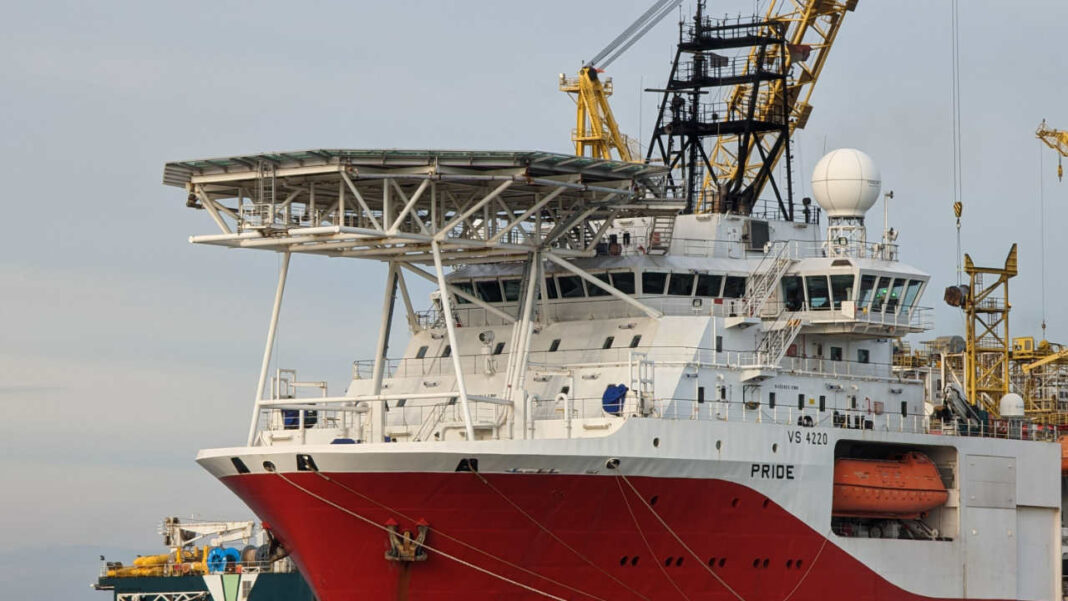

SUVA, Fiji, 28 September 2026 — Suppose the most evident proof of climate change impact on the Pacific is not to be found on the land, but rather in depth offshore and underwater.
This is the particular issue now being tackled at the open ocean. The 94-meter research ship RV Investigator left Fiji on the 27th of September 2026 to start an oceanographic expedition that will trace the route along the 170 degrees W longitude, from the equator to the ice edge of Antarctica. The journey is planned to last until the 16th of December 2026.
This vessel belongs to CSIRO, the national Australian scientific agency, and will be busy making accurate estimates of the changing ocean shore both chemically and physically. Among other key parameters of the oceans being studied by the experts are temperature, nutrients, carbon, and oceanic circulation, aimed at showing the ocean’s reaction to climate change and its influence on climate conditions.
Nevertheless, there is a certain fascinating factor of the expedition: the researchers are not merely discovering new territories. They are going back to places researched around ten years ago.
This creates an opportunity to invent a “scientific time machine.” They can compare current measurements to past ones to see how fast the Pacific Ocean is changing. The previous measurements in the section of 170°W were carried out by RV Investigator in 2016 and by other research ships in 2009 and 2001, which is crucial in terms of history.
Dr. Bea Pena-Molino, the chief scientist, stated that the task the research group was working on consisted of revealing the influence of certain factors such as warming and El Niño on the condition of oceans.
The significance of the expedition also transcends scientific discovery, as the Western Pacific region is experiencing issues like warming oceans, ocean acidification, and impacts resulting from changes in the Antarctic, although it has been under-observed. Measurements obtained will be vital for climate models, IPCC reports, and climate predictions of the region.
Seventy scientists from over 15 research institutions worldwide are collaborating with the crew on the expedition. Among the participants, there are four young scientists from the Pacific region, including two scientists from Fiji, which will add a regional perspective to findings of the expedition that could help prepare for building new infrastructure, manage the marine resources, and assess environmental threats.
As the RV Investigator keeps moving southward, it is acting as a scientific stopwatch measuring an ocean in the state of transition.