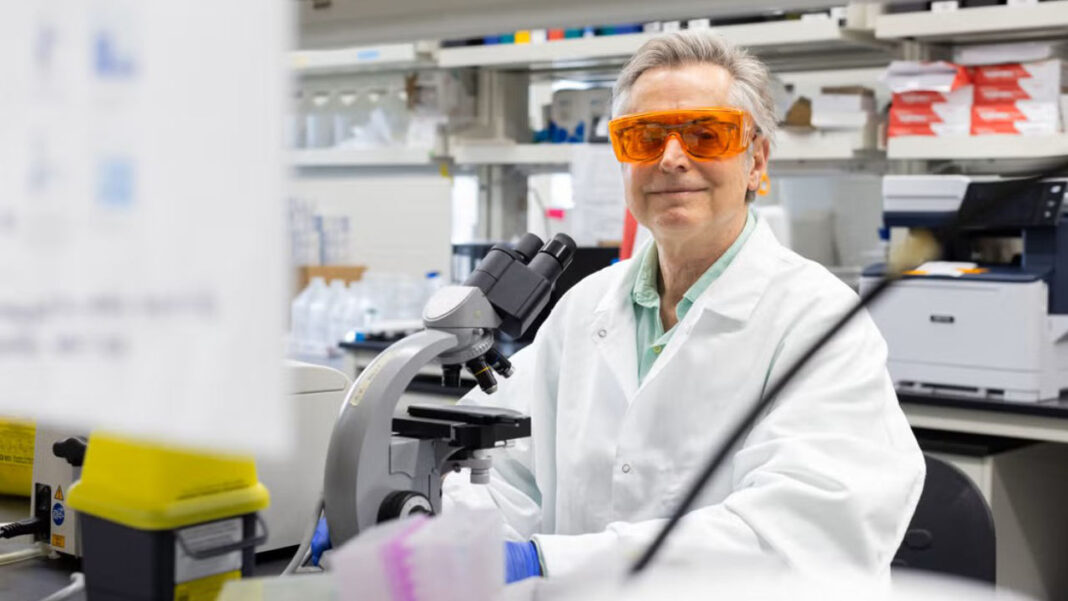

A team of doctors and scientists in Canada has shared an important medical case. They are from University Health Network, Unity Health Toronto, and the University of Toronto. They reported what may be the first case in Canada where a person with HIV is now in long-term remission. This could even be a possible cure.
The patient is a 62-year-old man. He is known as the “Toronto patient.”. His case was presented at a national HIV research conference in Canada. Experts say this case gives hope for the future of HIV treatment, particularly because it demonstrates the potential for long-term remission and the effectiveness of new therapeutic approaches. The man was first diagnosed with HIV in 1999. He lived with the virus for 27 years. During this time, he took HIV medicine regularly. This medicine is called antiretroviral therapy, or ART. It helped control the virus in his body.
In 2021, he became very sick with a type of blood cancer called ‘acute myelogenous leukaemia’. Because of these circumstances, doctors decided he needed a bone marrow transplant. This is a serious and risky procedure, but it can save lives in cancer patients. The transplant was done at a leading cancer centre in Toronto. Doctors carefully chose a special donor. This donor had a rare genetic change called the CCR5 delta-32 mutation. This mutation is crucial in HIV research. HIV normally enters the body’s immune cells using a protein called CCR5. This protein sits on the surface of certain cells. But people with the delta-32 mutation do not have this protein. Because of this, HIV cannot easily enter their cells.
This makes them naturally resistant to HIV. This mutation is very rare. It is found in about 1% of people of European background. Doctors used donor cells with this mutation. They hoped it would help the patient fight both cancer and HIV. After the transplant, the patient kept taking HIV medicine for a while. This medicine is called ART. In July 2025, doctors slowly stopped his ART treatment. They did this procedure very carefully because HIV can return if treatment is stopped. By April 2026, the results looked very positive. The virus was still not found in his body. Standard tests could not detect HIV in his blood. This condition is called sustained remission.
Doctors say if the virus stays undetectable for about two and a half years after stopping treatment, he may be considered cured. So far, only about 10 people in the world have reached this stage. Researchers have closely monitored the patient for five years. They used very sensitive tests to check for any sign of the virus. Over time, they saw a steady drop in HIV levels in his body. They also looked for hidden HIV in what is called the “viral reservoir.” This is where the virus can hide in the body in a dormant state. It is one of the biggest challenges in curing HIV. Even when the virus is not active, it can come back later. In this patient, the amount of hidden virus became extremely low.
Scientists could not find active virus in his immune cells. They also did not see the usual immune response that happens when HIV is present. Even with this success, doctors warn that bone marrow transplants are not a normal treatment for HIV. The procedure is risky and can have serious side effects. It is only used in patients who already need it for life-threatening cancers. However, cases like this are very valuable for research. They help scientists understand how a cure might work.
The goal is to find safer and simpler treatments. Which can give the same results without such high risks. Researchers are now focusing on the body’s immune system. Scientists are now studying special cells called T cells. These cells can find and destroy hidden HIV in the body. This may be an important step toward a future cure. Advanced labs in Toronto also played a key role in this research. These labs allow scientists to safely study dangerous viruses like HIV. This helps researchers discover new treatments more quickly.
The research was supported by several health organizations in Canada. Experts say that each new case like this brings us closer to ending HIV. This is not a cure for everyone yet. But it gives strong hope. It shows that a world without HIV could be possible one day.