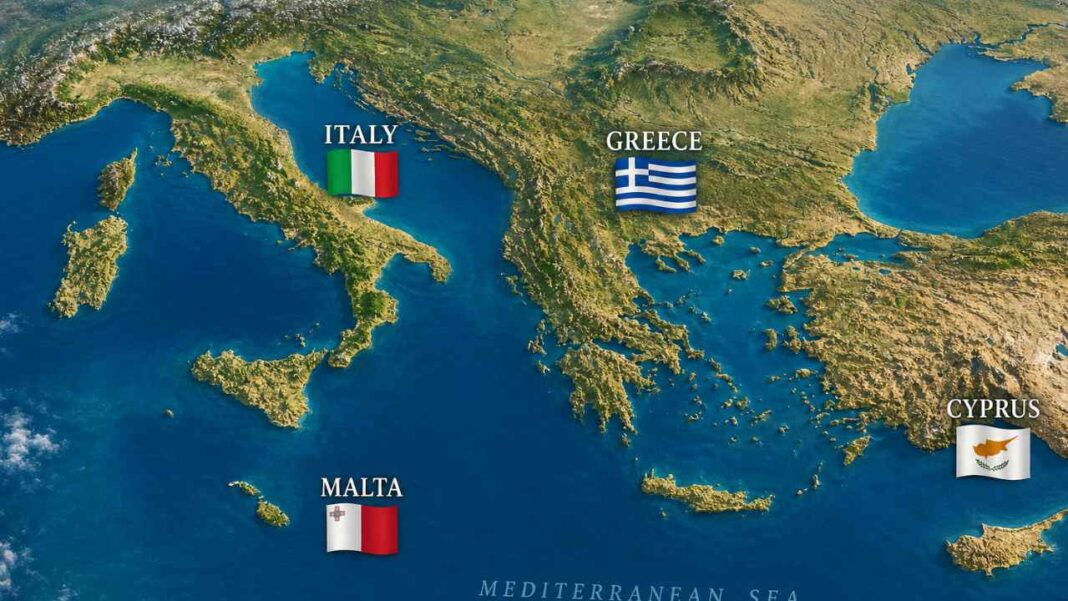
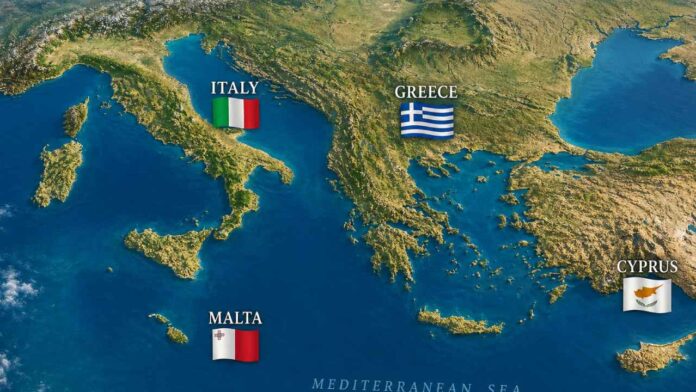

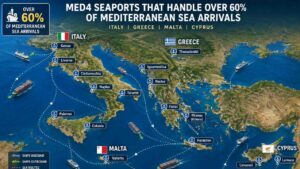
In a meeting on the sidelines of an informal European Council in Ayia Napa on Friday, April 24th, 26th, the leaders of Cyprus, Greece, Italy, and Malta agreed to coordinate policies to avert a new influx of irregular migrants linked to instability in the Middle East. This quartet, also referred to as MED4, requires faster EU funding for border infrastructure. Additionally, the group called for more flexible relocation schemes and a tougher stance on flag-of-convenience rescue vessels. The Italian foreign minister, Antonio Tajani, told reporters that the group would ‘speak with one voice’ at the next Justice & Home Affairs Council. Their aim is to press for mandatory solidarity when disembarkations exceed agreed thresholds. These four countries handle over 60% of Mediterranean sea arrivals. However, they say that present burden-sharing is largely voluntary & ineffective, which has led to increased pressure on local resources and heightened tensions among the countries involved. Business lobbies both in Milan & Valletta welcomed this initiative. They argued that unmanaged arrivals strain local services, besides fuelling public opposition to the skilled migration programs that enterprises may require. However, they also warned that the overly restrictive maritime rules may complicate crew-change operations at key ports such as Gioia Tauro, besides Limassol, potentially leading to delays in shipping schedules and increased operational costs for businesses reliant on timely crew changes.
In such an evolving regulatory climate, both travellers and HR departments may benefit from specialised support. VisaHQ keeps abreast of shifting entry requirements across the MED4, besides the wider EU. These help applicants in gathering the correct documents. Additionally, when booking appointments, it is important to avoid last-minute surprises, whether they are for short-term business travel or longer work assignments.
For global mobility teams, the message is twofold: heightened border vigilance is likely along the Central Mediterranean route. However, a common MED4 position, which refers to a unified stance among Mediterranean countries on migration issues, may accelerate EU-wide digitisation of work visa channels. This is a long-standing request from employers. The group entrusted the interior & migration ministers with drafting an action plan by late May ’26. This may offer a concrete timeline for forthcoming policy shifts. Observers noted that the MED4’s bargaining power may have increased since Germany signalled it may seek temporary opt-outs from the new EES (European Electronic System for Travel Authorisation). This may ease airport queues, benefiting southern states’ leverage in intended broader migration tasks.