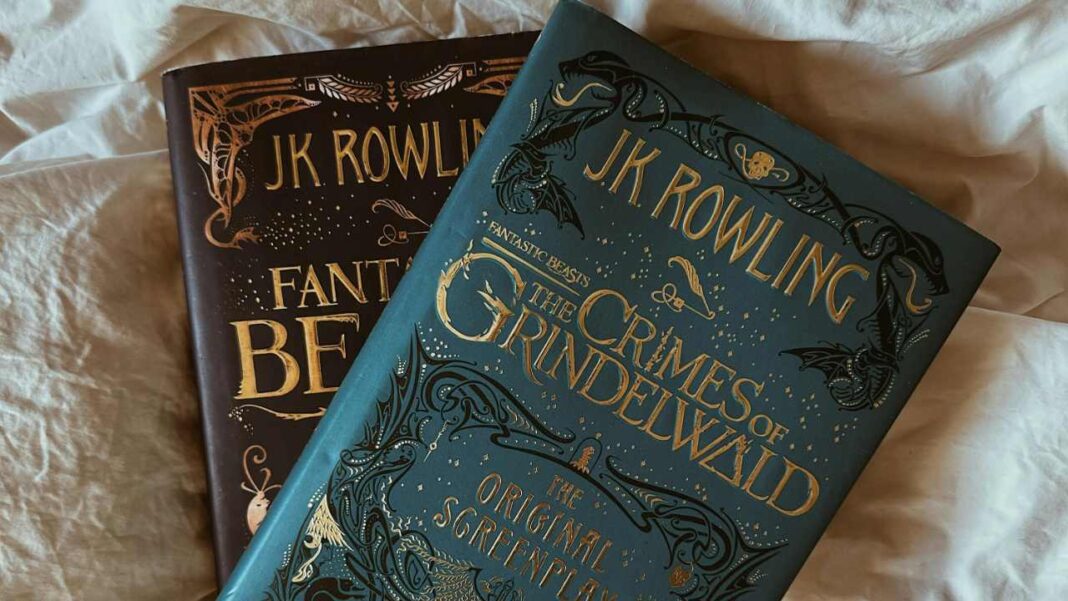

One of the few books that cross the line between fiction and scholarly impracticality in such a convincing manner is J.K. Rowling’s Fantastic Beasts and Where to Find Them. What is presented as an obscure novelty item for Harry Potter fans quickly develops into a very sophisticated pseudo-academic book that creates a new area of research based around the study of magical animals: magizoology.
Rowling does not only create new magical creatures but also places them within what appears to be a realistic system of regulation, ecology, and history. The text is written in the style of a government-issued booklet published by the Wizarding community, along with information such as classification of creatures, laws regulating magical creatures, and who oversees the regulation of magical creatures. The five classifications of danger established by the Ministry of Magic mimic real scientific classification systems, so the narrative has anthropological validity.
The work’s depth makes it more than just a story; it is a satire on humanity and wizardkind—how they have fears of new and unknown things, the need to control nature around them, and also a bureaucratic need to have rules and regulations regarding all things magical, including creatures found in magical habitats. An example of how these satirical traits can be seen is that (in the book), there are multi-faceted systems created to keep magical creatures hidden from Muggles. These systems include memory modification and isolated information campaigns. By comparing these to real-world equivalents, we can demonstrate their similarities in controlling or denying information.
Rowling also does a much better job than most writers at addressing ecological logic in that she does not create some random imaginary magical creature for her story but instead gives each creature a place within a habitat, assigns it behaviours that would create a unique species, and asserts each species is part of an overall living ecosystem. For example, dragons use an extensive amount of land to live and have very specific breeding behaviours; the Chizpurflies are parasitic bugs that borrow life from the living; even an Augurey is based on scientific criteria for predicting rain based on its behaviour. This represents how mankind’s knowledge and understanding of mankind have changed—from superstition to empirical knowledge. As mankind’s knowledge and understanding changed, so too did their behaviours and the behaviours of the magical world.
The book is also very versatile with tones. It moves effortlessly from dark, nearly mythical terror to understated, dry comedy. For example, the Acromantula is a huge, intelligent spider that talks just as a person would but is impossible to train and very deadly. While this creature’s description is terrifying, it reads in a very matter-of-fact manner as if it were being described in a field guide. In opposition to the Acromantula, the Billywig is an example of a silly creature that levitates you when it stings you, and both the way this is described will spark the reader’s imagination as to whether it’s an actual magical creature or just an unexpectedly silly one.
Another unique aspect of the book is how J.K. Rowling takes different kinds of folklore from around the world and introduces them into her world. The mythological creatures that J.K. Rowling writes about do not exactly fit the original stories we have heard; instead, she alters their (mythological) histories by providing them with magical explanations (e.g., the Loch Ness Monster is not actually a monster; it is a kelpie that wants to be famous, and the Diricawl has been given the magical ability to disappear). Using traditional and non-traditional folklore to create and develop history from a magical point of view adds depth to the story and encourages readers to think about whether myth and/or history is real.
Notwithstanding its allure, the novel Fantastic Beasts and Where to Find Them has a significant thematic message: conservation. This notion of protecting magical beings, regardless of if they are dangerous or not, is supported by the ethical obligation to preserve these animals for future generations due to their “peculiar beauty and power”.
The notion of conservation connects this narrative to the ever-increasing concerns of biodiversity and extinction in our world. The author’s message has meaning that goes far beyond the storyline because it conveys an important message that should be echoed out in the real world today.
Truly speaking, the text is not just an ancillary book; it is an “immersion” series on world-building. JK Rowling creates an entire scientific ecosystem of imaginary animals based upon a scientific system of rules, ethics, and history governing these fantastic animals. What results from this is a work of fiction that feels more like a hidden truth waiting to be explored and/or discovered than a work of fiction.
If you read this novel, you will experience magic in a way that looks like magic; however, they are really described and documented in an organized way.