


Foreign Direct Investment (‘FDI’) in the United Kingdom is covered by the National Security & Investment Act (‘NSIA’) of ’21. The law equally applies to UK purchasers. During ’25, the government continued to update information & guidelines concerning the legislation, ensuring that both domestic and foreign investors were aware of the latest requirements and compliance measures under the NSIA.
The NSIA was applicable as of January ’22. It has since become a regular feature of transactions, involving businesses with activities in the UK. A selected quantum of transactions in 17 sectors tends to be subject to mandatory notification if a target carries on specified activities in any of those sectors of the economy. The UK government is empowered to review a wide variety of transactions. The Cabinet Office’s Investment Security Unit (‘ISU’) administers the regime. The Chancellor of the Duchy of Lancaster (the ‘Chancellor’) exercises final decision-making powers. These powers include the ability to review qualifying transactions in any sector on an ad hoc basis. Voluntary filings may not be retrospectively reviewed. This power can be exercised for up to 5 years following the closing of a transaction.
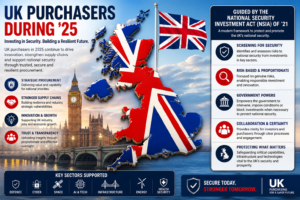
However, the NSIA is not a true “foreign’ direct investment screening mechanism. It applies equally to UK & foreign investors alike. The first conditional decision was made under the NSIA in July ’22. It imposed conditions on UK-based investor Epiris. This decision was in the context of its acquisition of the digital communications provider that supplies radio solutions to UK emergency services, Sepura. The regime also includes the internal reorganisations (eg, those that may be done to facilitate a transaction that itself may trigger a filing), such as restructuring the management or operational framework of the company to comply with regulatory requirements.
Major developments of ’25 summarised
A very significant development in ’25 was the launch of a consultation in July. This was on changes to the NSIA regulations. They defined which activities require mandatory notification under the regime. In its review of the responses to that consultation, the government confirmed in March ’26 that these updates will be enacted through legislation later this year.